If you’ve seen “ASL” in a text message, TikTok comment, Snapchat chat, or online conversation, it usually means “Age, Sex, Location?” People use it to quickly ask for basic information about someone they are talking to online.
The term has been around for many years and is still occasionally used on social media, messaging apps, and online communities. While newer slang appears every day, ASL remains one of the most recognizable internet abbreviations.
Many people search for the meaning of ASL because they see it in chats and wonder whether it has a different meaning on platforms like TikTok, Snapchat, or Instagram. In most cases, the meaning remains the same.
ASL Meaning in Text
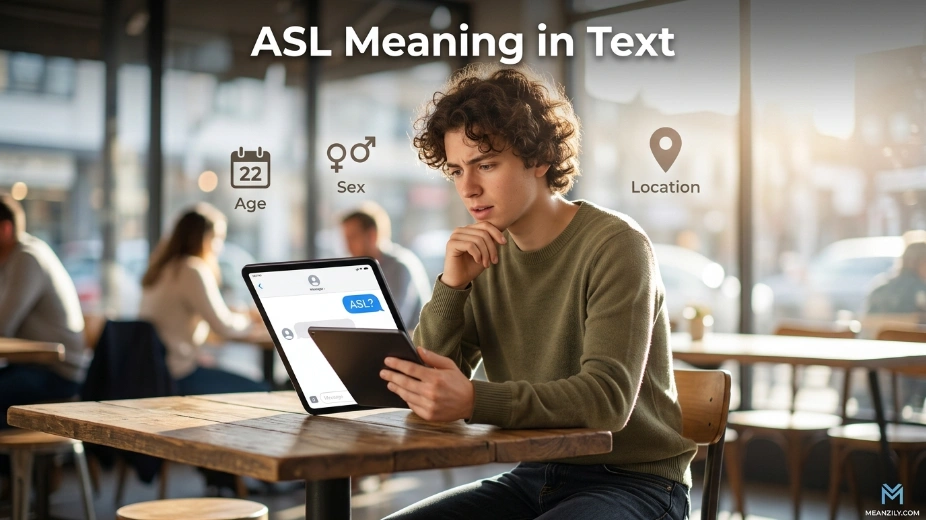
ASL stands for Age, Sex, Location?
It is an internet acronym that people use when they want to know a few basic details about someone they are chatting with online.
The abbreviation became popular in the early days of online chat rooms and instant messaging services. Instead of typing three separate questions, people could simply write “ASL?”
What Does ASL Mean in Everyday Chat?
In everyday texting, ASL is a quick way to ask:
- How old are you?
- Are you male or female?
- Where are you from?
For example:
“Hey, ASL?”
The person is asking for basic personal information to get to know you better.
Although ASL is still used today, many people now prefer to ask these questions separately because it feels more natural and friendly.
Where People Use ASL
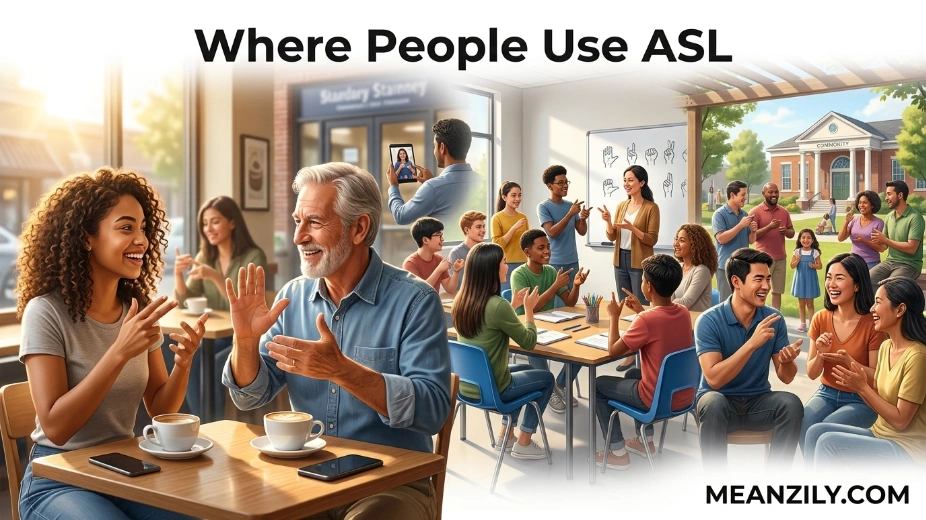
ASL can appear on several social media platforms and messaging apps.
ASL on TikTok
On TikTok, ASL may appear in comments, direct messages, or livestream chats.
Some users type it when meeting new people or starting conversations. Others may use it jokingly because it is considered old-school internet slang.
ASL on Snapchat
Snapchat users sometimes send “ASL?” when adding new friends or joining group chats.
It serves as a quick introduction request.
ASL on Instagram
On Instagram, ASL may show up in DMs when someone wants to learn a little more about another user.
However, many Instagram users prefer asking questions individually rather than using the abbreviation.
ASL on WhatsApp
ASL is less common on WhatsApp because people often know each other already.
Still, it may appear in public groups or conversations with new contacts.
ASL in SMS Text Messages
Traditional text messaging occasionally includes ASL, especially when people meet through online communities, gaming groups, or social platforms.
Its meaning remains the same: Age, Sex, Location.
Real Chat Examples

Below are realistic examples of how ASL might appear in conversations.
Example 1
A: Hey!
B: Hi there.
A: ASL?
Example 2
A: Nice to meet you.
B: You too.
A: ASL?
Example 3
A: We both like the same game.
B: That’s cool.
A: ASL?
Example 4
A: Are you new here?
B: Yep.
A: ASL?
Example 5
A: What’s up?
B: Just relaxing.
A: ASL?
Example 6
A: You seem friendly.
B: Thanks!
A: ASL?
Example 7
A: Which country are you from?
B: Pakistan.
A: Cool. ASL?
Example 8
A: Want to join our group chat?
B: Sure.
A: Before that, ASL?
Example 9
A: We’ve been chatting for a while.
B: Yeah.
A: Mind sharing your ASL?
Example 10
A: Hello!
B: Hey there.
A: ASL? Just curious.
How to Reply When Someone Says “ASL”
There are many ways to respond depending on the situation.
Funny Replies
- “Old enough to pay bills, young enough to complain about them.”
- “Human, Earth, that’s all you’re getting.”
- “Nice try, FBI.”
Casual Replies
- “22, male, New York.”
- “19, female, London.”
- “25, Pakistan.”
Friendly Replies
- “I’m 21, female, and from Canada. How about you?”
- “24, male, from Australia. Nice to meet you.”
Neutral Replies
- “I’m 20 and from the UK.”
- “I’d rather not share personal details online.”
Is ASL Rude or Offensive?
ASL is generally not considered rude or offensive.
It is simply a shorthand way of asking for basic information.
However, context matters. Some people may feel uncomfortable sharing personal details with strangers online. Because of this, receiving an unexpected “ASL?” can sometimes feel intrusive.
Is It Safe to Use?
Yes, the term itself is safe to use.
However, you should be careful about sharing personal information online, especially with people you do not know.
Is It Appropriate at School or Work?
In casual conversations, ASL is usually fine.
In professional environments, workplaces, or formal communication, it is generally better to ask questions directly and respectfully rather than using internet slang.
Who Uses This Term?
ASL has been used by internet users for decades.
Age Groups
People of different ages recognize the term, but older internet users may be more familiar with it because it was extremely popular during the early chat room era.
Gen Z Usage
Many Gen Z users know what ASL means, although they may not use it as frequently as older online users.
Some younger users encounter it through memes, gaming communities, or social media discussions.
Common Platforms
ASL appears on:
- TikTok
- Snapchat
- Discord
- Online forums
- Gaming chats
How Often Does It Appear Online?
ASL is less common than it was years ago, but it still appears regularly across the internet.
Its long history has helped it remain recognizable even as new slang terms emerge.
Origin of the Term
ASL originated during the early years of internet chat culture.
In the 1990s and early 2000s, chat rooms were extremely popular. Users often met complete strangers online and wanted a quick way to learn basic information about them.
Typing “Age, Sex, Location?” repeatedly was inconvenient, so internet users shortened it to ASL.
Internet Culture Influence
Chat services and messaging platforms helped spread the acronym worldwide.
As more people connected online, ASL became one of the most widely recognized internet abbreviations.
Is the Origin Certain?
Yes, the meaning is generally well established.
Unlike some modern slang terms that have unclear origins, ASL’s connection to early chat rooms is widely understood.
Comparison Table
| Term | Meaning | Type | Usage | Popularity |
|---|---|---|---|---|
| ASL | Age, Sex, Location | Acronym | Asking personal details | Moderate |
| IDK | I Don’t Know | Acronym | Expressing uncertainty | Very High |
| IDC | I Don’t Care | Acronym | Showing indifference | High |
| IMO | In My Opinion | Acronym | Sharing opinions | High |
| BRB | Be Right Back | Acronym | Temporary absence | High |
Real-World Usage Example
Imagine you join a new online gaming community.
You start chatting with another player while waiting for a match to begin. After talking for a few minutes, the other person types:
“ASL?”
They are simply asking your age, sex, and location to learn a little more about who they are talking to. You can choose to answer fully, partially, or not at all depending on your comfort level.
Why Do People Still Use ASL Today?
The internet has changed dramatically since the days of old chat rooms, but some online abbreviations have managed to survive. ASL is one of those terms. Even though newer generations use different slang, many people still recognize ASL because it has been part of internet culture for decades.
Some users type it out of habit, while others use it as a quick way to start a conversation. In online gaming communities, public chat groups, and social platforms, it can still appear when people are getting to know each other.
Another reason ASL remains popular is its simplicity. Three short letters can communicate a question that would otherwise require several separate messages.
Why Some People Avoid Answering ASL Questions
Not everyone feels comfortable responding when someone asks for their ASL.
Many internet users prefer to keep personal information private, especially when speaking with strangers. Sharing details such as age and location can make some people feel exposed or vulnerable online.
For this reason, it is perfectly acceptable to decline the question politely. Online privacy has become more important than ever, and people are increasingly careful about the information they share.
Respecting another person’s decision not to answer is considered good online etiquette.
ASL in Online Gaming Communities
Online games often bring together players from different countries and backgrounds. During conversations between teammates, someone might ask ASL as a quick way to learn more about the people they are playing with.
This is especially common in multiplayer games that encourage teamwork and social interaction. Players may be curious about where others are from or whether they are around the same age.
However, many gaming communities now encourage players to avoid sharing too much personal information with strangers for safety reasons.
As a result, ASL is still seen occasionally, but not as often as it was in earlier years of online gaming.
How Internet Slang Changes Over Time
ASL is a good example of how internet language evolves.
When chat rooms were popular, ASL was one of the most common abbreviations online. As technology changed, new platforms introduced new slang terms that reflected modern communication styles.
Despite these changes, some expressions never completely disappear. They become part of internet history and continue to be understood by users across different generations.
ASL has reached that status. Even people who never actively use it often know what it means when they encounter it online.
Common Situations Where You Might See ASL
You are most likely to encounter ASL in situations where people are meeting for the first time online.
Examples include:
- Joining a public chat room
- Entering a gaming lobby
- Participating in a livestream chat
- Meeting new people in online communities
- Starting conversations in social media messages
In each of these situations, users may be curious about the people they are talking to and use ASL as a quick icebreaker.
Can ASL Be Used as a Joke?
Yes, many people now use ASL humorously.
Because the acronym is associated with the early internet, some users mention it jokingly to reference older online culture. You may see comments such as “ASL?” followed by playful responses that are clearly not serious.
Memes and nostalgic internet content have helped keep the expression alive. For some users, typing ASL is less about gathering information and more about making a humorous reference to classic internet chat rooms.
This playful use has become increasingly common on social media platforms.
Online Safety Tips When Someone Asks for ASL
Whenever someone asks for personal information online, it is important to think about privacy and safety.
You should never feel pressured to share details that make you uncomfortable. If you choose to answer, consider limiting the amount of information you provide.
For example, instead of sharing a specific city, you might only mention your country or general region.
Parents should also teach younger internet users to be cautious when discussing personal information with strangers online.
Being friendly online is great, but protecting your privacy is equally important.
How ASL Compares to Modern Internet Slang
Many modern abbreviations focus on emotions, reactions, or opinions. Terms like LOL, IMO, and TBH are used to express thoughts or feelings.
ASL is different because it is designed to gather information rather than express it.
This unique purpose is one reason it has remained recognizable over the years. While countless slang terms have disappeared, ASL continues to stand out because it serves a practical role in conversations.
Even though newer expressions are more common today, ASL still has a place in internet communication.
What ASL Reveals About Early Internet Culture
The popularity of ASL offers a glimpse into how people interacted online in the early days of the internet.
At that time, many conversations happened in anonymous chat rooms where users knew very little about one another. Asking for age, sex, and location became a common way to break the ice and start a discussion.
The acronym reflects an era when online communication was simpler and often focused on meeting new people from around the world.
Today, social media profiles provide much of this information automatically, which is one reason ASL is used less frequently than before. Even so, it remains an important part of internet history.
Frequently Asked Questions
What does ASL mean in text messages?
ASL usually means Age, Sex, Location? It is used to ask basic information about someone in an online conversation.
What does ASL mean on TikTok?
On TikTok, ASL generally has the same meaning: Age, Sex, Location? People may use it in comments, messages, or livestream chats.
Is ASL slang?
Yes. ASL is considered internet slang and an online acronym commonly used in digital communication.
Is ASL rude or offensive?
No. ASL is not inherently rude or offensive. However, some people may prefer not to share personal information with strangers.
How should you reply to ASL?
You can answer with your age, gender, and location if you feel comfortable. You can also politely decline to share personal details.
Conclusion
ASL stands for Age, Sex, Location? and is one of the oldest internet acronyms still recognized today. People use it in text messages, social media chats, gaming communities, and online conversations when they want to learn basic information about someone.
While it is generally harmless and not considered offensive, it is always important to think carefully before sharing personal details online.
In casual conversations, ASL can be useful, but in professional settings or when talking to strangers, a more direct and respectful approach may be better.
Discover More Post
Saranghae Meaning Explained Korean Love Slang Hidden …
What Does Canon Event Meaning in Text? Real Meaning …
What Does 41 Mean in Text? Real Meaning Examples …