LYM usually means “Love You More” in text messages, Snapchat, TikTok, Instagram, and other online chats. If someone recently sent you LYM, they’re most likely expressing affection, appreciation, or a stronger emotional connection in a sweet and friendly way.
As texting slang continues to evolve, abbreviations like LYM can leave people guessing about the sender’s true meaning. While it’s commonly used between friends, family members, and romantic partners, the meaning can vary depending on the conversation. In this guide, you’ll discover exactly what LYM means, how it’s used on social media, and real-life examples that make it easy to understand and reply with confidence.
LYM Meaning in Text
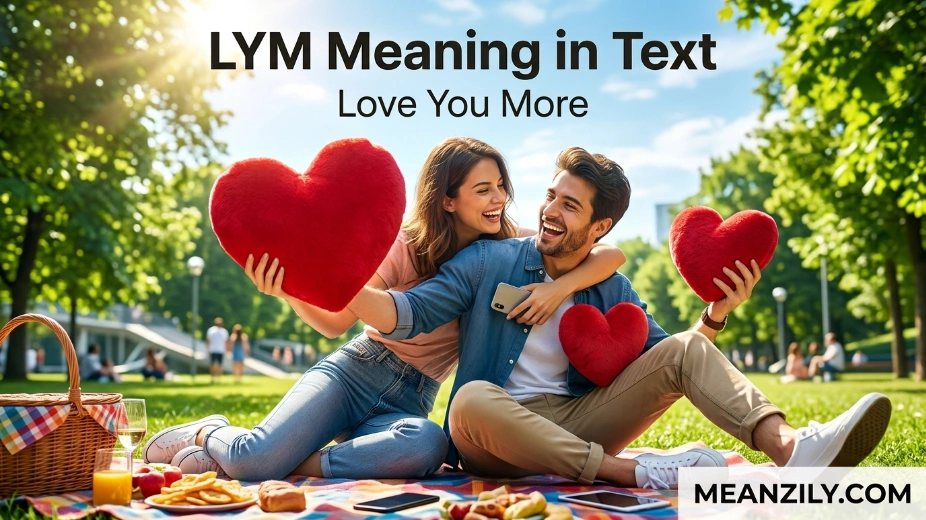
In text messaging, LYM most commonly means “Love You More.”
It is a simple and affectionate response often sent after someone says “I love you” or “love ya.”
For example:
Friend: Love you!
You: LYM ❤️
The phrase communicates that your feelings are just as strong—or even stronger—than the other person’s.
LYM is considered a texting abbreviation and messaging shorthand. Instead of typing three full words, users shorten the phrase into a quick acronym that is easy to send.
Because online conversations often move quickly, people prefer shorter expressions. LYM fits perfectly into modern digital communication where speed and convenience matter.
What Does LYM Stand For?
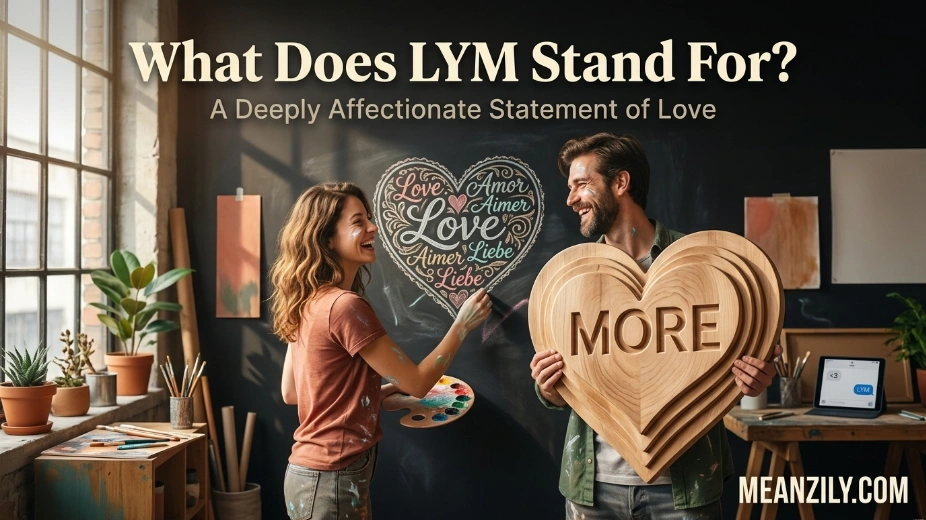
LYM stands for:
Love = Deep affection or care
You = The person being addressed
More = A stronger or greater amount
When combined, “Love You More” becomes a playful and affectionate way of telling someone that your feelings are greater than theirs.
Of course, people do not usually mean this literally. It is often used as a sweet expression between friends, family members, partners, or close acquaintances.
People shorten it to LYM because:
• It saves typing time
• It feels casual and modern
• It matches internet slang culture
• It works well on mobile devices
• It fits naturally into quick chats
Why Do People Use LYM?
There are several reasons why LYM remains popular in online messaging.
It Saves Time
Typing “Love You More” repeatedly can become tedious. LYM delivers the same message in just three letters.
It Feels Personal
Even though it is short, the meaning remains warm and heartfelt.
It Matches Social Media Culture
Social media language favors short, memorable abbreviations. LYM fits perfectly alongside other common chat acronyms.
It Expresses Affection Quickly
Whether someone is ending a conversation or responding to a kind message, LYM offers a quick way to show appreciation.
It Feels Modern
Many younger users enjoy using abbreviations because they feel natural within texting culture and online conversations.
Where People Use LYM
TikTok
On TikTok, LYM often appears in comments, captions, and replies.
Users may write:
“Thanks for supporting my content. LYM ❤️”
Who uses it?
• Content creators
• Fans
• Friends interacting on videos
• Teen and young adult users
Example:
Comment:
“You’re my favorite creator!”
Reply:
“Aw thank you! LYM ❤️”
Snapchat
Snapchat conversations tend to be casual and fast-paced.
LYM frequently appears between close friends or romantic partners.
Example:
Friend:
“Goodnight ❤️”
You:
“Goodnight, LYM 😊”
Who uses it?
• Friends
• Couples
• Classmates
• Teen users
Instagram users often use LYM in direct messages and comment sections.
Example:
Friend:
“Miss you!”
You:
“Miss you too. LYM ❤️”
Instagram users appreciate short messages that communicate emotion without requiring long explanations.
WhatsApp is one of the most common places for LYM.
People send it in:
• Family chats
• Friend groups
• Private conversations
• Relationship chats
Example:
Mom:
“Take care today.”
You:
“Will do. LYM ❤️”
SMS/Text Messages
Traditional texting remains a major place where LYM appears.
Example:
Partner:
“I love you.”
You:
“LYM ❤️”
The abbreviation works especially well when someone wants to send a quick response while on the go.
Real Chat Examples
Example 1
A: Love you ❤️
B: LYM ❤️
A: That’s impossible 😂
Example 2
A: Thanks for always being there.
B: Anytime. LYM 😊
A: You’re the best.
Example 3
A: Goodnight!
B: Sleep well. LYM ❤️
A: Sweet dreams.
Example 4
A: I passed my exam!
B: Congratulations! LYM ❤️
A: Thank you!
Example 5
A: Miss you already.
B: LYM ❤️
A: Can’t wait to see you.
Example 6
A: You’re such a great friend.
B: LYM 😊
A: Aww thanks.
Example 7
A: Have a safe trip.
B: Thanks! LYM ❤️
A: Keep me updated.
Example 8
A: You made my day.
B: LYM ❤️
A: Glad to hear it.
Example 9
A: Good luck today.
B: Thank you. LYM 😊
A: You’ve got this.
Example 10
A: Happy birthday!
B: Thanks! LYM ❤️
A: Hope you have an amazing day.
Example 11
A: You’re my favorite person.
B: LYM ❤️
A: That’s sweet.
Example 12
A: Thanks for helping me.
B: LYM 😊
A: Anytime.
Example 13
A: See you tomorrow.
B: LYM ❤️
A: Looking forward to it.
Example 14
A: You’re amazing.
B: LYM ❤️
A: No, you are.
Example 15
A: I appreciate you.
B: LYM 😊
A: Means a lot.
Example 16
A: GG everyone.
B: GG, LYM fam ❤️
A: Great game.
Example 17
A: That TikTok was hilarious.
B: Glad you liked it. LYM ❤️
A: Keep posting.
Example 18
A: Thank you for listening.
B: LYM ❤️
A: You’re a real one.
Example 19
A: Stay safe.
B: LYM 😊
A: You too.
Example 20
A: Love ya.
B: LYM ❤️
A: Always.
Example 21
A: You made me laugh today.
B: LYM 😂
A: Mission accomplished.
Example 22
A: Bestie forever?
B: LYM bestie ❤️
A: Forever.
Example 23
A: Have fun tonight.
B: LYM ❤️
A: Thanks.
Example 24
A: You’re awesome.
B: LYM 😊
A: Appreciate that.
Example 25
A: Thanks for everything.
B: LYM ❤️
A: Anytime.
How to Reply When Someone Says “LYM”
Funny Replies
• Impossible, I loved you first.
• Nice try, but I still win.
• The math doesn’t add up 😂
• Challenge accepted.
• Not even close.
Casual Replies
• Aww thanks.
• Love you too.
• Same here.
• Appreciate you.
• That’s sweet.
Friendly Replies
• You’re the best.
• Right back at you.
• Sending love your way.
• Thanks, friend.
• Means a lot.
Neutral Replies
• Thank you.
• That’s kind of you.
• Appreciate it.
• Same to you.
• Hope you’re doing well.
Is LYM Rude or Offensive?
No, LYM is generally not considered rude or offensive.
In most situations, it is a positive and friendly expression used to show affection, appreciation, or emotional closeness. Because it stands for “Love You More,” the phrase usually carries a warm and caring tone.
Is It Safe to Use Online?
Yes. LYM is widely considered safe for social media, texting, and online conversations.
You can use it in:
• Personal messages
• Family chats
• Friend conversations
• Social media comments
• Relationship discussions
Is It Appropriate at School?
Usually, yes.
Students often use LYM when chatting with close friends. However, it may feel too personal for formal communication with teachers or school staff.
Is It Appropriate at Work?
It depends on the relationship.
Using LYM with close coworkers who are also friends may be acceptable. However, in professional business communication, it is generally better to use more formal language.
For example:
Professional:
“Thank you for your help.”
Instead of:
“LYM ❤️”
Context matters when using internet slang in workplace environments.
Who Uses This Term?
Gen Z
Gen Z users are among the most active users of LYM.
Because they grew up with texting, social media language, and messaging shorthand, abbreviations like LYM feel natural in everyday communication.
Millennials
Many Millennials also use LYM, especially in personal messages and family chats.
While they may not use as much internet slang as younger generations, most understand what the abbreviation means.
Social Media Users
People active on TikTok, Instagram, Snapchat, and WhatsApp frequently encounter abbreviations like LYM.
Short forms help users communicate quickly while maintaining an emotional connection.
Gaming Communities
Although not as common as terms like GG or BRB, some gamers use LYM jokingly or affectionately among friends.
Example:
“Good game everyone. LYM squad ❤️”
Texting Culture
LYM fits perfectly within modern texting culture.
People increasingly prefer short expressions that communicate feelings without requiring lengthy messages.
Origin of the Term
The exact origin of LYM is difficult to trace.
Like many texting abbreviations, it likely developed naturally as mobile messaging became more popular.
In the early days of SMS texting, users often shortened phrases because:
• Character limits were restrictive
• Typing on small phone keyboards was slower
• Shorter messages saved time
As internet slang evolved, phrases like:
• LOL
• BRB
• IDK
• TBH
became common.
LYM followed a similar pattern by shortening a frequently used phrase into a simple acronym.
Today, it remains part of modern social media language and online messaging culture.
Other Meanings of LYM
While “Love You More” is the most common meaning in texting, LYM can occasionally have different meanings depending on the context.
Some niche communities or organizations may use LYM as an abbreviation for something completely unrelated.
However, when you see LYM on:
• TikTok
• Snapchat
• Instagram
• WhatsApp
• Text messages
the meaning is almost always “Love You More.”
The surrounding conversation usually makes the intended meaning obvious.
Common Mistakes People Make About LYM
Assuming It Has a Negative Meaning
Some people see an unfamiliar abbreviation and assume it is rude or offensive.
In reality, LYM is usually positive and affectionate.
Confusing It With Other Acronyms
Users sometimes mistake LYM for similar-looking abbreviations.
For example:
• LYK = Let You Know
• LY = Love You
• LYLAS = Love You Like A Sister
These terms have different meanings.
Using It in Formal Situations
LYM works best in casual conversations.
Using it in formal business emails or professional documents can seem inappropriate.
Ignoring Context
Like many internet slang terms, context matters.
If someone sends:
“Goodnight, LYM ❤️”
the meaning is clearly affectionate.
Always consider the overall conversation before interpreting an abbreviation.
Related Internet Slang Terms
| Term | Meaning | Common Use |
|---|---|---|
| IDK | I Don’t Know | Expressing uncertainty |
| IDC | I Don’t Care | Showing indifference |
| IMO | In My Opinion | Sharing personal views |
| TBH | To Be Honest | Giving honest opinions |
| NGL | Not Gonna Lie | Introducing a truthful statement |
| FR | For Real | Showing agreement or seriousness |
| SMH | Shaking My Head | Expressing disappointment |
| BRB | Be Right Back | Temporarily leaving a conversation |
These abbreviations are common examples of internet slang and messaging shorthand.
Unlike LYM, which expresses affection, many of these terms focus on opinions, reactions, or conversation management.
Comparison Table
| Term | Meaning | Type | Usage | Popularity |
|---|---|---|---|---|
| LYM | Love You More | Affection acronym | Friendly and loving conversations | Moderate |
| IDK | I Don’t Know | Chat acronym | Expressing uncertainty | Very High |
| IDC | I Don’t Care | Texting abbreviation | Showing indifference | High |
| IMO | In My Opinion | Internet abbreviation | Sharing viewpoints | High |
| BRB | Be Right Back | Messaging shorthand | Leaving briefly | Very High |
This comparison shows that LYM is more emotional and relationship-focused than most common chat acronyms.
Real-World Usage Example
Imagine Sarah is leaving for college in another city.
Before boarding the bus, she sends her mother a text:
“Love you ❤️”
Her mother replies:
“LYM ❤️”
Sarah immediately understands that her mother means “Love You More.”
No lengthy explanation is needed. Three letters communicate affection, support, and emotional connection.
This is exactly why abbreviations like LYM remain popular in digital communication.
Why This Slang Remains Popular
Fast Communication
People want to communicate quickly.
Short abbreviations help users send messages faster without sacrificing meaning.
Mobile Texting Habits
Most online conversations happen on smartphones.
Typing fewer characters is often more convenient.
Social Media Influence
TikTok, Snapchat, Instagram, and WhatsApp encourage quick interactions.
Short expressions naturally become part of social media language.
Emotional Expression
Unlike many chat acronyms, LYM carries emotional value.
It allows users to express affection in a simple and memorable way.
Internet Culture
Modern internet slang continues to evolve.
New abbreviations appear regularly, but affectionate expressions like LYM remain relevant because relationships and connection are timeless.
People Also Ask
What does LYM mean in text messages?
In text messages, LYM usually means “Love You More.” It is often used as a response to someone saying “I love you” or expressing affection.
What does LYM mean on TikTok?
On TikTok, LYM typically means “Love You More.” Users may include it in comments, captions, or replies to show appreciation and affection.
Is LYM slang?
Yes. LYM is considered internet slang and a texting abbreviation. It is part of modern online messaging and social media communication.
Is LYM rude or offensive?
No. LYM is generally positive and friendly. It is not considered offensive and is commonly used in affectionate conversations.
How should you reply to LYM?
You can reply with phrases like “Love you too,” “Aww thanks,” “Same here,” or even “Not possible, I love you more.”
What does LYM stand for?
LYM stands for “Love You More.” It is a shortened version of a common affectionate phrase.
Why do people use LYM?
People use LYM because it is quick, easy to type, and communicates affection without needing a long message.
Is LYM a Gen Z term?
Gen Z uses LYM frequently, but people of all ages may use and understand it.
Can adults use LYM?
Absolutely. Adults often use LYM in conversations with friends, family members, and romantic partners.
When should you avoid using LYM?
Avoid using LYM in formal business communication, professional emails, or situations where casual internet slang may seem inappropriate.
Frequently Asked Questions
Is LYM commonly used today?
Yes. While not as common as terms like LOL or IDK, LYM still appears regularly in texting and social media conversations.
Does LYM always mean Love You More?
Most of the time, yes. In texting and social media contexts, “Love You More” is by far the most common meaning.
Is LYM used in romantic relationships?
Yes. Romantic partners often use LYM as an affectionate response to “I love you.”
Can friends use LYM?
Definitely. Friends sometimes use LYM to express appreciation and emotional support.
Is LYM appropriate for family members?
Yes. Parents, siblings, children, and other relatives commonly use LYM in family conversations.
Is LYM popular on Snapchat?
Yes. Snapchat’s casual messaging style makes abbreviations like LYM very common.
Does LYM have a hidden meaning?
Generally, no. It usually means exactly what it says: “Love You More.”
Should you use LYM in professional emails?
No. Professional communication is usually better served with complete words and formal language.
Conclusion
If you’ve been wondering what does LYM mean in text, the answer is simple: LYM stands for “Love You More.”
It is a popular texting abbreviation and internet slang term used to express affection, appreciation, and emotional closeness. You’ll most often see it on TikTok, Snapchat, Instagram, WhatsApp, and traditional text messages.
The term is generally friendly, safe, and non-offensive. Whether used between friends, family members, or romantic partners, LYM helps people communicate warmth in a quick and modern way.
As online messaging continues to evolve, abbreviations like LYM remain popular because they make digital communication faster, easier, and more personal.
Discover More Post
TSK Meaning in Text Slang Explained What It Means and How …
What Does PMO Mean in Text? PMO Slang Meaning …
Palm Lines Meaning Explained Hidden Symbols Spiritual …

Cove is the founder and lead SEO strategist behind Meanzily, with over 5 years of hands-on experience in search engine optimization and content marketing. He specializes in creating high-quality, user-focused content that aligns with Google’s latest SEO and E-E-A-T guidelines. Cove has helped multiple websites grow organically through data-driven strategies, keyword research, and on-page optimization. His mission is to deliver valuable, easy-to-understand content that ranks well and truly helps readers.