If you’ve seen “FN” in a text message, TikTok comment, Snapchat chat, or Instagram post, it usually means “For Now.” People use it when talking about something temporary or something that may change later.
This short abbreviation appears frequently in texting and social media conversations because it’s quick and easy to type. Many people search for its meaning after seeing it in chats and wondering what the sender is trying to say.
Like many internet abbreviations, FN can have different meanings depending on the context. However, in everyday texting, “For Now” is the most common interpretation.
Understanding how and where people use FN can help you avoid confusion and communicate more naturally online.
FN Meaning in Text
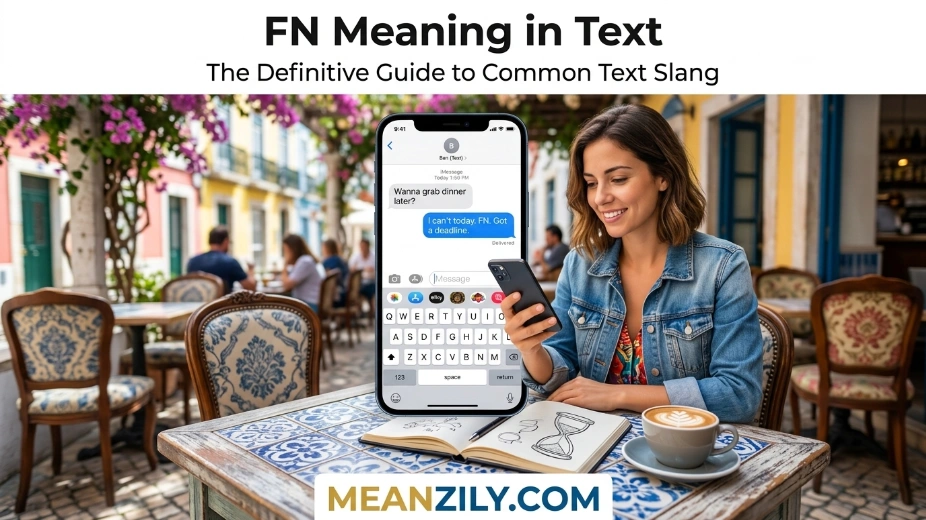
FN is an abbreviation that most commonly stands for “For Now.”
People use it when they want to describe a temporary situation, decision, or plan. It suggests that something is true at the moment but may change later.
For example:
“I’m staying home FN.”
This means the person is staying home for now, but their plans could change.
FN is considered an abbreviation rather than a traditional acronym because people usually say the full phrase “for now” instead of pronouncing each letter.
In everyday chats, it helps save time and makes texting faster.
Common Meaning of FN
The most popular meaning is:
FN = For Now
Example:
“I’ll use my old phone FN until I buy a new one.”
Other Possible Meanings
In certain communities, FN may occasionally have other meanings, such as:
- Fortnite
- Full Name
- Friday Night
However, the intended meaning depends entirely on the conversation. In general texting, “For Now” remains the most common usage.
Where People Use FN
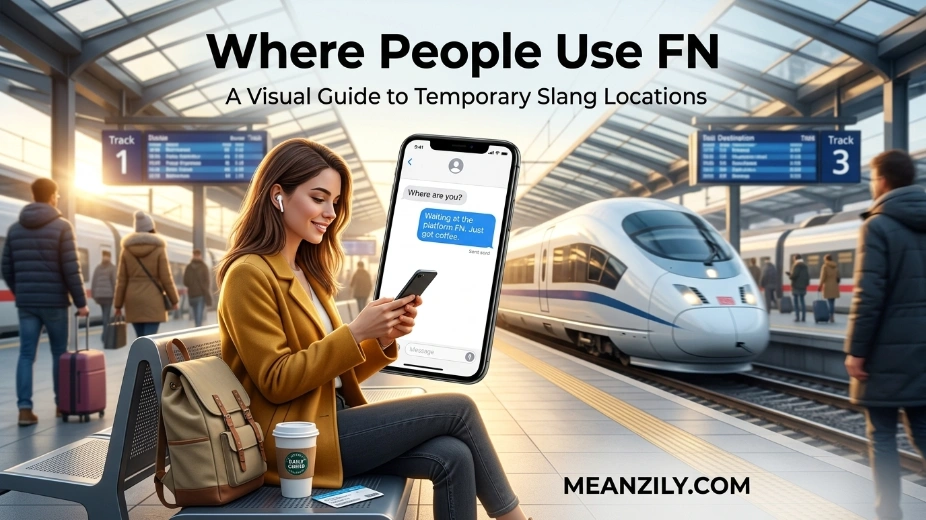
FN appears across many messaging apps and social platforms.
TikTok
TikTok users often include FN in comments and captions.
Example:
“This trend is my favorite FN.”
It means the trend is their favorite at the moment.
Snapchat
On Snapchat, FN is commonly used in private chats between friends.
Example:
“I’m busy FN, talk later.”
The person is busy for now but may be available later.
Instagram users sometimes add FN in stories, comments, or direct messages.
Example:
“Taking a break from posting FN.”
This suggests the break is temporary.
WhatsApp conversations frequently include FN because it shortens longer phrases.
Example:
“Let’s keep this plan FN.”
The plan may change in the future.
SMS
Traditional text messaging also uses FN.
Example:
“I’m working from home FN.”
This tells the recipient that the arrangement is temporary.
Real Chat Examples

Here are 10 realistic texting conversations showing how FN is used.
Example 1
A: Are you still looking for a job?
B: Yeah, I’m freelancing FN.
A: Hope you find something soon.
Example 2
A: Where are you staying?
B: At my cousin’s house FN.
A: Nice, that works.
Example 3
A: Are you using your old laptop?
B: Yep, FN at least.
A: Makes sense.
Example 4
A: Are you coming tonight?
B: Can’t FN, maybe later.
A: No problem.
Example 5
A: What game are you playing?
B: Mostly Fortnite FN.
A: Cool choice.
Example 6
A: Are you keeping your car?
B: FN, yes.
A: Got it.
Example 7
A: Still watching that series?
B: It’s my favorite FN.
A: Same here.
Example 8
A: Are you living in the city?
B: FN, yes.
A: How do you like it?
Example 9
A: What’s your plan after graduation?
B: Nothing definite FN.
A: You’ll figure it out.
Example 10
A: Are you using that profile picture?
B: Just FN.
A: It looks good.
How to Reply When Someone Says “FN”
Your response depends on the conversation and tone.
Funny Replies
- “FN? Sounds mysterious.”
- “For now? I’ll check back tomorrow.”
- “We’ll see if that changes in five minutes.”
Casual Replies
- “Okay, sounds good.”
- “Got it.”
- “That makes sense.”
Friendly Replies
- “Hope everything works out.”
- “Let me know if things change.”
- “Sounds like a good plan for now.”
Neutral Replies
- “Understood.”
- “Thanks for letting me know.”
- “Okay, noted.”
Is FN Rude or Offensive?
No, FN is generally not rude or offensive.
It is a harmless abbreviation used to save time while texting.
Most people use it casually when discussing temporary situations or plans.
Because it has a neutral meaning, it is usually safe to use with friends, classmates, coworkers, and family members.
Is It Appropriate at School?
Yes, in casual student conversations it is usually acceptable.
However, writing the full phrase “for now” may appear more professional in assignments or formal communication.
Is It Appropriate at Work?
In informal workplace chats, FN is usually fine.
For professional emails, reports, or official documents, writing out the complete phrase is often the better choice.
Who Uses This Term?
FN is used by a wide range of internet users.
Teenagers
Teens often use abbreviations to make texting quicker. FN fits naturally into fast conversations.
Gen Z
Gen Z users frequently use shorthand expressions across social media and messaging apps.
Because they communicate online so often, abbreviations like FN help keep messages short.
Young Adults
College students and young professionals also use FN regularly in casual digital communication.
Frequent Social Media Users
People who spend a lot of time on TikTok, Snapchat, Instagram, and WhatsApp are more likely to encounter FN.
How Common Is It?
FN is moderately common online.
While it is not as universally recognized as abbreviations like LOL or BRB, many internet users understand its meaning when used in context.
Origin of the Term
The exact origin of FN is somewhat unclear.
Like many internet abbreviations, it likely developed naturally as users searched for faster ways to communicate online.
As texting became more popular, people started shortening common phrases to save time and reduce typing effort.
The phrase “for now” is frequently used in everyday conversation, making it a natural candidate for abbreviation.
Internet culture, mobile messaging, online gaming, and social media likely contributed to its spread.
Because abbreviations often emerge organically across different communities, there is no single documented source that created FN.
Comparison Table
| Term | Meaning | Type | Usage | Popularity |
|---|---|---|---|---|
| FN | For Now | Abbreviation | Temporary situations | Moderate |
| IDK | I Don’t Know | Acronym | Expressing uncertainty | Very High |
| IDC | I Don’t Care | Acronym | Showing indifference | High |
| IMO | In My Opinion | Acronym | Sharing opinions | High |
| BRB | Be Right Back | Acronym | Temporary absence | Very High |
Why Is FN So Popular in Online Conversations?
Modern online communication moves quickly. People often prefer short forms and abbreviations because they save time and make conversations feel more natural.
FN is popular because it replaces a common two-word phrase with just two letters. Instead of typing “for now” every time, users can simply type FN and still get their message across.
Another reason for its popularity is that it works in many situations. Whether someone is talking about plans, opinions, work, hobbies, or relationships, FN can easily fit into the conversation.
As mobile messaging continues to dominate communication, short expressions like FN are likely to remain common.
Situations Where FN Makes Sense to Use
FN is most useful when discussing something that is temporary.
For example, a person may be using a borrowed car, living in a temporary apartment, or working a short-term job. In each case, FN helps explain that the situation is not permanent.
People also use it when they are undecided about something.
Someone might say:
“I’m sticking with this choice FN.”
This suggests they may reconsider later.
Whenever there is uncertainty about the future, FN can help communicate that flexibility.
Situations Where You Should Avoid Using FN
Although FN is useful in casual conversations, there are times when using the full phrase is better.
Formal emails are one example. A manager, teacher, or client may not recognize every internet abbreviation.
Business proposals, academic papers, and professional reports should usually avoid texting shortcuts.
Using “for now” instead of FN makes writing clearer and more professional in these situations.
The goal is always to match your language to your audience.
How FN Changes the Tone of a Message
Small abbreviations can influence how a message feels.
When someone writes “for now,” the sentence may sound slightly more formal and complete.
When they write “FN,” the tone becomes more relaxed and conversational.
For example:
“I’ll keep this schedule for now.”
Feels slightly formal.
Meanwhile:
“I’ll keep this schedule FN.”
Feels more casual and text-friendly.
This difference is one reason many people prefer abbreviations when chatting with friends.
Common Mistakes People Make With FN
One mistake is assuming FN always means the same thing.
Like many internet abbreviations, its meaning depends on context. Some users may interpret it differently depending on the conversation.
Another mistake is overusing it.
Adding FN to every message can make conversations feel unnatural.
It’s generally best used only when discussing temporary situations or plans that may change later.
A final mistake is using it in highly professional settings where clarity is more important than brevity.
How FN Differs From Other Temporary Expressions
English has many phrases that communicate temporary situations.
Examples include:
- At the moment
- For the time being
- Currently
- Right now
- Temporarily
FN is unique because it is extremely short and designed for digital communication.
While all these expressions have similar meanings, FN is usually the quickest option in text conversations.
That’s why it remains popular among frequent texters and social media users.
Can FN Have Different Meanings in Different Communities?
Yes. Internet language often changes depending on the community using it.
Gamers, social media users, students, and online forums sometimes assign different meanings to the same abbreviation.
For example, some gamers may recognize FN as a reference to Fortnite, while others may interpret it as “For Now.”
This is why reading the surrounding conversation is important.
Context almost always reveals the intended meaning.
Why Internet Abbreviations Continue to Grow
The internet has created a culture where speed matters.
People send millions of messages every day through social media platforms and messaging apps. Because of this, shortcuts naturally develop.
Abbreviations like LOL, BRB, IDK, and FN exist because they make communication faster without changing the overall meaning.
As new platforms emerge, new abbreviations will likely appear as well.
Internet language is constantly evolving to match the way people communicate online.
What FN Reveals About Digital Communication Trends
FN is a good example of how online communication prioritizes efficiency.
Users want to express ideas quickly while still being understood.
The popularity of abbreviations shows that people value convenience when chatting online.
At the same time, these shortcuts create a sense of belonging. Understanding terms like FN helps users participate more comfortably in modern digital culture.
For many people, learning internet abbreviations is almost like learning a new vocabulary designed specifically for online communication.
Should Parents and Teachers Know What FN Means?
Understanding common internet abbreviations can help parents and educators stay informed about modern communication habits.
Fortunately, FN is generally harmless and does not carry a negative meaning.
Knowing terms like FN can make it easier to understand conversations that take place on social media, messaging apps, and online communities.
It also helps adults communicate more effectively with younger generations who regularly use texting abbreviations in everyday conversations.
Real-World Usage Example
Imagine a student who is saving money for a new laptop.
A friend asks:
“Why are you still using that old computer?”
The student replies:
“I’m using this one FN until I can afford a new laptop.”
In this situation, FN means the current arrangement is temporary. The student plans to upgrade later, but for now the old laptop is sufficient.
How FN Helps Keep Text Messages Short
One reason abbreviations survive online is convenience. People often send dozens or even hundreds of messages every day, and small shortcuts can save time.
FN removes the need to type two separate words while still delivering the same meaning. Although the time saved may seem small, frequent texters appreciate any shortcut that makes communication faster.
This is especially true when messaging on mobile devices where users want to respond quickly without typing long sentences.
As a result, FN has become one of many abbreviations that support faster digital communication.
Why Context Matters When Reading FN
Not every abbreviation can be understood by looking at the letters alone.
The meaning of FN often depends on the conversation surrounding it. Reading the previous messages usually provides enough clues to understand what the sender means.
For example, if someone says:
“I’m keeping my current job FN.”
The abbreviation clearly refers to a temporary situation.
Looking at context helps prevent misunderstandings and ensures the conversation remains clear.
Does FN Mean the Same Thing Worldwide?
Internet abbreviations often travel across countries because social media connects people globally.
English-speaking users from different regions may use FN in similar ways, especially when communicating online.
However, local slang can influence how abbreviations are interpreted. Some users may recognize FN immediately, while others may be unfamiliar with it.
This variation is normal because internet language develops differently across communities and regions.
Despite these differences, “For Now” remains a widely understood meaning in many online spaces.
How New Internet Users Learn Terms Like FN
Most people do not learn internet abbreviations from a dictionary.
Instead, they discover them naturally while using social media, watching videos, joining online groups, or chatting with friends.
Someone may notice FN appearing repeatedly in conversations and eventually understand its meaning through context.
Search engines also play an important role. Many users search for terms they do not recognize, which is why questions about abbreviations remain popular online.
Learning internet language is often a gradual process that happens through daily exposure.
The Difference Between FN and Full Sentences
Abbreviations are useful, but they do not always replace complete sentences.
For example:
“I’m staying here FN.”
communicates the basic idea quickly.
However:
“I’m staying here for now until I find a better option.”
provides more detail and clarity.
The choice depends on the situation. Casual conversations often favor shorter expressions, while detailed discussions benefit from complete sentences.
Understanding when to use each style can improve communication.
Why Some People Avoid Using FN
Not everyone enjoys internet abbreviations.
Some people prefer traditional writing because they believe it reduces confusion and improves readability.
Others simply did not grow up using texting shortcuts and may find them unfamiliar.
For this reason, certain users choose to write “for now” instead of FN, even in casual conversations.
Neither approach is wrong. Communication styles vary from person to person.
Can FN Be Used in Group Chats?
Yes, FN works well in group conversations.
When several people are discussing plans, schedules, or decisions, FN can quickly indicate that something is temporary.
For example:
“Let’s use this meeting time FN.”
This tells everyone that the arrangement may change later.
Because group chats often move quickly, abbreviations can help participants keep messages concise and easy to read.
How Social Media Encourages Abbreviations
Many social media platforms reward short, engaging communication.
Comments, captions, replies, and direct messages are often brief. This environment naturally encourages abbreviations like FN.
Users become accustomed to expressing ideas in fewer words while still maintaining meaning.
Over time, these shortcuts spread from one platform to another until they become familiar to larger audiences.
This process explains why internet abbreviations often gain popularity so quickly.
What Makes FN Easy to Understand?
Some abbreviations are confusing because they have several unrelated meanings.
FN is relatively simple because its most common interpretation is straightforward and easy to apply.
The phrase “for now” is already familiar in everyday English, so shortening it to FN feels natural.
Most readers can understand it immediately when used in a sentence discussing temporary circumstances.
This simplicity contributes to its continued use online.
The Future of Terms Like FN
Internet language changes constantly.
Some abbreviations disappear after a few years, while others remain popular for decades. Terms that are simple, useful, and easy to remember often survive the longest.
FN has several qualities that support its longevity. It is short, practical, and tied to a phrase people use regularly.
Although future communication trends may introduce new expressions, abbreviations that solve everyday communication needs tend to remain relevant for a long time.
What FN Tells Us About Modern Language
Language has always evolved alongside technology.
Letters, telephones, emails, text messages, and social media have each influenced the way people communicate.
FN represents a modern adaptation of language where efficiency and speed are highly valued.
Rather than changing the meaning of a phrase, it simply changes the way that phrase is written.
This demonstrates how digital communication continues to shape everyday language while keeping its core purpose intact: helping people understand one another.
Can FN Become Part of Everyday Vocabulary?
Many internet expressions eventually move beyond online conversations.
Words and abbreviations that were once limited to texting sometimes appear in spoken conversations, advertisements, and even media content.
While most people still say “for now” aloud rather than “FN,” the abbreviation has become familiar enough that many internet users recognize it instantly.
This shows how online communication can influence broader language trends and introduce new forms of expression into everyday life.
Why People Search for the Meaning of FN
Many internet users encounter FN unexpectedly while scrolling through social media or reading text messages.
Unlike common abbreviations such as LOL or OMG, FN is not immediately recognizable to everyone. This often leads people to search online for its meaning.
Curiosity is another factor. When users see an unfamiliar abbreviation multiple times, they naturally want to understand what others are saying.
Search trends show that people frequently look up internet slang because digital communication evolves faster than traditional language resources.
How FN Fits Into Fast-Paced Online Culture
Online communication today is often immediate and spontaneous.
People reply to messages while commuting, studying, working, or watching videos. Because of this, speed has become an important part of digital interaction.
FN fits neatly into this environment because it allows users to communicate an idea quickly without sacrificing meaning.
The abbreviation reflects a broader trend where efficiency influences the way people write online.
Why Younger Generations Adapt to Abbreviations Quickly
Digital natives grow up surrounded by smartphones, messaging apps, and social media platforms.
As a result, they are constantly exposed to new abbreviations and slang terms. This regular exposure makes it easier for younger users to understand and adopt expressions like FN.
Many teenagers learn new internet terms through friends, influencers, gaming communities, and social media content rather than formal education.
This creates a rapidly changing vocabulary that evolves with online culture.
The Role of Convenience in Internet Language
Convenience has always influenced language development.
People naturally seek easier ways to communicate, whether through shortened words, contractions, or abbreviations.
FN is a small example of this principle in action.
Instead of typing two separate words, users can express the same idea with only two letters. The message remains understandable while requiring less effort.
This balance between simplicity and clarity helps explain why abbreviations continue to thrive online.
How FN Can Reduce Repetition in Conversations
When discussing temporary situations, people may need to repeat the phrase “for now” several times.
Using FN can make conversations feel less repetitive.
For instance, during a discussion about future plans, a person might refer to multiple temporary decisions. Replacing the full phrase with the abbreviation helps keep messages concise and easier to read.
This is one reason many frequent texters prefer abbreviations in longer chat threads.
What New Users Often Misunderstand About FN
People who encounter FN for the first time sometimes assume it has a complicated meaning.
In reality, the abbreviation is usually straightforward once the context is understood.
Another misunderstanding occurs when users believe every abbreviation has only one definition. Internet language rarely works that way.
The same letters can mean different things depending on the platform, audience, and topic being discussed.
Learning to consider context is one of the most useful skills for understanding online communication.
How Messaging Habits Influence Language Evolution
The way people communicate has changed dramatically over the past two decades.
Texting and instant messaging encourage shorter sentences, faster responses, and simplified expressions.
These habits influence language by creating demand for convenient shortcuts.
FN emerged within this environment because it meets the needs of people who value quick communication.
The continued popularity of abbreviations reflects how technology shapes everyday language choices.
Why Some Abbreviations Become Popular While Others Disappear
Thousands of internet abbreviations have been created over the years, but only a small number achieve widespread use.
Successful abbreviations usually share several characteristics. They are easy to remember, simple to understand, and useful in everyday conversations.
FN benefits from all three qualities.
Many other abbreviations disappear because they are too specific, confusing, or limited to a particular community.
The most successful internet terms tend to solve a common communication need.
The Connection Between Mobile Devices and Abbreviations
Mobile technology has had a major impact on how people write.
Small keyboards and touchscreens encourage shorter messages because they are easier to type.
Although modern smartphones offer predictive text and voice typing, many users still prefer abbreviations out of habit.
FN represents one of many shortcuts that became more common as mobile communication grew.
Its continued use shows how technology can influence language even after the original need becomes less important.
How FN Appears in Online Discussions
Beyond private messages, FN sometimes appears in public discussions.
People may use it when discussing current opinions, temporary trends, short-term plans, or changing situations.
For example, someone participating in a discussion forum might explain that a particular solution works FN while they search for a permanent alternative.
In these situations, the abbreviation helps communicate flexibility and uncertainty about the future.
Why Understanding FN Improves Digital Literacy
Digital literacy involves more than knowing how to use technology.
It also includes understanding the language people use online.
Recognizing terms like FN can make conversations easier to follow and reduce confusion when interacting on social media or messaging apps.
As internet communication continues to evolve, familiarity with common abbreviations becomes an increasingly useful skill.
Even a simple abbreviation can contribute to better understanding and smoother communication.
How Online Communities Create Shared Vocabulary
Every online community develops its own communication style over time.
Members often adopt specific phrases, abbreviations, and expressions that become familiar within the group.
FN is part of this broader phenomenon.
When enough people use an abbreviation regularly, it becomes part of a shared vocabulary that helps members communicate efficiently.
This process demonstrates how language evolves through social interaction rather than formal rules alone.
What FN Suggests About Human Communication
At its core, communication is about sharing ideas as clearly as possible.
The popularity of FN shows that people value both clarity and efficiency.
Rather than replacing language, abbreviations adapt existing phrases to fit modern communication habits.
This ability to simplify language while preserving meaning highlights the flexibility of human communication and its ability to evolve alongside new technologies.
Frequently Asked Questions
What does FN mean in text messages?
FN usually means “For Now.” It refers to something temporary or subject to change later.
What does FN mean on TikTok?
On TikTok, FN most commonly means “For Now.” Users often include it in comments, captions, and replies.
Is FN slang?
FN is generally considered an internet abbreviation rather than traditional slang. It shortens the phrase “for now.”
Is FN rude or offensive?
No. FN is a neutral abbreviation and is not considered offensive.
How should you reply to FN?
You can respond with phrases like:
- “Got it.”
- “Sounds good.”
- “Let me know if that changes.”
- “Okay, thanks.”
Conclusion
FN most commonly means “For Now” in text messages, social media posts, and online conversations. People use it when describing temporary situations, plans, opinions, or decisions that could change later.
You’ll often see it on TikTok, Snapchat, Instagram, WhatsApp, and SMS chats. Since it isn’t rude or offensive, it’s generally safe to use in casual conversations.
However, in formal school or workplace communication, writing the full phrase “for now” is usually a better choice. Understanding abbreviations like FN makes it easier to follow modern online conversations and communicate more confidently.
Discover More Post
What Does Fuck Meaning in Text? Slang Guide with …
Chunky Meaning Explained Real-Life Usage Hidden Contexts …
Rex Meaning Slang What Rex Really Means in Modern …

Cove is the founder and lead SEO strategist behind Meanzily, with over 5 years of hands-on experience in search engine optimization and content marketing. He specializes in creating high-quality, user-focused content that aligns with Google’s latest SEO and E-E-A-T guidelines. Cove has helped multiple websites grow organically through data-driven strategies, keyword research, and on-page optimization. His mission is to deliver valuable, easy-to-understand content that ranks well and truly helps readers.