If you’ve received a message containing “FS” and wondered what it means, you’re not alone. In texting and social media conversations, FS usually means “For Sure.” People use it to show agreement, certainty, or confirmation in a quick and casual way.
You’ll often see FS on TikTok, Snapchat, Instagram, WhatsApp, and regular text messages. Because internet slang changes quickly, many people search for the meaning of FS when they encounter it in chats or comments online.
Understanding common abbreviations like FS can help you follow conversations more easily and avoid confusion when talking with friends or online communities.
FS Meaning in Text
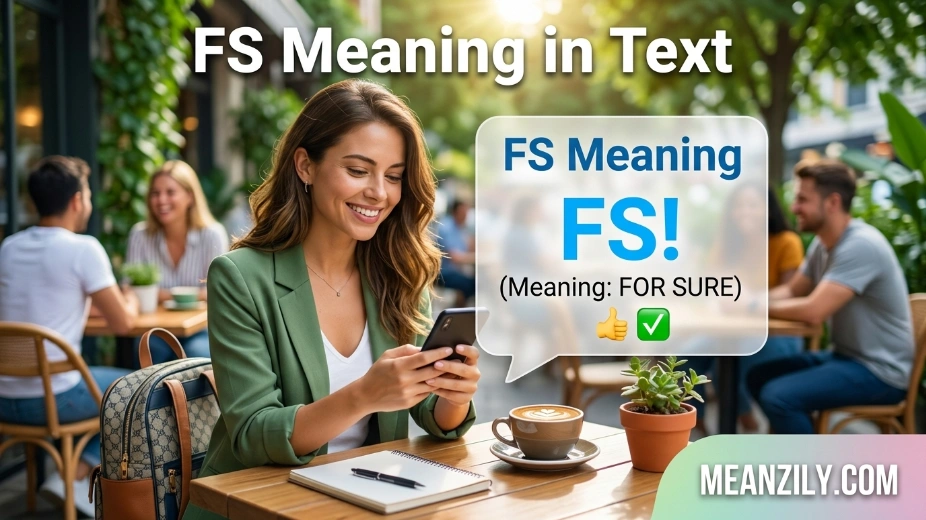
FS most commonly stands for “For Sure.”
It is a popular internet abbreviation used in casual conversations. Instead of typing the full phrase, people shorten it to FS to save time while texting.
When someone says FS, they are usually expressing certainty, agreement, support, or confidence about something.
For example:
- “Are you coming tonight?”
- “FS!”
In this case, FS simply means “Yes, definitely.”
The abbreviation is considered internet slang and is commonly used by younger users, especially on social media platforms.
What Does FS Mean in Everyday Chat?
In everyday texting, FS can mean:
- Definitely
- Absolutely
- Of course
- Without a doubt
- Yes, for sure
People often use it when they strongly agree with something or want to confirm plans.
Examples:
- “That movie was amazing.”
- “FS.”
Or:
- “Want to grab lunch tomorrow?”
- “FS, sounds good.”
The meaning is usually positive and friendly.
Where People Use FS
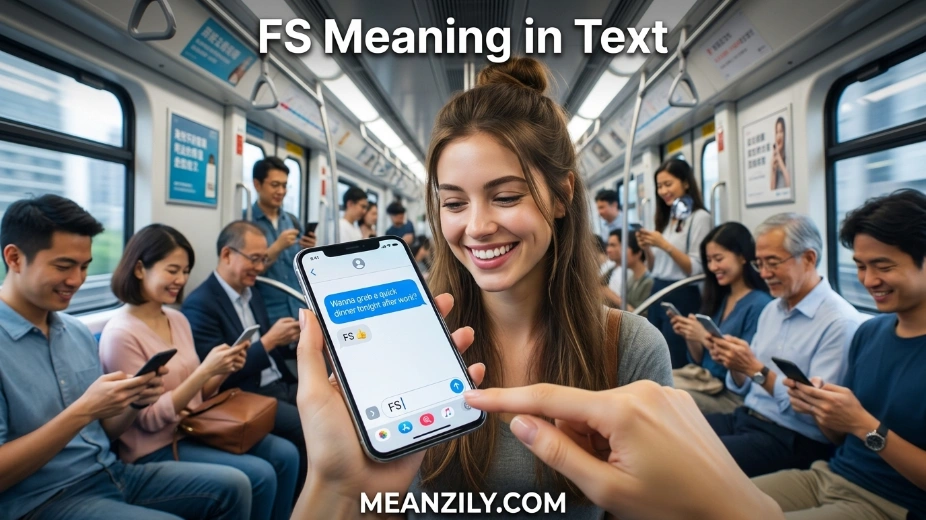
FS appears across many social media platforms and messaging apps. While the meaning remains mostly the same, the context can vary slightly.
FS on TikTok
On TikTok, FS is commonly used in comments and replies.
Users may write:
- “FS this is the best video today.”
- “I’d watch this again FS.”
Here, it means they strongly agree with something.
FS on Snapchat
Snapchat conversations are usually fast and informal, making abbreviations very common.
Examples:
- “You coming later?”
- “FS.”
The term helps users reply quickly without typing a complete sentence.
FS on Instagram
Instagram users often use FS in comments, direct messages, and story replies.
Examples:
- “This outfit is fire FS.”
- “FS, I need this.”
It adds emphasis and shows genuine agreement.
FS on WhatsApp
WhatsApp users frequently use FS in group chats and private conversations.
Examples:
- “Should we order pizza?”
- “FS.”
The abbreviation keeps conversations short and efficient.
FS in SMS Text Messages
Traditional text messaging still includes internet slang.
Examples:
- “Can you help me tomorrow?”
- “FS.”
The meaning remains exactly the same: “For Sure.”
How to Reply When Someone Says “FS”

The best response depends on the conversation and your relationship with the other person.
Funny Replies
- “Glad we’re on the same page.”
- “That’s the energy I wanted.”
- “No hesitation at all.”
- “You answered fast.”
Casual Replies
- “Awesome.”
- “Sounds good.”
- “Perfect.”
- “Cool, let’s do it.”
Friendly Replies
- “Thanks for confirming.”
- “Can’t wait.”
- “See you then.”
- “That’ll be fun.”
Neutral Replies
- “Okay.”
- “Noted.”
- “Understood.”
- “Good to know.”
Real Chat Examples
Below are realistic texting conversations showing how FS is commonly used.
Example 1
A: Are you free this weekend?
B: FS.
A: Great, let’s meet up.
Example 2
A: That concert was amazing.
B: FS, best one this year.
A: I agree.
Example 3
A: Want pizza tonight?
B: FS.
A: I’ll place the order.
Example 4
A: Should we leave early?
B: FS, traffic will be bad.
A: Good idea.
Example 5
A: Did you finish the assignment?
B: FS.
A: Nice work.
Example 6
A: This new game is fun.
B: FS, I’ve been playing all day.
A: Same here.
Example 7
A: Let’s watch that movie.
B: FS.
A: I’ll get the snacks.
Example 8
A: Are you joining the group call?
B: FS.
A: See you there.
Example 9
A: We should travel together someday.
B: FS, that would be awesome.
A: Let’s start planning.
Example 10
A: Think they’ll win tonight?
B: FS.
A: Hope you’re right.
Is FS Rude or Offensive?
In most situations, FS is not rude or offensive.
It is generally considered a harmless abbreviation that simply means “For Sure.”
However, like many slang terms, the tone depends on context.
For example:
- Friendly conversation: perfectly acceptable.
- Professional email: not recommended.
- School assignment: better to use complete words.
- Business communication: use “Certainly” or “Of course” instead.
FS is safe to use among friends, family members, and casual online communities.
If you’re communicating with teachers, clients, managers, or professional contacts, it’s usually better to avoid internet slang and use formal language.
Who Uses This Term?
FS is widely used across different age groups, but it is especially popular among younger internet users.
Gen Z Usage
Gen Z frequently uses abbreviations like FS because they prefer fast, informal communication.
You’ll often find FS in:
- Text messages
- TikTok comments
- Snapchat chats
- Instagram DMs
- Gaming communities
Millennials
Many millennials also understand and use FS, particularly those active on social media.
Younger Internet Users
Teenagers and young adults are the most frequent users.
The abbreviation appears regularly in conversations where speed and convenience matter.
How Common Is It Online?
FS is fairly common online.
While it may not be as universally recognized as abbreviations like LOL or BRB, it still appears frequently across modern messaging platforms.
Its popularity continues because it is short, easy to type, and instantly understood by many internet users.
Origin of the Term
The exact origin of FS is difficult to trace.
Like many internet abbreviations, it likely developed naturally as people looked for faster ways to communicate online.
The phrase “for sure” has existed in spoken English for decades. As texting and instant messaging became popular, users began shortening common phrases into abbreviations.
Eventually, “For Sure” became “FS.”
Internet Culture Influence
Internet culture encourages quick communication.
Users regularly shorten phrases such as:
- BRB (Be Right Back)
- IDK (I Don’t Know)
- IMO (In My Opinion)
- FS (For Sure)
These abbreviations spread through chat rooms, online forums, social media platforms, and texting apps.
Is the Origin Certain?
No.
There is no single documented creator of FS.
Most language experts believe it emerged organically through online communication and became more popular as social media usage increased.
Comparison Table
| Term | Meaning | Type | Usage | Popularity |
|---|---|---|---|---|
| FS | For Sure | Abbreviation | Agreement and confirmation | High |
| IDK | I Don’t Know | Acronym | Expressing uncertainty | Very High |
| IDC | I Don’t Care | Acronym | Showing lack of concern | High |
| IMO | In My Opinion | Acronym | Sharing opinions | High |
| BRB | Be Right Back | Acronym | Temporary departure from chat | Very High |
Real-World Usage Example
Imagine a group of friends planning a weekend trip.
One friend sends a message:
“Everyone still interested in going Saturday?”
A second friend replies:
“FS.”
That short response instantly tells the group that the person is definitely joining the trip.
Instead of typing a full sentence like “Yes, I am definitely coming,” the abbreviation communicates the same message quickly and clearly.
This is exactly why FS remains popular in modern digital communication.
Why Do People Use FS Instead of Typing “For Sure”?
Texting is all about speed. People often shorten common phrases so they can reply faster without losing the meaning of their message.
FS is a perfect example. It takes only two letters to communicate certainty, agreement, or enthusiasm. Instead of typing “for sure,” users can send a quick response and keep the conversation moving.
This habit has become especially common among younger internet users who communicate through messaging apps throughout the day.
Another reason people use FS is that it feels casual and relaxed. It matches the informal style of most online conversations and helps messages feel more natural.
Different Meanings of FS You Might Encounter Online
Although FS most often means “For Sure,” internet abbreviations can sometimes have multiple meanings depending on the context.
For example, in online marketplaces, FS may stand for “For Sale.” In gaming communities, users occasionally use FS with different meanings specific to that community.
This is why context matters. If someone replies “FS” to a question, they almost always mean “For Sure.” However, if you see FS next to a product listing, it likely means something completely different.
Looking at the surrounding conversation is usually enough to understand the intended meaning.
Signs That FS Means “For Sure” in a Conversation
Sometimes people worry about misunderstanding internet slang. Fortunately, identifying the meaning of FS is usually straightforward.
If the conversation involves plans, opinions, recommendations, or questions, FS almost always means “For Sure.”
For example:
- “Do you want to come?”
- “FS.”
Or:
- “This restaurant is amazing.”
- “FS.”
In both cases, the abbreviation expresses agreement or confidence.
The more you encounter it in conversations, the easier it becomes to recognize instantly.
How FS Changes the Tone of a Message
Words and abbreviations can influence how a message feels.
Using FS often makes a reply sound more enthusiastic than a simple “yes.”
Compare these examples:
- “Yes.”
- “FS.”
The second response feels more energetic and confident.
Because of this, many people use FS when they want to show strong support for an idea or demonstrate excitement about plans.
The abbreviation adds personality without requiring a long response.
Common Mistakes People Make When Using FS
One common mistake is using FS in situations where formal language is expected.
For example, writing FS in a job application email may seem unprofessional because not everyone understands internet slang.
Another mistake is assuming that every person knows what the abbreviation means.
Older users or people who rarely use social media might not recognize it immediately.
When communicating with someone you don’t know well, spelling out “for sure” can sometimes be the safer choice.
Using the right level of formality helps avoid misunderstandings.
How FS Compares to Simply Saying “Yes”
Both responses indicate agreement, but they can create slightly different impressions.
“Yes” is neutral and direct.
“FS” often sounds more enthusiastic and conversational.
For example:
- “Can you help me tomorrow?”
- “Yes.”
Compared to:
- “Can you help me tomorrow?”
- “FS.”
The second response feels warmer and more confident.
This subtle difference explains why many people prefer using FS during casual chats.
Can FS Be Used in Group Chats?
Absolutely. Group chats are one of the most common places where FS appears.
When multiple people are discussing plans, making decisions, or sharing opinions, FS provides a quick way to show support.
For example, if someone suggests going to a movie, several group members might respond with FS to indicate that they agree.
This keeps conversations organized and prevents people from typing lengthy responses.
As group chats become more active, abbreviations like FS help participants communicate efficiently.
Why Internet Slang Continues to Grow
Terms like FS exist because online communication evolves constantly.
Every generation develops new ways to express ideas quickly. As technology changes, language changes too.
Social media platforms encourage shorter messages, faster responses, and more casual interactions. This environment naturally creates abbreviations and slang terms.
Some expressions disappear after a few years, while others become part of everyday internet language.
FS has remained popular because it is simple, useful, and easy to understand.
Should Parents Know the Meaning of FS?
Many parents want to understand the language their children use online.
Learning common abbreviations like FS can make it easier to follow conversations and understand social media culture.
Fortunately, FS is not considered secretive, dangerous, or inappropriate slang. In most situations, it simply means “For Sure.”
Understanding modern internet expressions helps bridge communication gaps between different generations and makes online interactions less confusing.
Will FS Still Be Popular in the Future?
Predicting internet slang is difficult because trends change rapidly.
However, abbreviations that are short, useful, and easy to remember often survive longer than more complicated slang terms.
FS meets all of these requirements.
Because it clearly communicates agreement in only two letters, many users continue to rely on it in daily conversations.
While new slang will certainly appear, FS is likely to remain familiar to social media users for years to come.
Why Context Matters When Reading FS
Internet abbreviations rarely exist in isolation. The surrounding words often determine how a term should be understood.
When someone sends “FS” after a suggestion, they are usually showing agreement. If it appears in a completely different setting, the meaning may change.
This is why experienced internet users pay attention to the entire conversation rather than focusing on a single abbreviation. Understanding context helps prevent confusion and makes online communication much easier.
As you become familiar with digital slang, recognizing these clues becomes second nature.
How Quickly Can New Users Learn Internet Abbreviations?
Many people worry that internet slang is difficult to understand, but most abbreviations are actually quite simple once you encounter them a few times.
FS is a good example because its meaning is easy to remember. After seeing it in a handful of conversations, most users instantly recognize it.
The same learning process happens with many popular abbreviations. Repeated exposure helps people understand slang naturally without needing to memorize long lists of terms.
Over time, these expressions become part of everyday online vocabulary.
Situations Where Writing the Full Phrase Is Better
Although abbreviations save time, there are moments when spelling out “for sure” is the better choice.
For instance, full phrases often create a more personal tone. A complete response may feel more thoughtful and engaging than a short abbreviation.
Writing the full phrase can also improve clarity when talking to someone who may not be familiar with internet slang.
Choosing between FS and “for sure” depends on the audience, setting, and purpose of the conversation.
What FS Reveals About Modern Communication Habits
The popularity of FS reflects how digital communication has evolved over the years.
People now exchange hundreds of messages across multiple platforms every week. Because of this, efficiency has become increasingly important.
Short expressions help users respond quickly while still conveying emotion and intent.
FS demonstrates how language adapts to technology. Instead of replacing communication, abbreviations simply make it faster and more convenient.
This trend continues to shape the way people interact online.
How Friends Commonly Use FS During Everyday Conversations
Among friends, FS often appears when discussing plans, entertainment, hobbies, or shared interests.
Someone might use it while agreeing to meet up, supporting an opinion, or expressing excitement about an upcoming event.
Because friends usually communicate informally, abbreviations fit naturally into their conversations.
The term helps maintain a relaxed atmosphere and allows messages to feel spontaneous rather than overly formal.
This casual usage explains why FS remains especially common in personal chats.
Why Some People Prefer Abbreviations Over Full Sentences
Not everyone enjoys typing long messages.
Many users prefer abbreviations because they reduce effort while still communicating the intended meaning clearly.
Short responses are particularly useful when messaging on mobile devices, where speed often matters more than detailed wording.
Abbreviations also help keep conversations flowing smoothly. Instead of interrupting a discussion with lengthy explanations, users can respond instantly.
FS is one of many examples of this communication style.
How Social Media Encourages Shorter Language
Modern social media platforms reward quick interactions.
People scroll rapidly through content, leave brief comments, and respond to messages within seconds. This environment naturally encourages shorter forms of communication.
As a result, abbreviations become practical tools for expressing thoughts efficiently.
Terms like FS thrive because they fit perfectly within fast-moving online conversations. They deliver a clear message without requiring extra words.
This pattern can be seen across nearly every major social platform today.
Understanding the Difference Between Slang and Abbreviations
Many people use the words slang and abbreviation interchangeably, but they are not exactly the same thing.
An abbreviation is a shortened version of a word or phrase. FS falls into this category because it represents “For Sure.”
Slang, on the other hand, refers to informal language commonly used by specific groups or communities.
FS functions as both an abbreviation and a slang expression because it is shortened language used primarily in casual communication.
Knowing this distinction can help readers better understand how internet language works.
Why FS Is Easy to Remember
Some internet abbreviations disappear quickly because they are difficult to understand or remember.
FS has remained popular partly because it connects directly to a familiar phrase. The letters match the first letters of “For Sure,” making the meaning relatively obvious once explained.
Simple abbreviations tend to spread more easily because users do not need much effort to learn them.
This simplicity has helped FS remain recognizable across different social media platforms and messaging apps.
How Digital Language Continues to Influence Everyday Speech
Interestingly, internet abbreviations sometimes move beyond screens and into real-world conversations.
People occasionally reference online slang while talking with friends, discussing social media, or joking about texting habits.
While most individuals still say “for sure” aloud rather than “FS,” the widespread use of abbreviations has influenced how people think about communication.
Digital language continues to shape modern culture, creating new expressions and changing how ideas are shared between generations.
Frequently Asked Questions
What does FS mean in text messages?
FS usually means “For Sure.” It is used to express agreement, certainty, or confirmation.
What does FS mean on TikTok?
On TikTok, FS generally means “For Sure.” Users often use it in comments to show strong agreement with a video or opinion.
Is FS slang?
Yes. FS is considered internet slang and a texting abbreviation commonly used in casual online conversations.
Is FS rude or offensive?
No. FS is generally not rude or offensive. It is usually friendly and harmless when used appropriately.
How should you reply to FS?
You can reply with phrases such as:
- “Awesome.”
- “Sounds good.”
- “Great.”
- “Perfect.”
- “See you then.”
The best reply depends on the conversation.
Conclusion
FS most commonly means “For Sure” in text messages and online conversations. People use it to express agreement, confidence, and confirmation in a quick and casual way. You’ll frequently see it on TikTok, Snapchat, Instagram, WhatsApp, and SMS messages.
The term is generally friendly and safe to use among friends and social media users. However, because it is internet slang, it may not be suitable for professional emails, workplace communication, or formal academic settings.
Understanding abbreviations like FS makes it easier to follow modern online conversations and communicate naturally with others.
Discover More Post
What Does Degenerate Mean Online? Slang Uses Replies …
What Does Xenophobia Mean in Text? Slang Guide Meaning …
What Does SCP Mean in Text? Real Meaning Examples …

Cove is the founder and lead SEO strategist behind Meanzily, with over 5 years of hands-on experience in search engine optimization and content marketing. He specializes in creating high-quality, user-focused content that aligns with Google’s latest SEO and E-E-A-T guidelines. Cove has helped multiple websites grow organically through data-driven strategies, keyword research, and on-page optimization. His mission is to deliver valuable, easy-to-understand content that ranks well and truly helps readers.