If you’ve seen “MK” in a text message and wondered what it means, the simple answer is that MK usually means “mm-kay” or “okay.” It’s a casual shorthand people use in texting, social media, and online chats to show agreement, understanding, or acknowledgment.
You’ll often find this abbreviation on TikTok, Snapchat, Instagram, WhatsApp, and regular text messages. Many people search for its meaning because internet slang changes quickly, and short forms like MK can be confusing if you’re not familiar with them.
In most situations, MK is friendly, casual, and easy to understand once you know the context. However, depending on how it’s used, it can sometimes sound indifferent or slightly annoyed.
This guide explains exactly what MK means, where it’s used, how to respond to it, and why it has become so popular online.
MK Meaning in Text
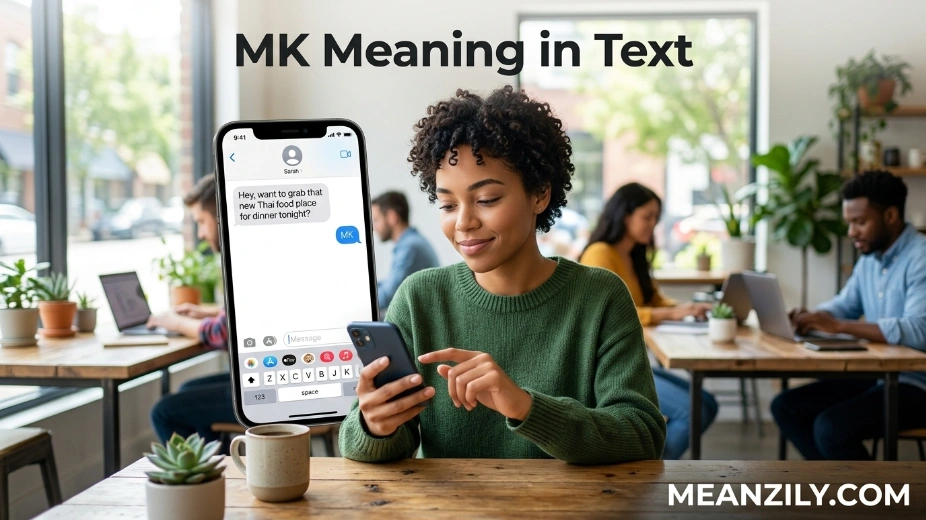
MK is a texting abbreviation that generally means “okay” or “alright.”
The term comes from the spoken phrase “mm-kay,” which is simply another way of saying “okay” in casual conversation. Instead of typing the full word, people shorten it to MK for convenience.
Is MK Slang, an Acronym, or an Abbreviation?
MK is best described as an abbreviation and a form of internet slang.
Unlike abbreviations such as LOL or BRB that stand for multiple words, MK doesn’t represent separate words. It’s simply a shortened version of the sound people make when saying “okay.”
What Does MK Mean in Everyday Conversations?
In daily texting, MK usually shows:
- Agreement
- Understanding
- Acknowledgment
- Acceptance of information
- Casual confirmation
For example:
Friend: I’ll pick you up at 7.
You: MK.
In this conversation, MK simply means “Okay, got it.”
Sometimes the tone depends on context. A quick “MK” without emojis or additional words may sound brief, while “MK 😊” feels friendlier.
Where People Use MK
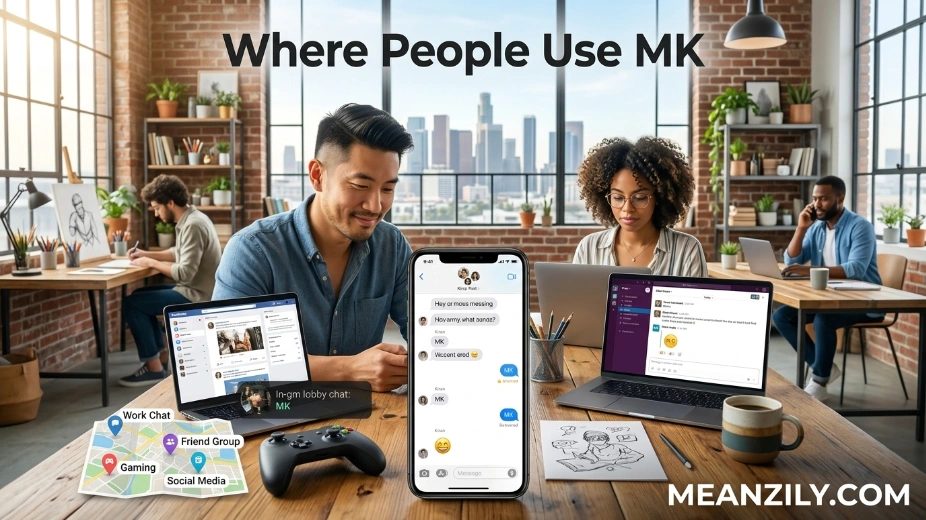
MK appears on many social media platforms and messaging apps. Although the meaning stays mostly the same, the way people use it can vary slightly.
TikTok
On TikTok, users often write MK in comments and replies.
Examples include:
- MK, that’s funny.
- MK, I see what you mean.
- MK, now I’m curious.
It usually shows agreement or acknowledgment.
Snapchat
Snapchat conversations are fast and informal, making MK a popular response.
People use it when:
- Confirming plans
- Responding to snaps
- Acknowledging messages
Example:
Friend: Sending streaks later.
You: MK.
Instagram users often use MK in:
- Direct messages
- Story replies
- Comment sections
The abbreviation keeps conversations short and casual.
WhatsApp users frequently send MK when they understand a message but don’t need to add much else.
Example:
Mom: Don’t forget groceries.
You: MK.
SMS Text Messages
Traditional texting remains one of the most common places for MK.
Since texting encourages quick replies, people often choose MK instead of typing a full sentence.
Real Chat Examples

Below are realistic examples showing how people use MK in everyday conversations.
Example 1
A: Want to meet after class?
B: Sure, around 4?
A: MK, see you then.
Example 2
A: I’ll send the notes tonight.
B: Thanks.
A: MK.
Example 3
A: The movie starts at 8.
B: MK, I’ll be ready.
A: Great.
Example 4
A: Don’t forget your charger.
B: MK.
A: You’ll need it.
Example 5
A: I ordered pizza.
B: MK, what toppings?
A: Pepperoni.
Example 6
A: I’ll call you later.
B: MK.
A: Talk soon.
Example 7
A: The teacher moved the deadline.
B: Really?
A: MK, check the email.
Example 8
A: Let’s play tonight.
B: MK, what time?
A: Around 9.
Example 9
A: Did you finish the project?
B: Almost.
A: MK, let me know when it’s done.
Example 10
A: I’m heading home.
B: MK, drive safely.
A: Thanks.
How to Reply When Someone Says “MK”
The best response depends on the conversation and your relationship with the person.
Funny Replies
- MK, mystery solved.
- MK, detective.
- MK, boss.
- MK, captain.
- MK, noted with dramatic effect.
Casual Replies
- Cool.
- Sounds good.
- Alright.
- Got it.
- No problem.
Friendly Replies
- Thanks!
- Awesome.
- Great 😊
- Appreciate it.
- Sounds good to me.
Neutral Replies
- Understood.
- Okay.
- Noted.
- Thanks for letting me know.
- Got it.
Is MK Rude or Offensive?
In most situations, MK is not rude or offensive.
It’s generally considered a harmless and casual way to say “okay.”
However, tone matters.
For example:
Friend: Sorry I can’t make it.
You: MK.
This could seem slightly cold because it’s very short.
Adding a few extra words can make it sound friendlier:
- MK, no worries.
- MK, thanks for telling me.
- MK, that’s okay.
Is It Safe to Use?
Yes, MK is safe to use in casual conversations.
Most people understand its meaning and won’t find it offensive.
Is It Appropriate at School?
Students commonly use MK when chatting with friends and classmates.
In casual school conversations, it’s perfectly acceptable.
Is It Appropriate at Work?
In professional settings, using the full word “okay” is often better.
Work emails and formal communication generally benefit from clearer language.
Who Uses This Term?
MK is used by a wide range of internet users.
Teenagers and Young Adults
The term is especially popular among teenagers and young adults who communicate frequently through messaging apps.
Gen Z Usage
Gen Z uses MK regularly because short text responses are common in modern online communication.
Quick acknowledgments help conversations move faster.
Social Media Users
Anyone active on:
- TikTok
- Snapchat
- Discord
- Messenger
may encounter MK frequently.
How Common Is It Online?
MK isn’t as widespread as abbreviations like LOL or IDK, but it’s still common enough that many internet users recognize it instantly.
Its popularity comes from its simplicity and ease of use.
Origin of the Term
The exact origin of MK isn’t completely clear.
Most experts believe it developed from the spoken phrase “mm-kay,” which is an informal pronunciation of “okay.”
People began typing the sound the same way they spoke it, eventually shortening it to MK.
Internet Culture Influence
Internet culture encourages speed and convenience.
As messaging apps became more popular, users started shortening common phrases into smaller forms.
MK fits perfectly into this trend because it requires only two letters while still communicating the intended meaning.
Is the Origin Certain?
Not entirely.
While the connection to “mm-kay” is widely accepted, there isn’t one documented moment when MK first appeared online.
Like many internet slang terms, it likely evolved gradually through online communities and texting culture.
Comparison Table
| Term | Meaning | Type | Usage | Popularity |
|---|---|---|---|---|
| MK | Okay, alright | Abbreviation | Agreement or acknowledgment | Moderate |
| IDK | I Don’t Know | Acronym | Expressing uncertainty | Very High |
| IDC | I Don’t Care | Acronym | Showing lack of concern | High |
| IMO | In My Opinion | Acronym | Sharing opinions | High |
| BRB | Be Right Back | Acronym | Leaving temporarily | High |
This comparison shows that MK is generally used for confirmation, while the other abbreviations serve different communication purposes.
Real-World Usage Example
Imagine you’re making plans with friends for the weekend.
One friend sends a message:
“We’re meeting at the mall at 3 PM.”
You quickly reply:
“MK, see you there.”
In this situation, MK simply means that you’ve read the message, understand the plan, and agree with it.
The conversation stays short and efficient without losing meaning.
Why Do People Type MK Instead of Okay?
Modern texting is all about speed. People often choose shorter words and abbreviations because they take less time to type. MK is a perfect example of this habit.
Instead of typing “okay,” users can send just two letters and still get the same message across. This is especially useful during fast-paced conversations where quick responses matter.
Many people also use MK because it feels more casual and relaxed than writing the full word. In informal chats, shorter replies often sound more natural than complete sentences.
The popularity of abbreviations like MK shows how digital communication continues to evolve. As texting habits change, people constantly create new shortcuts to make conversations faster and easier.
Different Meanings MK Can Have Depending on Context
Although MK usually means “okay,” context can slightly change how it is interpreted.
For example, a cheerful conversation may make MK sound friendly and positive. In a serious discussion, the same response might simply indicate acknowledgment.
Sometimes MK can signal that someone has read a message but doesn’t have much to add. Other times it can mean they agree with what was said.
Because tone doesn’t always come through clearly in text messages, it’s important to look at the surrounding conversation before assuming what MK means.
Common Mistakes People Make When Interpreting MK
One of the biggest mistakes is assuming MK is always rude. In reality, most people use it as a neutral response.
Another misunderstanding happens when users think MK is a secret code or special acronym. Most of the time, it’s simply another way of saying “okay.”
Some people also confuse MK with usernames, initials, or brand names. While those meanings can exist in other situations, texting conversations usually use MK as a casual acknowledgment.
Understanding the context of the conversation helps avoid these misunderstandings.
MK vs Okay: Is There a Difference?
The meanings of MK and okay are nearly identical, but the tone can feel slightly different.
“Okay” often appears more complete and polished. It works well in both casual and professional communication.
MK, on the other hand, feels more informal. It is commonly used among friends, family members, and social media users.
Choosing between the two usually depends on the setting. Casual conversations tend to favor MK, while professional communication often favors the full word.
Can MK Be Used in Group Chats?
Yes, MK is very common in group conversations.
When multiple people are discussing plans, sharing updates, or making decisions, a simple MK can quickly show agreement without creating unnecessary messages.
For example, if someone says, “Let’s meet at 6 PM,” several group members might reply with MK to confirm they understand.
This helps keep group chats organized and prevents long chains of repetitive responses.
How MK Fits Into Modern Internet Language
Internet communication has created an entirely new vocabulary over the years. Abbreviations, emojis, GIFs, and slang expressions have become a normal part of online conversations.
MK fits naturally into this digital language because it is short, recognizable, and easy to understand.
Many internet users prefer quick responses over lengthy messages. As a result, abbreviations like MK continue to remain popular across different platforms.
Its simplicity allows it to work in nearly any casual online conversation.
Similar Texting Terms People Often Use Alongside MK
People who use MK frequently also use other short expressions during conversations.
Some common examples include:
- Yep
- Yup
- K
- KK
- Alr
- Bet
- Gotcha
All of these terms serve similar purposes by helping users acknowledge messages quickly.
The choice often depends on personal texting habits and the platform being used.
How Social Media Has Influenced Abbreviations Like MK
Social media platforms encourage fast interaction. Users scroll quickly, comment rapidly, and send short messages throughout the day.
This environment naturally rewards brief forms of communication.
Terms like MK became more common because they save time and fit perfectly within the fast-moving nature of online conversations.
As platforms continue to evolve, new abbreviations appear regularly while older ones adapt to changing communication styles.
Should Parents Know What MK Means?
Parents who monitor their children’s online activity may encounter unfamiliar abbreviations from time to time.
Fortunately, MK is one of the simpler terms to understand. It generally means “okay” and is not considered harmful, offensive, or inappropriate.
Learning common internet slang can help parents better understand digital conversations without overreacting to harmless abbreviations.
In most cases, MK is simply part of everyday texting language used by people of all ages.
Why MK Is Popular Among Fast Texters
Many people send dozens or even hundreds of messages every day. Because of this, they naturally look for ways to type faster.
MK has become popular because it delivers a complete response with only two letters. It allows users to acknowledge a message instantly without stopping their flow of conversation.
Fast texters often rely on shortcuts like MK when chatting during work breaks, commuting, studying, or multitasking. The shorter the response, the easier it is to keep the conversation moving.
This convenience is one of the main reasons MK has remained part of online communication for years.
Does MK Have the Same Meaning Across Different Countries?
One interesting thing about internet slang is that it often crosses borders. People from different countries can use the same abbreviation even if they speak different native languages.
MK is generally understood as a casual version of “okay” in many English-speaking online communities. Because social media connects users worldwide, the abbreviation has spread far beyond its original audience.
However, not everyone may recognize it immediately. Older internet users or people who rarely use social media may be less familiar with the term.
Even so, its meaning usually becomes clear once it appears in conversation.
Situations Where Using MK Makes Sense
MK works best in informal situations where a long response is unnecessary.
For example, if someone sends a simple reminder, gives directions, or confirms a plan, MK can be an efficient reply. It lets the sender know their message has been received and understood.
The abbreviation is especially useful when the conversation doesn’t require detailed feedback.
Using MK in these moments keeps communication simple and natural.
Situations Where You Should Avoid Using MK
Although MK is useful in casual chats, there are times when it may not be the best choice.
Important conversations often benefit from more complete responses. If someone shares significant news, asks a serious question, or discusses a sensitive topic, a two-letter reply may feel too brief.
Professional settings can also require clearer communication. In those cases, using full words and complete sentences usually creates a better impression.
Choosing the right response for the situation helps prevent misunderstandings.
How MK Reflects Changing Communication Habits
The way people communicate today is very different from how they communicated twenty years ago.
Texting, social media, and messaging apps have encouraged shorter and faster exchanges. As a result, abbreviations have become a normal part of daily communication.
MK reflects this shift toward efficiency. Rather than typing a complete response every time, users often choose compact expressions that communicate the same idea.
The continued popularity of MK shows how language adapts to new technology and communication styles.
What New Internet Users Should Know About MK
People who are new to social media often feel overwhelmed by the number of abbreviations they encounter online.
The good news is that MK is one of the easier terms to learn. Unlike some slang expressions that have multiple interpretations, MK is usually straightforward and simple.
When you see it in a conversation, you can generally assume the person means “okay” unless the surrounding context suggests otherwise.
Learning common abbreviations like MK can make online conversations much easier to understand.
Why Context Matters More Than the Letters Themselves
Many internet abbreviations can have slightly different meanings depending on the conversation.
MK is no exception. The same two letters can sound enthusiastic, neutral, supportive, or indifferent depending on what was said before and after.
For example, punctuation, emojis, and message timing can influence how the response is perceived.
This is why experienced texters pay attention to the entire conversation rather than focusing on a single abbreviation in isolation.
How MK Compares to One-Word Responses
Text messages often contain short replies such as:
- Sure
- Fine
- Okay
- Yep
- Cool
MK belongs to this category of quick acknowledgment responses.
What makes it different is that it feels even more informal than many of these alternatives. While “sure” or “okay” may seem slightly more complete, MK emphasizes speed and simplicity.
The choice usually comes down to personal texting preferences.
The Role of Abbreviations in Digital Conversations
Abbreviations help reduce typing effort while keeping conversations efficient.
In busy online environments, users often prioritize convenience. This is why short forms remain common even when smartphones offer autocorrect and predictive text.
MK serves as a practical example of how abbreviations simplify communication without changing the overall meaning of a message.
Its continued use demonstrates that people value quick and effortless interaction.
Will MK Remain Popular in the Future?
Predicting internet slang is difficult because online language changes constantly.
Some abbreviations disappear after a few years, while others become permanent parts of digital culture.
MK has several advantages that may help it remain relevant. It is easy to type, easy to understand, and useful in everyday conversations.
As long as people continue to value fast communication, abbreviations like MK will likely continue appearing in text messages and social media interactions.
Frequently Asked Questions
What does MK mean in text messages?
MK usually means “okay” or “alright.” It’s a casual way to acknowledge a message.
What does MK mean on TikTok?
On TikTok, MK generally means “okay” and is often used in comments, replies, and direct messages.
Is MK slang?
Yes. MK is considered internet slang and a texting abbreviation commonly used in casual conversations.
Is MK rude or offensive?
No. MK is usually not rude. However, because it’s short, it can sometimes seem slightly dismissive depending on the context.
How should you reply to MK?
You can reply naturally with responses like “Sounds good,” “Okay,” “Great,” or continue the conversation normally.
Conclusion
MK is a simple texting abbreviation that usually means “okay” or “alright.” People use it on TikTok, Snapchat, Instagram, WhatsApp, and regular text messages to show agreement, understanding, or acknowledgment. In most situations, it’s friendly, casual, and completely safe to use.
While it may occasionally sound brief or indifferent, context usually makes the intended meaning clear. If you’re chatting with friends online, MK is a quick and convenient way to respond, though using full words may be better in professional or formal situations.
Discover More Post
Cuh Meaning Truth Behind This Street Slang 2026
Dictator Meaning A Clear Complete and Modern Explanation …
Warrant Meaning Explained Types Legal Powers and How …

Jinx is a seasoned SEO expert and digital content strategist with over 9 years of hands-on experience in search engine optimization, content marketing, and online brand growth. As the driving force behind Meanzily, Jinx specializes in creating high-performing, user-focused content that ranks, converts, and delivers real value. With deep expertise in modern SEO trends, keyword research, and search intent optimization, Jinx helps websites grow organically and sustainably. Passionate about data-driven strategies and helpful content, Jinx is committed to delivering accurate, engaging, and SEO-friendly insights for today’s digital audience.