If you’ve seen “SMD” in a text message, TikTok comment, Snapchat chat, or Instagram post and had no idea what it meant, you’re definitely not alone. Internet slang moves fast, and new abbreviations seem to pop up everywhere overnight.
In most cases, SMD stands for “Suck My D*,”** a slang expression that can be used to show frustration, sarcasm, anger, or disrespect. Depending on the situation, it might be meant as a joke between friends or a direct insult during an argument.
Because the meaning isn’t always obvious, many people search for it after spotting it in conversations online. The tone, context, and platform can all affect how the term is interpreted.
In this guide, you’ll learn exactly what SMD means in text, where people use it, whether it’s considered offensive, and the best ways to respond when someone sends it to you.
SMD Meaning in Text
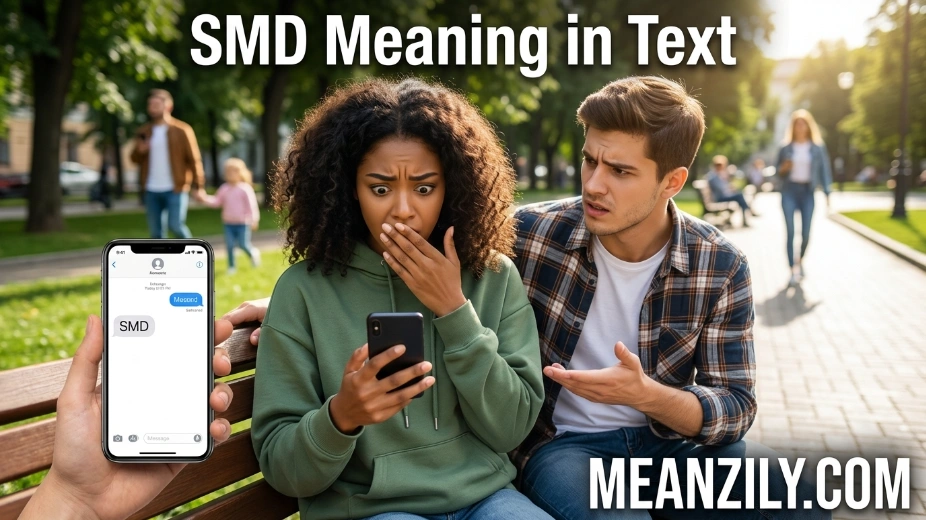
SMD is an internet slang abbreviation that usually stands for:
“Suck My D*”**
It is considered a rude and aggressive expression. People often use it when they are annoyed, angry, joking with close friends, or trying to insult someone.
Unlike many texting abbreviations that save time while typing, SMD is mainly used to express strong emotions rather than convenience.
Is SMD an Acronym or Slang?
SMD is both an acronym and an internet slang term.
- Acronym because each letter represents a word.
- Slang because it is informal language commonly used online.
Most people use it casually on social media, but it is generally not considered polite language.
What Does It Mean in Everyday Chat?
In everyday texting, SMD often means:
- “Leave me alone.”
- “I’m annoyed.”
- “I don’t care what you’re saying.”
- “Stop bothering me.”
The exact meaning depends on the conversation and relationship between the people involved.
Where People Use SMD
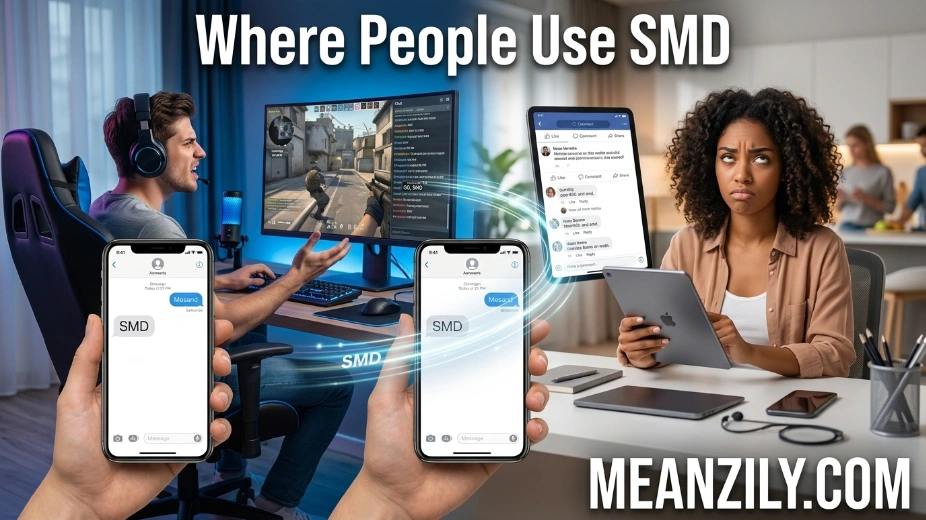
The abbreviation appears across many online platforms.
TikTok
On TikTok, SMD often appears in comment sections during arguments or playful banter between users.
Some creators also use it humorously in captions or videos to exaggerate frustration.
Snapchat
Snapchat users may send SMD in private chats when joking with friends or reacting to something annoying.
Because messages disappear, slang tends to be used more casually there.
Instagram comments and direct messages frequently contain internet abbreviations like SMD.
It may appear during debates, jokes, or sarcastic conversations.
On WhatsApp, people sometimes use SMD in group chats with close friends.
The meaning is usually understood through the context of the conversation.
SMS
Although less common than on social media, SMD can still appear in standard text messages.
Because it can sound offensive, users should be careful when using it in SMS conversations.
Real Chat Examples
Below are realistic examples showing how SMD might appear in conversations.
Example 1
A: You still owe me lunch.
B: Bro, SMD 😂
A: I’m reminding you tomorrow.
Example 2
A: You lost the game again.
B: SMD.
A: Somebody’s mad.
Example 3
A: Clean your room.
B: SMD.
A: Nice try.
Example 4
A: I beat your score.
B: SMD 😂
A: Sounds jealous.
Example 5
A: Why are you late again?
B: SMD.
A: That’s not an excuse.
Example 6
A: You’re always online.
B: SMD lol.
A: Caught you.
Example 7
A: I told everyone your secret.
B: SMD.
A: Relax, I’m joking.
Example 8
A: Your team lost.
B: SMD 😂
A: Facts are facts.
Example 9
A: You’re buying pizza tonight.
B: SMD.
A: I’ll take that as a yes.
Example 10
A: Stop sending memes.
B: SMD.
A: More memes coming.
How to Reply When Someone Says “SMD”
Your response should depend on the tone of the conversation.
Funny Replies
- “That’s the best comeback you’ve got?”
- “I’ll pretend I didn’t read that.”
- “Someone woke up angry today.”
- “Very creative.”
Casual Replies
- “Relax, it’s not that serious.”
- “Okay then.”
- “Fair enough.”
- “Got it.”
Friendly Replies
- “Haha, calm down.”
- “You’re funny.”
- “I’ll let that slide.”
- “No hard feelings.”
Neutral Replies
- “Let’s keep it respectful.”
- “I understand your point.”
- “Let’s move on.”
- “Okay.”
Is SMD Rude or Offensive?
Yes, SMD is generally considered a rude expression.
Because the phrase behind the abbreviation contains explicit language, many people view it as offensive.
Is It Safe to Use?
It depends on the audience.
Close friends may use it jokingly, but strangers or coworkers may find it disrespectful.
Is It Appropriate at School?
Usually not.
Teachers, classmates, and educational environments typically expect respectful communication.
Is It Appropriate at Work?
No.
Professional settings require polite language, and SMD could be considered inappropriate or offensive.
Using it in workplace communication could create misunderstandings or appear unprofessional.
Who Uses This Term?
SMD is most common among younger internet users.
Age Groups
The term is frequently used by:
- Teenagers
- Young adults
- Social media users
- Online gaming communities
Older adults may be less familiar with the abbreviation.
Gen Z Usage
Gen Z users often use abbreviations and slang as part of everyday online communication.
SMD appears alongside many other popular internet expressions.
Common Platforms
You’ll most often find it on:
- TikTok
- Snapchat
- X (Twitter)
- Discord
How Often Does It Appear Online?
While it isn’t as common as abbreviations like LOL or BRB, it still appears regularly in comments, chats, memes, and online arguments.
Origin of the Term
The exact origin of SMD is difficult to identify.
Like many internet abbreviations, it likely developed as users looked for faster ways to type common phrases online.
Internet Culture Influence
Text messaging, chat rooms, gaming communities, and social media all helped spread the term.
As internet culture evolved, abbreviations became a quick way to express emotions and reactions.
Is the Origin Clear?
Not entirely.
There is no single confirmed source that created SMD.
Instead, it appears to have emerged naturally through online communication and spread across multiple platforms.
Comparison Table
| Term | Meaning | Type | Usage | Popularity |
|---|---|---|---|---|
| SMD | Suck My D*** | Slang Acronym | Anger, sarcasm, insults | Medium |
| IDK | I Don’t Know | Acronym | Express uncertainty | Very High |
| IDC | I Don’t Care | Acronym | Show indifference | High |
| IMO | In My Opinion | Acronym | Share opinions | High |
| BRB | Be Right Back | Acronym | Temporary absence | High |
Real-World Usage Example
Imagine two friends are playing an online game together.
One friend loses several matches in a row while the other keeps teasing him about it. After another joke, the frustrated friend replies with “SMD 😂”.
In this situation, the expression is not necessarily meant as a serious insult. Instead, it acts as a playful response showing annoyance while keeping the conversation lighthearted.
The meaning changes depending on the relationship between the people involved and the overall tone of the chat.
Why Do People Use SMD Instead of Writing the Full Phrase?
Many internet users prefer abbreviations because they are quicker to type and easier to recognize. Instead of writing an entire phrase, people often use a few letters to express the same emotion or reaction.
SMD is one of those shortcuts that became popular through texting and social media. The abbreviation allows users to communicate frustration, sarcasm, or annoyance with just three letters.
Another reason people use abbreviations is that they blend into online culture. Many users learn internet slang from friends, videos, comments, and memes, then start using it naturally in their own conversations.
However, shortening a phrase does not change its meaning. Even though SMD is written as an abbreviation, many people still view it as offensive because they understand what the letters represent.
Different Meanings SMD Can Have Depending on Context
Although SMD most commonly refers to an offensive slang phrase, context can completely change how an abbreviation is interpreted.
In some online communities, users may use SMD jokingly without any serious intention. Among close friends, it can simply be playful banter rather than an actual insult.
In professional or technical discussions, SMD may sometimes refer to unrelated terms and acronyms. Because abbreviations often have multiple meanings, it is important to look at the surrounding conversation before assuming what someone means.
This is why context matters so much in digital communication. The same three letters can create very different impressions depending on who is using them and where they are being used.
Signs That Someone Is Using SMD as a Joke
Not every use of SMD is meant to offend someone. In some conversations, people use it as part of friendly teasing.
One clue is the presence of laughing emojis. If someone writes SMD followed by laughing faces, they may be joking rather than trying to start an argument.
Another sign is the relationship between the people chatting. Close friends often use stronger language with each other than they would with strangers.
The overall tone of the conversation also matters. If both people are exchanging jokes and playful comments, SMD may simply be part of that casual interaction.
Why Internet Slang Changes So Quickly
Internet language evolves faster than traditional language. New slang terms appear almost every day across social media platforms.
When a phrase becomes popular in a viral video, meme, or online trend, millions of users may start using it within a short period of time.
Some slang terms disappear after a few months, while others remain popular for years. Their survival usually depends on how often people continue using them in everyday conversations.
SMD has remained recognizable because internet abbreviations tend to spread easily across multiple platforms and generations of users.
Common Misunderstandings About SMD
People who are new to internet slang often misunderstand abbreviations when they first encounter them.
Some assume SMD is a harmless expression because it contains only three letters. Others may think it has a completely different meaning based on the conversation they are reading.
Another common misunderstanding is believing that abbreviations automatically make offensive phrases acceptable. In reality, many people still react to the intended meaning rather than the shortened form.
Learning the context and background of slang terms can help prevent confusion and avoid awkward situations online.
Should Parents Be Aware of the Term SMD?
Parents who monitor online activity may occasionally encounter abbreviations they do not recognize.
Understanding terms like SMD can help parents better understand the language young people use on social media and messaging apps.
This does not mean every use of the term is harmful, but knowing its meaning provides valuable context when reviewing messages or online interactions.
Open conversations about respectful communication are often more effective than focusing only on individual slang words.
How Social Media Helped Popularize SMD
Social media platforms have played a major role in spreading internet slang around the world.
A phrase that starts in one online community can quickly reach millions of people through shares, reposts, videos, and comments.
As users interact across different platforms, they carry familiar slang expressions with them. This creates a cycle where terms become widely recognized even among people who do not use them regularly.
SMD is one example of how online communication can transform a simple abbreviation into a commonly understood internet expression.
When Ignoring SMD Is the Best Response
Sometimes the smartest response is no response at all.
If someone uses SMD to provoke an argument, replying may only continue the conflict. Ignoring the message often removes the attention that the person is seeking.
Many online disagreements become larger because both sides continue responding emotionally.
When the comment is clearly intended to insult or upset someone, staying calm and moving on is often the most effective approach.
How Internet Slang Affects Modern Communication
Internet slang has changed the way people communicate online. Messages have become shorter, faster, and more informal than they were in the early days of the internet.
Abbreviations allow users to express emotions, opinions, and reactions with minimal effort.
While this makes communication more efficient, it can also create misunderstandings when people are unfamiliar with certain terms.
Learning common slang expressions helps users navigate online conversations more confidently and understand the intent behind messages.
Similar Slang Terms People Often See Alongside SMD
People who encounter SMD often come across other internet abbreviations in the same conversations.
Examples include LOL, LMAO, IDC, IDK, FR, TBH, and SMH. Each serves a different purpose, whether expressing laughter, honesty, frustration, or uncertainty.
These abbreviations have become part of everyday digital communication, especially among younger users.
Understanding multiple slang terms at once makes it easier to follow social media discussions, group chats, and online communities without feeling lost.
Why Some People Dislike the Term SMD
Not everyone is comfortable with internet slang, especially when it contains offensive language. Many users dislike SMD because it can come across as disrespectful or unnecessarily aggressive.
In online discussions, the phrase may quickly change the mood of a conversation. What starts as a friendly exchange can become tense when someone uses language that others perceive as insulting.
People also have different standards for communication. While one person may view SMD as a joke, another may see it as rude behavior. This difference in perception is one reason the term often sparks mixed reactions.
Understanding how others might interpret your words is an important part of communicating effectively online.
How First-Time Internet Users React to SMD
Many people encounter internet slang for the first time while browsing social media or reading text messages.
When they see SMD, they often feel confused because the abbreviation is not immediately obvious. Unlike common terms such as LOL or OMG, the meaning behind SMD is not always easy to guess.
This confusion leads many users to search online for an explanation. Once they learn its meaning, they usually gain a better understanding of the conversation they were reading.
Internet slang can sometimes feel like a separate language, especially for people who are new to digital communication.
Situations Where Using SMD Can Cause Problems
Using strong slang expressions can sometimes create unintended consequences.
For example, sending SMD to someone who does not understand your sense of humor may damage a friendship or create unnecessary conflict. The recipient could interpret the message more seriously than you intended.
Miscommunication becomes even more likely when texting because people cannot hear tone of voice or see facial expressions.
Before using slang that may be considered offensive, it is worth thinking about how the other person might react.
How Online Gaming Communities Use SMD
Gaming communities have developed their own unique vocabulary over the years, and abbreviations play a major role in that culture.
Players often use short expressions during matches because they need to communicate quickly. In competitive environments, emotions can run high, which sometimes leads to stronger language.
SMD occasionally appears during friendly trash talk between players or after frustrating moments in a game.
However, many gaming communities now encourage respectful communication and may discourage language that could create a toxic atmosphere.
Can SMD Have Different Meanings in Different Communities?
One interesting aspect of internet language is that meanings can vary between communities.
A term that has one meaning on social media may be interpreted differently in a specific hobby group, workplace, or online forum.
This is why context should always come first when decoding abbreviations. Looking at the topic of discussion and the people involved often provides important clues.
Assuming a meaning without considering context can sometimes lead to misunderstandings.
Why Abbreviations Became Popular in Text Messaging
The popularity of abbreviations is closely connected to the history of mobile communication.
Early mobile phones often had limited keyboards, making long messages slower to type. Users began shortening words and phrases to save time and effort.
Over time, these shortcuts became habits. Even though modern smartphones make typing easier, abbreviations remain popular because people are already familiar with them.
SMD is one example of how texting culture influenced the language people use online today.
How Context Changes the Impact of SMD
The same word or phrase can feel very different depending on the situation.
For example, if two close friends exchange SMD during a playful argument, neither person may take offense. The phrase becomes part of a joke rather than a serious insult.
On the other hand, if the same term is directed at a stranger during a heated disagreement, it may appear much more hostile.
This demonstrates why understanding context is essential when interpreting online messages.
What SMD Reveals About Modern Internet Culture
Internet slang often reflects broader trends in digital communication.
People increasingly favor speed, convenience, and emotional expression when interacting online. Short abbreviations fit perfectly into this environment because they communicate a message quickly.
Terms like SMD show how internet users adapt language to match the fast pace of online conversations.
They also highlight how digital communities create their own forms of expression that may not exist in traditional language.
How Teachers and Educators View Internet Slang
Educators generally recognize that internet slang is a normal part of modern communication.
However, many teachers encourage students to understand the difference between informal and formal language.
A slang term that works in a group chat may not be appropriate in an academic assignment or classroom discussion.
Learning when to switch between casual and professional communication is an important skill in both education and future careers.
Does SMD Mean the Same Thing Worldwide?
The internet connects people from different countries, cultures, and language backgrounds.
As a result, not everyone interprets abbreviations in exactly the same way. Some users may immediately recognize SMD, while others may have never seen it before.
Cultural differences can also influence how offensive or acceptable a term appears.
Even though SMD is widely understood in many English-speaking online communities, familiarity with the term varies around the world.
The Role of Anonymity in Slang Usage
People often communicate differently online than they do in face-to-face conversations.
When users feel anonymous, they may be more willing to use strong language, jokes, or slang expressions that they would avoid in person.
This environment can contribute to the popularity of abbreviations like SMD.
At the same time, anonymity can sometimes encourage negative behavior, which is why many platforms promote respectful interactions among users.
How Language Experts View Internet Slang
Linguists and language researchers often study internet slang because it provides insight into how language evolves.
Online communities constantly create new words, abbreviations, and expressions. Some disappear quickly, while others become part of everyday communication.
Experts generally view this process as a natural evolution of language rather than a problem.
SMD and similar abbreviations demonstrate how technology influences the way people communicate with one another.
What You Should Remember Before Using SMD
Before using any slang term, it helps to consider three factors: audience, setting, and purpose.
Ask yourself who will read the message, whether the environment is casual or formal, and what reaction you hope to achieve.
A phrase that feels harmless among friends may not be appropriate in a workplace conversation or public discussion.
Being aware of these factors can help you communicate more effectively and avoid misunderstandings.
Why People Search for the Meaning of SMD
Many internet users encounter unfamiliar abbreviations while scrolling through social media, reading comments, or chatting with friends. When they see SMD for the first time, they often have no idea what it means.
Curiosity is one of the biggest reasons people search for slang definitions. Nobody likes feeling left out of a conversation, especially when everyone else seems to understand a term.
Search engines have become the go-to resource for decoding internet language. Within seconds, users can learn the meaning of an abbreviation and understand the context in which it was used.
As online communication continues to evolve, searches for slang terms like SMD remain common among both younger and older internet users.
How SMD Appears in Online Arguments
Internet arguments often move quickly, and emotions can escalate within a few messages.
In heated exchanges, people sometimes rely on short expressions instead of writing long responses. SMD may appear when someone wants to dismiss another person’s opinion without continuing the discussion.
This usage often signals frustration or irritation rather than a desire for productive conversation.
Because the phrase can sound hostile, it may increase tension and make disagreements more difficult to resolve.
Why Tone Is Hard to Detect in Text Messages
One challenge of digital communication is the lack of vocal tone and body language.
When speaking face to face, people can rely on facial expressions, gestures, and voice inflections to understand meaning. Text messages remove these important clues.
As a result, a message containing SMD may be interpreted differently by different readers. One person may see it as a joke, while another may view it as an insult.
This uncertainty is one reason misunderstandings occur so frequently online.
How Friend Groups Create Their Own Slang Rules
Every friend group develops its own communication style over time.
Certain words, jokes, and abbreviations may become common among a specific group while remaining unfamiliar to outsiders.
In some circles, SMD might be used casually without causing offense. Members understand the context and know that no harm is intended.
However, someone outside that group may react very differently. This highlights how social dynamics influence the meaning of internet slang.
What Makes Certain Slang Terms Go Viral
Not every abbreviation becomes widely recognized.
For a slang term to spread, it usually needs repeated exposure through social media, entertainment, online communities, or influencers.
When thousands of people begin using the same expression, others naturally pick it up and incorporate it into their own conversations.
The rapid sharing of content online allows slang terms to gain popularity much faster than traditional language trends.
How SMD Compares to Traditional Insults
Traditional insults are often written as complete words or phrases, while internet slang relies heavily on abbreviations.
This difference makes terms like SMD appear shorter and less obvious at first glance.
Despite the abbreviated format, the emotional impact can still be similar because many users understand the intended meaning.
The main distinction lies in presentation rather than purpose.
Why Some Users Avoid Slang Altogether
Not everyone enjoys using internet abbreviations.
Some people prefer clear communication and feel that slang creates unnecessary confusion. Others simply find it easier to write complete words.
Professional users, business owners, and educators often avoid slang because they want their messages to be understood by the widest possible audience.
Choosing not to use slang does not make communication less effective. In many situations, clarity is more important than following internet trends.
How SMD Reflects Digital Communication Habits
Modern communication often prioritizes speed over detail.
People send messages while commuting, working, studying, or multitasking. Short expressions fit naturally into this fast-paced environment.
Abbreviations allow users to communicate reactions almost instantly. Instead of writing a full sentence, they can express an emotion with just a few characters.
SMD is one example of how communication habits have adapted to the digital age.
The Difference Between Understanding and Using Slang
Knowing the meaning of a slang term does not necessarily mean you need to use it yourself.
Many people learn internet abbreviations simply so they can understand online conversations more easily.
Recognizing a term can help you follow discussions, interpret comments, and avoid confusion without adopting the language in your own messages.
Understanding and using slang are two separate things, and every user decides what feels appropriate for them.
How New Internet Users Learn Slang Naturally
Most people do not study internet slang formally. Instead, they learn it through repeated exposure.
Seeing the same abbreviation multiple times across different platforms helps users gradually understand its meaning.
Friends, family members, online creators, and social media communities all contribute to this learning process.
Over time, unfamiliar terms become recognizable simply because they appear so frequently in everyday online interactions.
Why Slang Means Different Things to Different Generations
Generational differences often influence how people interpret internet language.
Younger users may immediately recognize abbreviations that older users have never encountered before.
At the same time, older generations may be familiar with expressions that younger users rarely hear.
This constant shift creates a language gap that encourages people to search for meanings and stay informed about changing communication trends.
The Importance of Digital Etiquette When Using Slang
Digital etiquette refers to the unwritten rules that guide respectful online behavior.
Even when using informal language, it is important to consider how your words may affect others.
A message that seems funny to one person may appear disrespectful to another. Understanding this possibility can help prevent unnecessary conflict.
Being mindful of digital etiquette encourages healthier conversations and creates a more positive online environment.
Can Slang Like SMD Lose Popularity Over Time?
Internet trends are constantly changing, and slang terms often follow the same pattern.
Some expressions remain popular for years, while others fade as new phrases replace them.
A term may become less common if younger users stop adopting it or if new social media trends introduce alternative expressions.
Language is always evolving, which means the popularity of any slang term can change over time.
Why Understanding Online Language Matters
The internet has become a major part of everyday life, influencing how people communicate, learn, and connect with others.
Understanding online language helps users navigate digital spaces more confidently.
Whether reading comments, participating in discussions, or chatting with friends, knowing the meaning of common abbreviations reduces confusion and improves communication.
Learning internet slang is not about using every term yourself. It is about understanding the language that shapes modern online interactions.
How SMD Is Perceived by Different Audiences
The reaction to SMD often depends on who is reading it. A teenager who spends hours on social media each day may immediately recognize the abbreviation and understand its intended tone.
Someone who rarely uses internet slang, however, may find the term confusing or shocking after learning its meaning.
Audience awareness plays a major role in communication. What feels normal in one group can feel inappropriate in another.
This is why experienced internet users often adjust their language depending on who they are talking to and where the conversation is taking place.
Why Slang Creates a Sense of Belonging Online
Language has always helped people identify with certain groups, and internet slang works the same way.
When users understand and use popular abbreviations, they often feel more connected to online communities. Shared language creates a sense of familiarity among people who may never meet in person.
This social aspect helps explain why slang spreads so quickly. People naturally adopt the language they see being used by friends, creators, and communities they follow.
As a result, abbreviations such as SMD can become part of a group’s everyday communication style.
How Memes Influence the Popularity of Terms Like SMD
Memes have become one of the strongest drivers of internet culture.
A single viral meme can introduce millions of users to a word, phrase, or abbreviation within a matter of days. Once people repeatedly encounter a term in humorous content, it becomes easier to remember and recognize.
Many slang expressions gain popularity not through direct conversation but through repeated exposure in entertaining posts.
This connection between humor and language helps explain why certain abbreviations remain visible across multiple platforms.
What Happens When Someone Misuses SMD
Using a slang term incorrectly can create confusion or awkward situations.
For example, someone may attempt to use SMD without fully understanding its meaning. Other users may then react negatively or assume the person intended something different.
Misusing slang is common because internet language evolves quickly and meanings are not always obvious.
Taking a moment to understand a term before using it can prevent misunderstandings and make communication more effective.
How Online Trends Shape Everyday Vocabulary
The internet influences language far beyond social media platforms.
Words and abbreviations that begin online often find their way into everyday conversations. People sometimes use internet slang while speaking with friends, discussing memes, or referencing online experiences.
This crossover demonstrates how digital culture affects the way language develops.
Even individuals who are not active social media users may eventually encounter popular online expressions through friends or family members.
Why Context Is More Important Than the Words Themselves
When interpreting internet slang, context often matters more than the actual letters being used.
A message can appear friendly, sarcastic, humorous, or aggressive depending on the surrounding conversation.
The same abbreviation may carry different emotional weight in different situations. Readers who focus only on the term itself may miss the broader meaning behind the message.
Considering the entire conversation usually provides a clearer understanding of the speaker’s intent.
How SMD Fits Into the Evolution of Texting Language
Texting language has changed dramatically over the years.
Early internet users relied heavily on abbreviations because character limits and slower typing methods encouraged shorter messages. Over time, these shortcuts became part of online culture.
Even though modern technology allows people to type quickly, abbreviations remain popular because they are familiar and efficient.
SMD represents one small piece of this larger evolution in digital communication.
The Difference Between Private and Public Usage
People often communicate differently in private messages than they do in public spaces.
A term that someone might casually use in a private chat with a close friend may never appear in a public comment section under their real name.
Public conversations tend to involve a broader audience, which often encourages more careful language choices.
This distinction influences how frequently certain slang terms appear in different online environments.
How Online Communities Develop Shared Expressions
Every online community develops its own culture over time.
Members often create inside jokes, nicknames, and expressions that become meaningful within that specific group. New users gradually learn these terms as they participate in discussions.
This process helps strengthen community identity and creates a unique communication style.
Abbreviations like SMD may become more or less common depending on the norms of a particular online community.
Why Understanding Slang Can Improve Digital Literacy
Digital literacy involves more than knowing how to use technology. It also includes understanding the language people use online.
Recognizing common abbreviations can help users interpret conversations accurately and avoid misunderstandings.
This knowledge is especially useful when navigating social media platforms, discussion forums, and messaging apps.
The better someone understands online language, the more confidently they can participate in digital spaces.
How Social Norms Affect the Acceptance of SMD
Social norms play a significant role in determining which words people consider acceptable.
A phrase that may be tolerated within one group could be discouraged within another. These expectations influence how frequently certain slang terms are used and how they are received.
Online communities often establish their own standards regarding respectful communication.
As these standards evolve, attitudes toward specific abbreviations can change as well.
Why New Slang Continues to Replace Older Terms
Language is constantly moving forward.
As new generations of internet users join online platforms, they introduce fresh expressions and communication styles. Older slang sometimes fades as newer alternatives become popular.
This cycle has existed for decades and shows no sign of slowing down.
The continuous arrival of new slang keeps online communication dynamic and reflects changing cultural trends.
How Curiosity Drives Interest in Internet Abbreviations
Human beings are naturally curious, especially when they encounter something unfamiliar.
A mysterious abbreviation in a text message or social media comment often encourages people to investigate its meaning.
This curiosity contributes to the popularity of slang-related searches online. Users want to understand conversations, trends, and cultural references that appear around them.
Learning the meaning of terms like SMD satisfies that curiosity and helps people feel more informed when engaging online.
What Learning SMD Teaches About Internet Culture
Understanding SMD is about more than learning a single abbreviation.
It provides insight into how internet users communicate, how online communities form, and how digital language evolves over time.
Every slang term tells a small story about the culture that created and popularized it.
By learning these expressions, users gain a better understanding of the broader social dynamics that shape communication in the digital world.
Frequently Asked Questions
What does SMD mean in text messages?
SMD usually means “Suck My D***.” It is a slang abbreviation often used to express annoyance, anger, or sarcasm.
What does SMD mean on TikTok?
On TikTok, SMD generally has the same meaning. It commonly appears in comments, captions, and arguments between users.
Is SMD slang?
Yes. SMD is considered internet slang and is mostly used in informal online conversations.
Is SMD rude or offensive?
Yes. Many people consider it offensive because it represents an explicit phrase. Its impact depends on context and audience.
How should you reply to SMD?
You can respond with humor, stay neutral, ignore it, or politely redirect the conversation depending on the situation.
Conclusion
SMD is a slang abbreviation that most commonly stands for “Suck My D***.” It is often used in texting, social media comments, gaming chats, and messaging apps to express frustration, sarcasm, or disrespect.
While some friends may use it jokingly, many people consider it rude and inappropriate in professional, educational, or formal settings.
Understanding the meaning and context behind SMD can help you interpret conversations correctly and choose the most appropriate response when you encounter it online.
Discover More Post
What Does wyd meaning Mean in Text? Real Meaning …
What Does FTL Mean in Text? Slang Guide with Examples …
What Does WSG Mean in Text? Real Meaning Examples …

Cove is the founder and lead SEO strategist behind Meanzily, with over 5 years of hands-on experience in search engine optimization and content marketing. He specializes in creating high-quality, user-focused content that aligns with Google’s latest SEO and E-E-A-T guidelines. Cove has helped multiple websites grow organically through data-driven strategies, keyword research, and on-page optimization. His mission is to deliver valuable, easy-to-understand content that ranks well and truly helps readers.