Ever come across “SMH” in a text, TikTok comment, Snapchat message, or Instagram post and wondered what everyone was talking about? You’re not alone. SMH is one of those internet slang terms that people use all the time, yet many users still aren’t sure what it actually means.
In simple terms, SMH stands for “Shaking My Head.” It’s a quick way to express disappointment, disbelief, frustration, or reaction to something that seems silly, surprising, or just plain ridiculous.
You’ll find this popular abbreviation everywhere online—from group chats and text messages to viral social media posts and comment sections. Because it’s used so frequently, understanding SMH can make online conversations much easier to follow.
In this guide, you’ll learn the real meaning of SMH, how people use it on social media, when it’s appropriate to use, and plenty of real-world examples so you’ll never be confused by this common slang term again.
SMH Meaning in Text
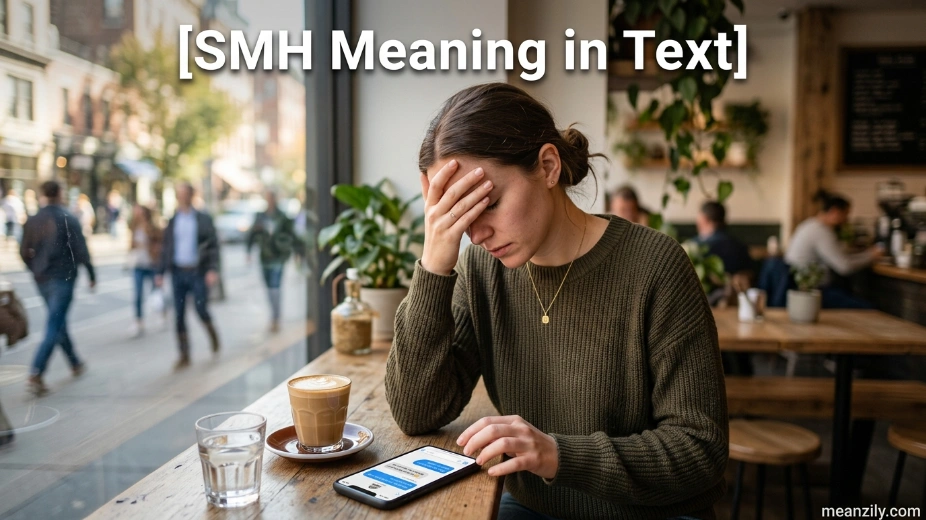
SMH stands for “Shaking My Head.”
It is an internet acronym that represents the physical action of shaking your head when you disagree with something, feel disappointed, or think a situation is ridiculous.
Instead of typing a long response, people use SMH as a quick way to express their feelings.
What Does SMH Mean in Everyday Conversations?
In everyday texting, SMH is usually used when someone:
- Can’t believe what happened
- Thinks something is foolish
- Feels disappointed
- Is mildly annoyed
- Finds a situation frustrating
For example:
“He forgot his wallet again. SMH.”
This means the speaker is disappointed or frustrated because the person made the same mistake again.
Is SMH Slang or an Abbreviation?
SMH is both an internet slang term and an acronym.
Each letter represents a word:
- S = Shaking
- M = My
- H = Head
Although it started as online shorthand, it has become a common part of digital communication.
Where People Use SMH
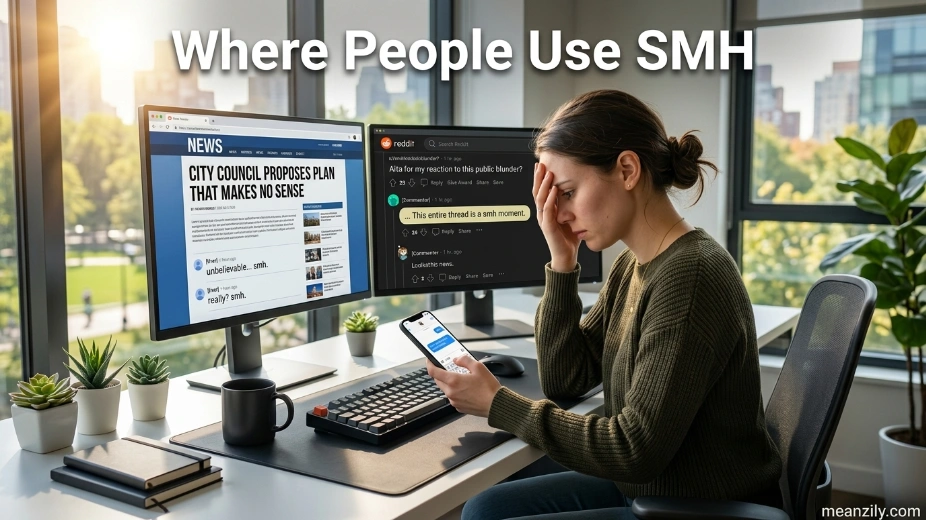
SMH is used across many social media platforms and messaging apps.
TikTok
On TikTok, users often write SMH in comments when reacting to videos showing bad decisions, funny mistakes, or unbelievable situations.
Example:
“Why would he do that? SMH.”
Snapchat
Snapchat users frequently use SMH in private chats when talking about friends, school, relationships, or everyday events.
Example:
“She missed the bus again SMH.”
Instagram comments often include SMH when users react to posts, stories, or viral content.
Example:
“People still believe that? SMH.”
In WhatsApp conversations, SMH is used as a quick reaction to frustrating news or surprising situations.
Example:
“My phone died during the meeting.”
“SMH, that’s terrible.”
SMS Text Messages
Traditional text messaging remains one of the most common places to see SMH.
It helps people express disappointment without typing a long explanation.
Example:
“I forgot my homework at home.”
“SMH.”
Real Chat Examples
Example 1
A: I left my keys inside the car.
B: Again?
A: Yeah, SMH.
Example 2
A: He showed up two hours late.
B: Seriously?
A: SMH.
Example 3
A: I forgot my password again.
B: You need to write it down.
A: SMH, I know.
Example 4
A: The internet stopped working during my exam.
B: That’s awful.
A: SMH.
Example 5
A: My team lost in the final minute.
B: Ouch.
A: SMH.
Example 6
A: I accidentally deleted the file.
B: Were you able to recover it?
A: Nope. SMH.
Example 7
A: He spent all his money on snacks.
B: What?
A: SMH.
Example 8
A: I studied the wrong chapter.
B: That’s rough.
A: SMH.
Example 9
A: She forgot my birthday.
B: Really?
A: SMH.
Example 10
A: I missed the train by ten seconds.
B: That’s frustrating.
A: SMH.
How to Reply When Someone Says “SMH”
The best reply depends on the conversation and your relationship with the person.
Funny Replies
- “Maybe today’s just not your day.”
- “The universe is testing you.”
- “Achievement unlocked: bad luck.”
- “At least it makes a good story.”
Casual Replies
- “That happens sometimes.”
- “I understand.”
- “That’s frustrating.”
- “I get why you’re upset.”
Friendly Replies
- “Hope things get better soon.”
- “Don’t worry, you’ll figure it out.”
- “That sounds annoying.”
- “I’m sorry that happened.”
Neutral Replies
- “I see.”
- “Understood.”
- “That’s unfortunate.”
- “Makes sense.”
Is SMH Rude or Offensive?
SMH is generally not considered rude or offensive.
Most people use it to express disappointment or disbelief rather than insult someone directly.
However, context matters.
If you use SMH while criticizing another person’s actions, they might feel judged or embarrassed.
Is It Safe to Use?
Yes. SMH is widely accepted in casual online communication.
Is It Appropriate at School?
Generally yes, especially in informal conversations between students and friends.
Is It Appropriate at Work?
In casual workplace chats, it may be acceptable. However, professional emails and formal business communication usually require more complete language.
Using full sentences often appears more professional.
Who Uses This Term?
SMH is used by people of many ages, but it is especially popular among younger internet users.
Gen Z Usage
Gen Z frequently uses SMH on:
- TikTok
- Snapchat
- Discord
- Group chats
The term fits well with fast-moving online conversations.
Millennials
Many millennials also use SMH because the acronym has been around for years and became popular during the rise of social media.
Common Platforms
You’ll commonly find SMH on:
- TikTok
- Snapchat
- X (formerly Twitter)
- Messenger
- SMS texting
How Often Does It Appear Online?
SMH remains one of the most recognized internet abbreviations.
Even though new slang terms appear regularly, SMH continues to be widely understood across different platforms and age groups.
Origin of the Term
The exact origin of SMH is difficult to pinpoint.
Most researchers believe it emerged during the early days of internet messaging, chat rooms, forums, and texting culture.
As online communication became faster, people started shortening common expressions into acronyms.
Instead of typing:
“I’m shaking my head because that’s disappointing.”
Users simply wrote:
“SMH.”
Internet Culture Influence
Internet culture helped spread the term quickly.
Social media platforms, memes, viral content, and online communities contributed to its popularity.
Today, many people recognize SMH even if they rarely use it themselves.
Is the Origin Certain?
No.
While the general development of SMH is linked to internet communication, there is no single documented creator or exact date when it first appeared.
Comparison Table
| Term | Meaning | Type | Usage | Popularity |
|---|---|---|---|---|
| SMH | Shaking My Head | Acronym | Disappointment or disbelief | Very High |
| IDK | I Don’t Know | Acronym | Expressing uncertainty | Very High |
| IDC | I Don’t Care | Acronym | Showing lack of interest | High |
| IMO | In My Opinion | Acronym | Sharing opinions | High |
| BRB | Be Right Back | Acronym | Temporary absence | High |
Real-World Usage Example
Imagine a student who spends several hours completing an important school project.
The next morning, they discover they forgot to save the final version before shutting down their computer.
They text a friend:
“I lost my entire project last night. SMH.”
In this situation, SMH expresses frustration and disappointment about the mistake without needing a long explanation.
Why Has SMH Become So Popular Online?
SMH has remained popular for many years because it allows people to express emotions quickly. Instead of typing a full sentence explaining disappointment or frustration, users can simply type three letters and instantly communicate how they feel.
The rise of social media has also contributed to its popularity. Platforms like TikTok, Instagram, and Snapchat encourage short, fast communication. Acronyms such as SMH fit perfectly into this style of conversation.
Another reason people continue using SMH is that it is easy to understand. Even users who are not familiar with internet slang can often figure out its meaning from the context of a conversation.
Because of its simplicity and versatility, SMH has become one of the most recognizable abbreviations on the internet.
Different Emotions That SMH Can Express
Many people assume SMH only means disappointment, but it can actually communicate several different emotions depending on the situation.
Sometimes it shows frustration when someone makes a mistake repeatedly. In other cases, it expresses disbelief when a person hears surprising news.
SMH can also reflect embarrassment, especially when someone is talking about their own actions. For example, if a person forgets an important appointment, they might send “SMH” to show they are annoyed with themselves.
The meaning often depends on the tone and context of the conversation.
SMH in Memes and Internet Humor
Internet users frequently include SMH in memes, jokes, and funny social media posts.
When people see an absurd situation or a humorous mistake, they often react with SMH because it captures a feeling of “I can’t believe this happened.”
Many viral videos generate comments filled with SMH reactions. These comments help viewers express amusement and disbelief at the same time.
The term has become part of internet humor because it can make a reaction seem more dramatic while still remaining lighthearted.
Can SMH Have a Positive Meaning?
Although SMH is usually associated with disappointment or frustration, it can occasionally be used in a playful or positive way.
For example, a friend might jokingly say:
“You’re buying another pair of shoes? SMH.”
In this situation, the person is not truly upset. They are teasing their friend in a friendly manner.
The tone of the conversation is important. Among close friends, SMH can sometimes be used humorously rather than critically.
However, its primary meaning still tends to be negative or mildly disapproving.
Common Mistakes People Make When Using SMH
One common mistake is using SMH in formal communication. While it works well in casual texting, it may appear unprofessional in business emails or academic writing.
Another mistake is assuming everyone understands internet slang. Older users or people unfamiliar with online abbreviations may not recognize what SMH means.
Some people also overuse the term. Repeating SMH in every conversation can make messages feel repetitive and less meaningful.
Using it naturally and only when it fits the situation usually creates the best impression.
When Not to Use SMH
There are situations where SMH may not be the best choice.
For example, if someone shares serious personal news, responding with SMH could seem insensitive or dismissive.
Formal workplace discussions are another setting where full sentences are often more appropriate than slang abbreviations.
It’s also wise to avoid using SMH when speaking with people who may misunderstand your tone. Since text lacks facial expressions and voice cues, some readers might interpret the abbreviation more negatively than intended.
Understanding your audience helps ensure your message is received correctly.
Similar Expressions to SMH
Internet users have created many abbreviations that serve a similar purpose to SMH.
Some people use “OMG” when they are shocked or surprised. Others use “WOW” to express disbelief.
Phrases like “Seriously?” or “I can’t believe it” are often used in the same situations where someone might type SMH.
Choosing between these expressions depends on the emotion you want to communicate. SMH tends to emphasize disappointment, while other reactions may focus more on surprise or amazement.
How SMH Changes the Tone of a Message
Adding SMH to a message can completely change how it feels to the reader.
Consider this sentence:
“He forgot the tickets.”
Now compare it with:
“He forgot the tickets. SMH.”
The second version clearly shows frustration or disappointment. The abbreviation adds emotional context that would otherwise be missing.
Because of this, SMH is often used to make text conversations feel more expressive and personal.
Why Understanding Internet Slang Matters
Internet slang evolves quickly, and new terms appear every year. Learning common abbreviations like SMH helps people communicate more effectively online.
Understanding popular slang can also prevent misunderstandings. Without knowing what SMH means, a person might misinterpret a conversation or miss the emotional tone behind a message.
Whether you’re using social media, texting friends, or participating in online communities, familiarity with common internet expressions makes communication smoother and more enjoyable.
Will People Still Use SMH in the Future?
Internet language changes constantly, and some slang terms disappear after only a few years. However, SMH has remained popular for a long time compared to many other abbreviations.
Its continued success comes from its simplicity and usefulness. The expression captures a common human reaction in just three letters.
While future generations may create new slang, SMH is already deeply established in online culture. For that reason, it is likely to remain recognizable and widely understood for years to come.
What Does SMH Usually Say About the Speaker?
The use of SMH often reveals how the speaker feels about a situation without requiring a detailed explanation. When someone types SMH, they are usually expressing a reaction rather than providing new information.
In many cases, the abbreviation shows that the person expected something better to happen. It can indicate disappointment, surprise, or frustration while keeping the message short and casual.
Because online conversations move quickly, people often rely on reactions like SMH to communicate emotions efficiently. The term acts almost like a facial expression in written form.
Why SMH Works So Well in Digital Communication
Text messages do not include tone of voice, facial expressions, or body language. As a result, people often use abbreviations and emojis to add emotional meaning to their messages.
SMH works well because it instantly communicates a reaction that many people recognize. Instead of writing several sentences to explain frustration, a user can type three letters and achieve the same effect.
This efficiency is one reason internet slang continues to thrive across social media platforms and messaging apps.
How SMH Differs From Face-to-Face Reactions
In real life, people often shake their heads when they disagree with something or find a situation disappointing. SMH is simply the digital version of that behavior.
When talking in person, body language helps others understand emotions. Online conversations lack these visual cues, so internet users created shortcuts like SMH to fill the gap.
This connection between physical actions and online language helps explain why the term feels natural in digital communication.
Situations Where SMH Is Commonly Used
There are many everyday situations where people may use SMH.
Someone might use it after hearing about a poor decision, a missed opportunity, or an avoidable mistake. Others may type it when reacting to unexpected news or frustrating experiences.
For example, if a friend repeatedly forgets important plans, another person may respond with SMH to show mild frustration.
The term often appears when people feel that a situation could have been handled differently.
How Younger and Older Generations View SMH
Different generations may have different levels of familiarity with internet slang.
Younger users often recognize SMH immediately because they regularly encounter abbreviations online. For many of them, the term feels completely normal in casual conversation.
Older users may understand the meaning but use it less frequently. Some prefer full sentences instead of internet shorthand.
Despite these differences, SMH has become common enough that people from various age groups can usually recognize it.
Can SMH Be Misunderstood?
Like many internet expressions, SMH can sometimes be interpreted differently depending on the reader.
One person may view it as a harmless reaction, while another may think it sounds critical or judgmental.
Because written communication lacks vocal tone, context becomes extremely important. A message between close friends may be received very differently than the same message sent to a coworker or acquaintance.
Being aware of your audience can help prevent confusion.
The Role of Context in Understanding SMH
Context plays a major role in determining the exact meaning of SMH.
The same abbreviation can express annoyance in one conversation and amusement in another.
For example, a person reacting to a friend’s harmless mistake may use SMH jokingly. Meanwhile, someone discussing a serious problem may use the same term to express genuine frustration.
Reading the surrounding messages usually provides clues about the intended meaning.
Why Some People Avoid Using SMH
Although SMH is widely accepted online, not everyone chooses to use it.
Some people prefer complete sentences because they feel clearer and more professional. Others avoid internet slang because they worry that certain readers may not understand it.
There are also users who simply prefer emojis or other expressions to communicate their reactions.
Communication styles vary from person to person, and SMH is just one of many available options.
How SMH Reflects Modern Internet Language
The popularity of SMH demonstrates how online language continues to evolve.
As digital communication becomes faster, people often create shorter ways to express common thoughts and emotions. Acronyms help users communicate efficiently while maintaining the emotional tone of a conversation.
SMH is a good example of how internet culture shapes language over time. What began as a simple abbreviation eventually became a standard part of online communication.
What New Internet Users Should Know About SMH
People who are new to social media or online communities may encounter SMH frequently.
The most important thing to remember is that the term usually expresses disappointment, disbelief, or frustration. It is generally informal and best suited for casual conversations.
New users do not need to use SMH themselves to understand online discussions. Simply recognizing its meaning can make reading comments, messages, and posts much easier.
As with any slang term, observing how others use it can provide valuable context and improve understanding.
How SMH Fits Into Everyday Online Conversations
Many internet abbreviations come and go, but SMH has remained useful because it reflects common human emotions.
People encounter frustrating situations almost every day, whether online or offline. The abbreviation gives them a quick way to react without interrupting the flow of conversation.
Because it is short, familiar, and easy to understand, SMH continues to appear in chats, comments, captions, and social media discussions around the world.
Its lasting popularity highlights the importance of simple, expressive communication in the digital age.
What Makes SMH Different From Emojis?
Both SMH and emojis help express emotions, but they do so in different ways.
An emoji relies on visual symbols, while SMH uses words condensed into an acronym. Some people prefer abbreviations because they feel more direct and specific.
For example, a disappointed face emoji can communicate sadness, frustration, or concern. SMH specifically suggests disbelief or disappointment about a particular situation.
Many users combine the two to make their messages even more expressive.
Why SMH Is Easy to Remember
One reason SMH remains popular is its simplicity.
The abbreviation consists of only three letters, making it easy to type and remember. Once people learn that it stands for “Shaking My Head,” they rarely forget its meaning.
Unlike some internet slang that changes frequently, SMH has a straightforward definition that has remained relatively consistent over time.
This stability helps keep the term relevant even as online language evolves.
How SMH Appears in Online Comment Sections
Comment sections are one of the most common places where people use SMH. Whether it’s a viral video, a controversial post, or a surprising news story, users often react with short comments rather than lengthy explanations.
SMH allows commenters to quickly share their opinion about something they find disappointing, confusing, or unbelievable. Since comment sections move fast, many people prefer brief reactions that others can understand immediately.
In some cases, a simple “SMH” can receive hundreds of likes because many readers share the same feeling.
Why Short Reactions Are Popular on the Internet
Modern online communication often rewards speed. Users scroll through content rapidly and rarely spend time writing long responses.
This environment has encouraged the growth of abbreviations like SMH. Short reactions help people participate in conversations without investing much time.
As a result, internet culture has developed a large collection of quick expressions that communicate emotions efficiently while keeping discussions moving.
The Psychological Appeal of Using SMH
People naturally want to express their reactions when they encounter surprising or frustrating information.
SMH provides an easy outlet for these emotions. Instead of keeping their thoughts to themselves, users can instantly share their response with others.
This sense of participation helps people feel connected to online communities. Even a simple abbreviation can create a feeling of shared understanding among users who view the same content.
How SMH Helps Convey Emotion Without Long Explanations
One challenge of digital communication is expressing emotion clearly.
When people speak face-to-face, their tone, facial expressions, and gestures provide additional meaning. Online messages lack these signals.
SMH helps fill that gap by adding emotional context to a statement. Readers can quickly recognize that the writer feels disappointed, annoyed, or surprised by the situation being discussed.
This extra layer of meaning makes conversations feel more natural.
Why Some Online Communities Use SMH More Than Others
Not every online platform uses internet slang in the same way.
Communities centered around entertainment, memes, gaming, and social media trends often use abbreviations frequently. These spaces encourage casual communication and fast reactions.
More professional communities may use SMH less often because members prefer formal language.
The culture of a platform often influences how commonly slang expressions appear.
The Difference Between Using SMH About Yourself and Others
SMH can be directed toward your own actions or someone else’s behavior.
When used about yourself, it often expresses self-awareness. For example, a person might write SMH after forgetting an important task.
When directed at others, the abbreviation may carry a stronger sense of criticism or disappointment.
Understanding this difference can help users communicate more effectively and avoid unintentionally sounding harsh.
How Online Trends Help Keep SMH Relevant
Many internet expressions disappear after a short period of popularity. However, SMH has remained relevant because it continues to fit modern communication habits.
Every day, people encounter situations that cause frustration, disbelief, or disappointment. Since SMH represents these common reactions, it remains useful regardless of changing trends.
Its practical nature has helped it survive while many other slang terms have faded from use.
What First-Time Readers Usually Think SMH Means
People who encounter SMH for the first time often try to guess its meaning based on context.
Some assume it refers to a person’s mood, while others think it may be a specific internet joke. Because the letters themselves do not provide obvious clues, new users can sometimes feel confused.
Fortunately, once people learn that SMH stands for “Shaking My Head,” the meaning usually becomes easy to recognize in future conversations.
How SMH Can Strengthen Social Connections Online
Although SMH is a small abbreviation, it can help create a sense of connection between users.
When multiple people react to the same event with SMH, they are expressing a shared viewpoint. This common reaction can make individuals feel part of a larger community.
Shared language has always played a role in bringing people together, and internet slang serves a similar function in digital spaces.
Why Understanding Acronyms Improves Digital Literacy
The internet contains thousands of abbreviations and slang expressions. Learning these terms improves digital literacy and makes online interactions easier to navigate.
Recognizing acronyms like SMH helps users understand conversations, comments, and social media posts more accurately.
As communication increasingly takes place online, familiarity with common internet language becomes a useful skill for people of all ages.
How SMH Reflects the Evolution of Written Language
Language constantly adapts to new forms of communication. Text messaging, social media, and online forums have influenced how people write and interact.
SMH represents one example of this evolution. The abbreviation transforms a physical gesture into a written expression that can be understood across different platforms.
Its popularity demonstrates how language changes to meet the needs of modern communication.
Can SMH Be Used Across Different Cultures?
Although SMH originated in English-speaking internet communities, its usage has spread far beyond those regions.
People around the world encounter English-language content on social media, making internet abbreviations more globally recognizable.
Even users whose first language is not English may understand or use SMH because of its widespread presence online.
This international exposure has contributed to the term’s lasting popularity.
Why SMH Remains Relevant Despite New Slang Terms
Every year, social media introduces new slang words and abbreviations. Despite this constant change, SMH continues to hold its place in online conversations.
One reason is that the emotion behind SMH is universal. People will always experience disappointment, frustration, and disbelief.
Because the abbreviation addresses these common feelings, it remains useful regardless of what new slang terms emerge in the future.
How Learning SMH Can Help Parents Understand Online Conversations
Parents sometimes encounter unfamiliar abbreviations when reading messages, social media comments, or online discussions.
Learning terms like SMH can provide valuable insight into how younger people communicate online.
Understanding common internet language makes it easier for parents to follow digital conversations and stay informed about online culture without feeling left behind by changing trends.
What SMH Reveals About Internet Communication Habits
The popularity of SMH highlights several characteristics of modern online communication.
People prefer speed, simplicity, and emotional expression. They want to communicate feelings quickly while using as few words as possible.
SMH meets all of these needs, which explains why it has become a lasting part of internet vocabulary and continues to appear across countless digital platforms every day.
Frequently Asked Questions
What does SMH mean in text messages?
SMH means “Shaking My Head.” It is used to show disappointment, disbelief, frustration, or annoyance.
What does SMH mean on TikTok?
On TikTok, SMH usually expresses disbelief or disappointment about something seen in a video or comment section.
Is SMH slang?
Yes. SMH is considered internet slang and also functions as an acronym.
Is SMH rude or offensive?
Usually no. It is generally harmless, but context can make it sound judgmental if directed toward someone.
How should you reply to SMH?
You can respond with sympathy, humor, understanding, or a simple acknowledgment depending on the conversation.
Conclusion
SMH stands for “Shaking My Head” and is one of the most common internet abbreviations used today. People use it in text messages, TikTok comments, Snapchat chats, Instagram posts, WhatsApp conversations, and many other online spaces to express disappointment, disbelief, frustration, or mild annoyance.
In most situations, SMH is safe and acceptable for casual communication, though it may not be ideal in formal professional settings.
Understanding what SMH means can help you follow online conversations more easily and communicate more naturally with friends and social media users.
Discover More Post
Saranghae Meaning Explained Korean Love Slang Hidden …
What Does Xenophobia Mean in Text? Slang Guide Meaning …
What Does Degenerate Mean in Text? Slang Guide with …

Jinx is a seasoned SEO expert and digital content strategist with over 9 years of hands-on experience in search engine optimization, content marketing, and online brand growth. As the driving force behind Meanzily, Jinx specializes in creating high-performing, user-focused content that ranks, converts, and delivers real value. With deep expertise in modern SEO trends, keyword research, and search intent optimization, Jinx helps websites grow organically and sustainably. Passionate about data-driven strategies and helpful content, Jinx is committed to delivering accurate, engaging, and SEO-friendly insights for today’s digital audience.