If someone replied with “TMI” in a text, TikTok comment, or Snapchat chat, they usually mean “Too Much Information.” It’s a popular internet slang term people use when someone shares details that feel overly personal, awkward, embarrassing, or simply more than anyone asked for.
You’ve probably seen TMI pop up on social media, in group chats, or during casual texting conversations. While it often comes across as a joke, many people aren’t sure whether it’s meant to be funny, rude, or something in between.
That’s exactly why so many people search for its meaning. Internet slang changes fast, and understanding terms like TMI can make online conversations much easier to follow.
In this guide, you’ll learn what TMI means in text, how people use it on platforms like TikTok, Instagram, and Snapchat, when it’s appropriate to use, and how to respond when someone sends it to you.
TMI Meaning in Text
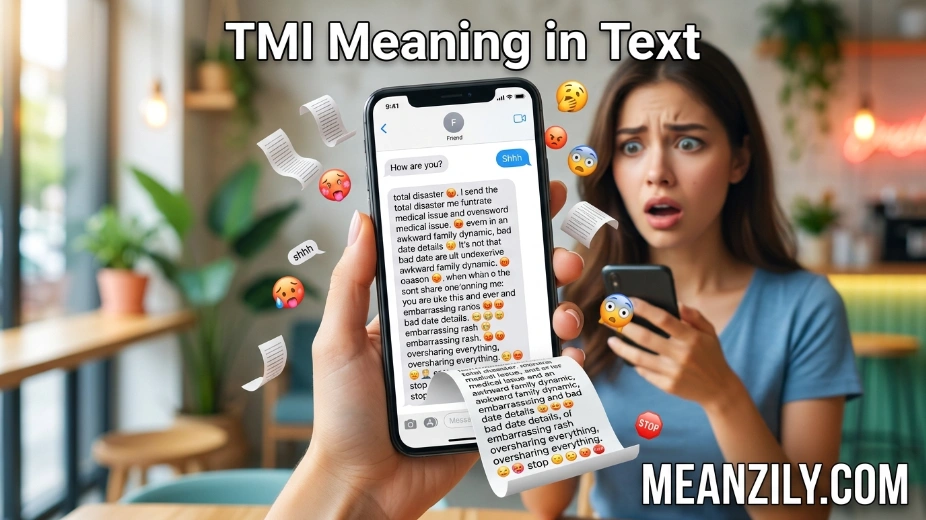
TMI stands for “Too Much Information.”
It is an internet slang acronym used when someone shares more details than others feel comfortable hearing or reading. Usually, the information is personal, awkward, embarrassing, or simply unnecessary for the conversation.
In everyday texting, TMI is often used playfully rather than seriously. Most people are not trying to be rude when they say it.
For example:
Friend: I accidentally wore my shirt inside out all day.
Friend: TMI, but that’s kind of funny.
In this situation, the person is joking that the information is more detailed than needed.
Is TMI an Acronym or Abbreviation?
TMI is an acronym because it is formed from the first letters of multiple words:
- T = Too
- M = Much
- I = Information
It has become one of the most recognized internet acronyms and is widely understood across social media platforms.
What Does TMI Mean in Everyday Chat?
In casual conversations, TMI can mean:
- You’re sharing too many details.
- That’s more information than I needed.
- That’s a little embarrassing.
- That’s personal.
- Okay, I didn’t need to know that.
However, tone matters. In most cases, TMI is meant as lighthearted humor rather than criticism.
Where People Use TMI
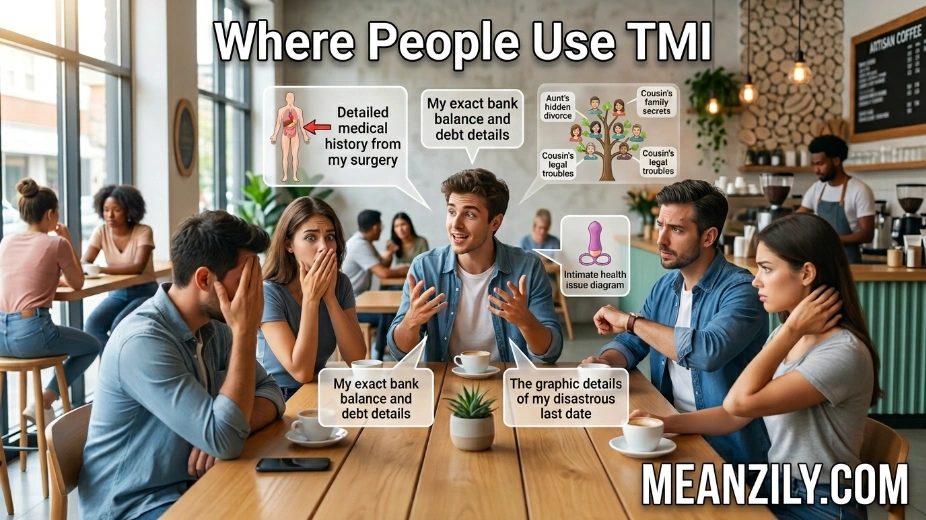
TMI appears almost everywhere online and in text messaging.
TMI on TikTok
TikTok users often comment “TMI” when creators overshare personal stories or discuss embarrassing situations.
Example:
“Girl, TMI 😂”
The comment is usually playful and humorous.
TMI on Snapchat
On Snapchat, friends use TMI during private conversations when someone shares very personal details.
Example:
“TMI lol, but thanks for telling me.”
TMI on Instagram
Instagram users may reply with TMI in comments, stories, or direct messages.
Example:
“TMI, but that’s actually hilarious.”
TMI on WhatsApp
WhatsApp group chats often include TMI when someone gives unnecessary details about a situation.
Example:
“We really didn’t need all those details. TMI 😂”
TMI in SMS Text Messages
Traditional text messaging is one of the oldest places where TMI became popular.
Example:
“TMI! I didn’t need to know that before lunch.”
How to Reply When Someone Says “TMI”
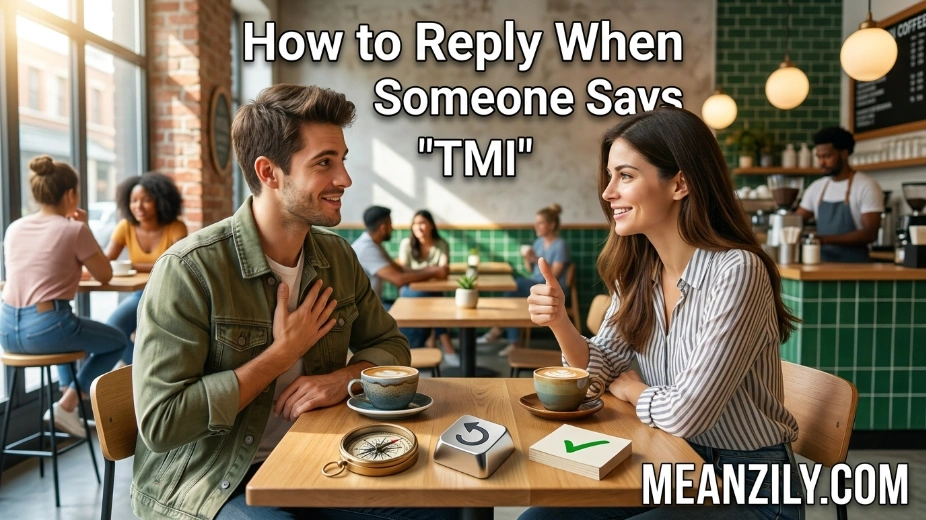
When someone replies with TMI, you can respond in different ways depending on the tone of the conversation.
Funny Replies
- “You know you wanted the details.”
- “Wait until you hear the rest.”
- “That wasn’t even the embarrassing part.”
- “I charge extra for premium information.”
Casual Replies
- “Fair enough.”
- “Oops, my bad.”
- “I’ll keep it shorter next time.”
- “Got carried away.”
Friendly Replies
- “Sorry, I was just sharing.”
- “Thanks for listening anyway.”
- “I trust you with the details.”
- “At least now you know.”
Neutral Replies
- “Understood.”
- “Point taken.”
- “Noted.”
- “I’ll leave out the details next time.”
Is TMI Rude or Offensive?
Generally, TMI is not considered rude or offensive.
Most people use it jokingly when someone shares a story with unnecessary details.
However, context matters.
If someone shares something important or emotional, responding with TMI could seem dismissive or insensitive.
Is It Safe to Use?
Yes. TMI is widely accepted in casual conversations and social media interactions.
Most people understand it immediately.
Is It Appropriate at School?
In informal conversations with friends, TMI is usually acceptable.
Students often use it in texting and group chats.
Is It Appropriate at Work?
In professional settings, it is better to use more formal language.
Instead of saying TMI, you could say:
- “That’s more detail than necessary.”
- “Let’s keep the discussion focused.”
- “Thank you for sharing.”
Who Uses This Term?
TMI is popular among a wide range of internet users.
Teenagers
Teenagers frequently use TMI in texts, social media comments, and group chats.
Gen Z
Gen Z users regularly use TMI on platforms such as TikTok, Snapchat, and Instagram.
It remains a common part of internet slang culture.
Millennials
Many millennials grew up using TMI in online messaging and still recognize it today.
Social Media Users
Anyone active on social media may encounter the term regularly.
How Common Is It?
TMI has remained popular for years.
Although internet slang changes quickly, TMI continues to be widely understood across generations.
Real Chat Examples
Below are realistic examples showing how people use TMI in conversations.
Example 1
A: I watched three hours of videos instead of studying.
B: That’s not too bad.
A: I also skipped my homework completely.
B: TMI 😂
Example 2
A: I spilled coffee all over my shirt.
B: Oh no.
A: Then I wore it anyway.
B: TMI but that’s funny.
Example 3
A: I talked to my crush for an hour.
B: Nice.
A: I saved every message screenshot.
B: TMI 😂
Example 4
A: I checked my weight five times today.
B: Why?
A: I was bored.
B: TMI.
Example 5
A: I forgot my password again.
B: Seriously?
A: Third time this week.
B: TMI lol.
Example 6
A: I ate four slices of pizza.
B: Sounds good.
A: Then I ate two burgers.
B: TMI 😂
Example 7
A: I accidentally sent a message to the wrong person.
B: That’s awkward.
A: It was meant for my crush.
B: TMI!
Example 8
A: I stayed awake until 4 AM.
B: Why?
A: Watching cat videos.
B: TMI but relatable.
Example 9
A: I have 47 unread emails.
B: Wow.
A: And I’m ignoring all of them.
B: TMI 😂
Example 10
A: I spent all day scrolling social media.
B: Same.
A: More than eight hours.
B: TMI!
Origin of the Term
The phrase “Too Much Information” existed long before social media became popular.
People originally used the full phrase in everyday conversations when someone revealed overly personal details.
As texting and internet communication became more common, users shortened the phrase to TMI for convenience.
Influence of Internet Culture
Internet culture helped spread the acronym worldwide.
Online forums, chat rooms, instant messaging services, and social media platforms made TMI a standard expression.
Is the Exact Origin Known?
The exact moment TMI became internet slang is difficult to identify.
However, it became widely recognized during the early years of online messaging and has remained popular ever since.
Comparison Table
| Term | Meaning | Type | Usage | Popularity |
|---|---|---|---|---|
| TMI | Too Much Information | Acronym | Used when someone overshares | Very High |
| IDK | I Don’t Know | Acronym | Expressing uncertainty | Very High |
| IDC | I Don’t Care | Acronym | Showing lack of interest | High |
| IMO | In My Opinion | Acronym | Sharing opinions | High |
| BRB | Be Right Back | Acronym | Leaving temporarily | High |
Real-World Usage Example
Imagine a group of friends having lunch together.
One friend starts explaining every detail about a medical appointment, including things nobody really needs to know.
Another friend laughs and says:
“TMI!”
Everyone understands that the comment is meant humorously and that the conversation may have become a little too detailed.
This is one of the most common real-world situations where people use the term.
Why Do People Say TMI Online?
The internet has made it easier than ever for people to share personal thoughts, daily experiences, and random moments from their lives. Sometimes, however, a person shares details that others feel are unnecessary or overly personal.
That’s when TMI often appears.
People use the phrase as a quick way to say, “I didn’t really need to know that.” In many cases, it is meant as a joke rather than a criticism. The term helps keep conversations light while signaling that someone may have shared more information than expected.
Because online communication moves quickly, short expressions like TMI have become popular ways to react instantly without typing long responses.
Signs That a Message Might Be Considered TMI
Not every personal story is considered too much information. The difference usually depends on the situation and the audience.
A message may be seen as TMI when it includes:
- Very private personal details
- Embarrassing stories
- Medical information that wasn’t requested
- Excessive descriptions of everyday events
- Details unrelated to the conversation
For example, if someone simply asks how your day is going, they may not expect a lengthy explanation of every small event that happened since morning.
Understanding these social cues can help make conversations more comfortable for everyone involved.
Why TMI Is Often Used as a Joke
One reason TMI has remained popular for so many years is that it adds humor to conversations.
Friends often tease each other when someone overshares something funny, awkward, or unexpected. Instead of reacting negatively, they respond with “TMI” to create a playful moment.
For example, someone might describe a strange dream in extreme detail. Rather than being offended, friends may laugh and reply with TMI.
The humor comes from exaggerating how much information was shared.
Because of this, the term is frequently associated with friendly banter rather than serious criticism.
When You Should Avoid Saying TMI
Although TMI is usually harmless, there are situations where it may not be the best response.
For example, if someone is discussing a personal struggle, health issue, family problem, or emotional experience, replying with TMI could make them feel ignored or dismissed.
Instead, it may be better to respond with empathy and understanding.
Good alternatives include:
- “I understand.”
- “Thanks for sharing.”
- “That sounds difficult.”
- “I appreciate you telling me.”
Choosing the right response depends on the tone of the conversation and the feelings of the other person.
TMI in Modern Internet Culture
Internet culture thrives on sharing stories, opinions, and experiences. Because people post so much content every day, reactions like TMI have become part of the online language.
Users often comment TMI under:
- Storytime videos
- Personal confessions
- Relationship posts
- Funny life updates
- Viral trends
The term has become so familiar that many internet users understand it instantly, even if they rarely use it themselves.
Its continued popularity shows how internet slang evolves while still remaining useful across different generations.
Common Misunderstandings About TMI
Many people who encounter TMI for the first time assume it is an insult.
In reality, that is usually not the case.
Most of the time, the sender is simply reacting to information they find surprising, overly detailed, or slightly awkward.
Another common misunderstanding is that TMI always means someone is angry. In fact, the phrase is often accompanied by laughing emojis, showing that it is intended as humor.
Understanding the tone behind the message is important before assuming negative intent.
How TMI Helps Keep Conversations Short
Modern messaging platforms encourage quick communication.
Instead of typing a full sentence such as “That is more information than I needed to know,” users can simply write TMI.
The acronym saves time while still expressing the same idea.
This efficiency is one reason internet abbreviations continue to thrive. People prefer short, recognizable phrases that communicate meaning instantly.
TMI is a perfect example of how digital communication has influenced everyday language.
Similar Slang Terms Related to TMI
Several internet expressions are often used alongside TMI because they react to surprising or unusual messages.
Some examples include:
- LOL (Laugh Out Loud)
- OMG (Oh My God)
- SMH (Shaking My Head)
- TBH (To Be Honest)
- OOF (Used to express sympathy or discomfort)
These terms often appear together in casual conversations.
For example:
“TMI 😂 OMG I can’t believe that happened.”
This combination creates a more expressive and entertaining response.
Can TMI Be Used Face-to-Face?
Yes. Although TMI became especially popular through texting and online communication, people also use it in spoken conversations.
You may hear someone say “TMI!” out loud when a friend starts sharing an embarrassing or highly detailed story.
In face-to-face situations, tone of voice usually makes it clear whether the comment is playful or serious.
Because it is widely recognized, many people use it naturally without even thinking about its online origins.
Why TMI Remains Popular After So Many Years
Many internet slang terms disappear quickly, but TMI has remained relevant for decades.
One reason is its simplicity.
The phrase describes a common social situation that happens both online and offline. People regularly encounter moments when someone shares more details than expected.
Since the concept is universal, the acronym continues to be useful regardless of changing social media trends.
As new platforms emerge, TMI remains one of the few internet expressions that people of different ages still understand and use regularly.
What People Usually Mean When They Type TMI
The meaning of TMI can change slightly depending on the conversation. While the basic definition remains “Too Much Information,” people often use it to express surprise, amusement, or mild discomfort.
For example, if a friend shares an awkward story about an embarrassing moment, someone might respond with TMI because the information was unexpected. In another situation, the same term could simply mean that the details went beyond what was necessary.
Because online conversations lack facial expressions and body language, users often rely on familiar slang terms like TMI to communicate their reactions quickly.
How Context Changes the Meaning of TMI
Context plays a huge role in understanding internet slang.
The same TMI message can feel funny in one conversation and serious in another. If friends are joking around, TMI usually comes across as playful teasing. If strangers are talking, the phrase might sound more direct.
Consider these situations:
- A friend shares a funny dating story.
- A coworker discusses a private medical issue.
- A family member describes an embarrassing moment.
The response may look identical, but the meaning behind it changes depending on who is speaking and what is being discussed.
This is why understanding context is just as important as understanding the acronym itself.
Why Some People Love Oversharing Online
The internet encourages people to share their experiences with large audiences.
Many users post about their daily routines, relationships, achievements, frustrations, and personal thoughts. For some people, sharing creates a sense of connection with others who may have similar experiences.
As a result, conversations sometimes include details that others consider unnecessary.
This doesn’t always mean the person intended to overshare. They may simply feel comfortable discussing topics that others would normally keep private.
The popularity of TMI reflects the balance between openness and personal boundaries in online communication.
The Difference Between Being Honest and Being TMI
Honesty and oversharing are not the same thing.
Being honest means communicating truthfully and openly. Being TMI usually means providing more detail than the situation requires.
For example:
“I’m feeling sick today.”
This is honest information.
“I’ll describe every symptom I’ve had since 5 AM.”
Some listeners might consider that TMI.
The distinction often depends on how much information is necessary for the conversation. Understanding this difference can improve communication both online and offline.
Why TMI Is Easy for Everyone to Understand
One reason TMI has survived while many slang terms disappeared is its simplicity.
The phrase describes a common experience that nearly everyone has encountered at some point. Most people have either shared too much information or listened to someone who did.
Because the idea is universal, the acronym remains relevant regardless of age, location, or social media platform.
Even people who are not active internet users often recognize what TMI means when they see it.
Situations Where TMI Can Create Awkward Moments
Although TMI is usually harmless, it can occasionally make conversations uncomfortable.
For example, someone may share highly personal information in a group chat where not everyone knows them well. Other participants might not know how to respond.
Similarly, discussing sensitive topics in public comment sections can sometimes attract TMI reactions from readers who feel the details are inappropriate for the setting.
Being aware of your audience can help reduce these awkward situations and keep conversations enjoyable for everyone.
How Social Media Changed Personal Boundaries
Years ago, most personal conversations happened face-to-face or through phone calls. Today, millions of people share life updates publicly on social media.
This shift has changed how people think about privacy.
Stories that once remained private are now often posted for friends, followers, or even strangers to see. As a result, reactions like TMI have become more common because audiences are exposed to much more personal content than ever before.
The term acts as a reminder that not every detail needs to be shared publicly.
Can TMI Have a Positive Meaning?
Surprisingly, yes.
Sometimes people use TMI affectionately when talking to close friends. The phrase may signal that the story was embarrassing or personal, but also entertaining.
For example, a friend might tell a funny story that reveals an awkward mistake.
A response such as “That’s TMI, but I can’t stop laughing” combines humor with genuine enjoyment of the story.
In these situations, TMI becomes part of friendly conversation rather than criticism.
How Parents and Adults Interpret TMI
While younger generations frequently use internet slang, many adults also understand TMI.
Parents may encounter the term when reading text messages, using social media, or communicating with younger family members.
Because the phrase has existed for many years, it is not limited to teenagers or Gen Z users.
Adults often use it in the same way—as a humorous response to information that feels overly detailed or unexpectedly personal.
This broad understanding helps explain why the acronym remains relevant across different age groups.
What TMI Reveals About Online Communication
TMI is more than just a slang term. It highlights how people manage information in digital conversations.
Online communication happens quickly, often with little filtering. As people share stories, emotions, and opinions, others react using short expressions that instantly communicate their thoughts.
The continued use of TMI shows that internet users value both openness and boundaries. People enjoy sharing experiences, but they also recognize when a conversation contains more details than necessary.
In that sense, TMI has become a small but important part of modern digital language.
Why TMI Continues to Appear in New Trends
Social media trends change constantly. New slang words appear every year, while older expressions often disappear.
TMI is different because it serves a practical purpose.
No matter how communication evolves, people will always encounter situations where someone reveals more information than expected. Since the concept itself never becomes outdated, the acronym continues to find a place in modern conversations.
Whether on future social platforms, messaging apps, or online communities, TMI will likely remain recognizable for years to come.
Why TMI Often Appears in Group Chats
Group chats bring together multiple people with different personalities, interests, and comfort levels. Because several people are reading the same messages, someone may occasionally share information that feels too personal for the entire group.
When this happens, another participant might respond with TMI.
The reaction is often lighthearted and serves as a reminder that not everyone in the chat wanted such detailed information. In many friend groups, this has become a common joke that helps keep conversations balanced and entertaining.
The larger the group, the more likely it is that someone will use TMI at some point.
How TMI Differs From Oversharing
People often use the words “TMI” and “oversharing” interchangeably, but they are not exactly the same.
Oversharing is a behavior. It happens when someone consistently reveals excessive personal details.
TMI, on the other hand, is a reaction. It is what another person says after hearing or reading information they believe was unnecessary.
In simple terms, oversharing is the action, while TMI is the response.
Understanding this distinction makes it easier to recognize how the phrase is used in conversations.
Why Friends Use TMI More Than Strangers
Close friends usually know each other’s personalities, habits, and sense of humor. Because of this familiarity, they feel comfortable using expressions like TMI without worrying about causing offense.
A stranger may hesitate before making the same comment because they do not know how the other person will react.
Among friends, TMI often becomes part of an ongoing joke. Someone shares an embarrassing story, another friend says “TMI,” and everyone laughs.
This social comfort is one reason the phrase remains especially common in personal conversations.
How TMI Can Make Conversations More Entertaining
Many internet slang terms survive because they add personality to communication.
TMI is one of those expressions.
Imagine reading a long story that suddenly takes an unexpected or awkward turn. A simple TMI response immediately communicates surprise, amusement, and disbelief all at once.
Instead of writing several sentences, users can express a complete reaction with just three letters.
This efficiency helps keep conversations fun and engaging.
The Psychology Behind Sharing Too Much Information
People share information for many different reasons.
Some want advice. Others seek emotional support. Many simply enjoy talking about their experiences.
In some situations, a person may not realize they are providing more details than necessary. What feels normal to them may seem excessive to someone else.
Psychologists often note that personal boundaries vary from person to person. One individual may be comfortable discussing private topics openly, while another prefers to keep those subjects confidential.
Because everyone has different comfort levels, reactions like TMI naturally occur in social interactions.
Why Humor and TMI Often Go Together
Humor plays a major role in how people interpret TMI.
Most of the time, the phrase is not intended to stop a conversation. Instead, it highlights an amusing detail that caught the listener off guard.
For example, someone may tell a story that becomes increasingly ridiculous with every sentence.
A friend responding with “TMI!” acknowledges the absurdity while keeping the mood playful.
This humorous connection has helped the phrase remain popular across multiple generations of internet users.
Situations Where TMI Is Completely Acceptable
There are many situations where using TMI feels perfectly natural.
Examples include:
- Conversations among close friends
- Casual online discussions
- Funny storytelling sessions
- Social media comment sections
- Informal texting
In these environments, people generally understand that the phrase is meant casually.
The key factor is familiarity. When participants know each other well, TMI rarely causes misunderstandings.
How Different Generations React to TMI
Although younger people may use TMI more frequently, different generations often interpret it similarly.
Teenagers typically see it as ordinary internet slang.
Young adults often use it in social media conversations and texting.
Older adults may recognize it from years of online communication or popular culture.
What’s interesting is that the meaning remains consistent across age groups. Unlike some slang terms that change over time, TMI has stayed remarkably stable.
Why TMI Works Better Than Long Explanations
Digital communication encourages speed.
People want quick ways to express thoughts without typing lengthy responses. TMI succeeds because it communicates a complete idea in only three letters.
Compare these responses:
- “That information was more detailed than I expected.”
- “TMI.”
Both convey a similar message, but one is much faster to type and read.
This convenience has contributed significantly to the acronym’s lasting popularity.
How TMI Reflects Modern Communication Habits
Modern communication is different from traditional conversations in many ways.
People send hundreds of messages each week, scroll through countless posts, and interact with large audiences online.
As communication speeds increase, shorter expressions become more valuable.
TMI represents this shift perfectly. It condenses an entire reaction into a brief, recognizable phrase that millions of people understand instantly.
The acronym demonstrates how language adapts to the demands of digital life.
Can TMI Be Used With Emojis?
Absolutely.
Many people combine TMI with emojis to clarify their tone.
Examples include:
- TMI 😂
- TMI 🤣
- TMI 😅
- TMI 🙈
These emojis help show that the response is playful rather than serious.
Without emojis, a text message can sometimes feel blunt. Adding a laughing or smiling emoji often makes the intended humor much clearer.
This combination is extremely common on messaging apps and social media platforms.
Why Learning Terms Like TMI Matters
Internet slang has become a normal part of everyday communication.
Understanding terms like TMI helps people participate more confidently in conversations online. It also reduces confusion when reading comments, messages, or social media posts.
Even if you never use the acronym yourself, recognizing its meaning allows you to understand the tone of a discussion more accurately.
As online language continues to evolve, familiarizing yourself with common expressions can make digital communication easier and more enjoyable.
Frequently Asked Questions
What does TMI mean in text messages?
TMI means “Too Much Information.” It is used when someone shares more details than necessary.
What does TMI mean on TikTok?
On TikTok, TMI usually means a creator or commenter shared overly personal or unnecessary information.
Is TMI slang?
Yes. TMI is a popular internet slang acronym commonly used in texting and social media.
Is TMI rude or offensive?
Usually no. It is generally used as a joke or lighthearted comment, though context matters.
How should you reply to TMI?
You can reply casually with phrases like “Oops,” “Fair enough,” “My bad,” or even joke back depending on the conversation.
Conclusion
TMI stands for “Too Much Information” and is a widely used internet acronym that appears in text messages, TikTok comments, Snapchat chats, Instagram conversations, WhatsApp messages, and many other online interactions.
People use it when someone shares more personal details than necessary, often in a playful or humorous way. In most situations, TMI is not rude and is considered harmless slang among friends. Understanding this expression can help you follow online conversations more easily and respond appropriately.
While it works well in casual chats, it is usually best to avoid using it in formal workplace or professional communication where clearer and more respectful wording may be preferred.
Discover More Post
Cascade Meaning Secrets Behind Flowing Change 2026
What Does 41 Mean in Text? Real Meaning Examples …
What Does Canon Event Meaning in Text? Real Meaning …