Ever seen someone drop a quick “tsk” in a chat and wondered what it actually means? In text slang, it’s basically a sound people use to show mild disappointment, judgment, or that “I can’t believe you just did that” reaction.
You’ll run into it all over social media — from TikTok comments and Snapchat replies to Instagram DMs and regular texting. It’s one of those tiny expressions that says a lot without needing a full sentence.
Most people search for it because it doesn’t look like a normal word at all. At first glance, it feels confusing, almost like an acronym — but it’s actually just a reaction sound written out.
In this guide, we’ll break down what “tsk” really means, how people use it in everyday conversations, and why it shows up so often in online slang today.
TSK Meaning in Text
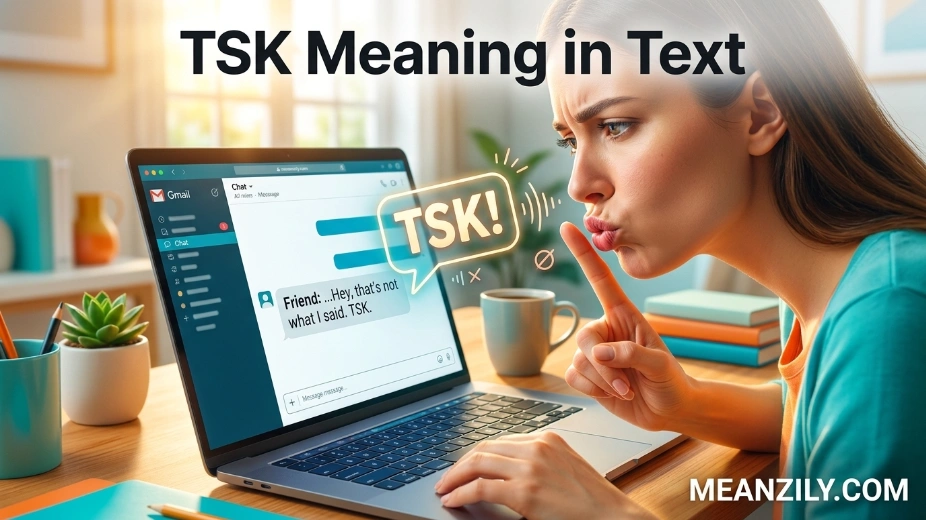
“tsk” is not a formal word or acronym. It is an onomatopoeic expression, meaning it represents a sound people make with their tongue.
In real life, “tsk” is the clicking sound someone makes to show:
- Disapproval
- Disappointment
- Mild frustration
- Judgment
In texting, people write it as “tsk” or “tskk” to express the same feeling.
It is not slang in the traditional sense like “lol” or “brb.” Instead, it is more of a written sound reaction.
In everyday chat, it usually means:
- “I’m not impressed”
- “That’s disappointing”
- “You shouldn’t have done that”
- Or even playful teasing
The meaning depends heavily on context.
Where People Use TSK
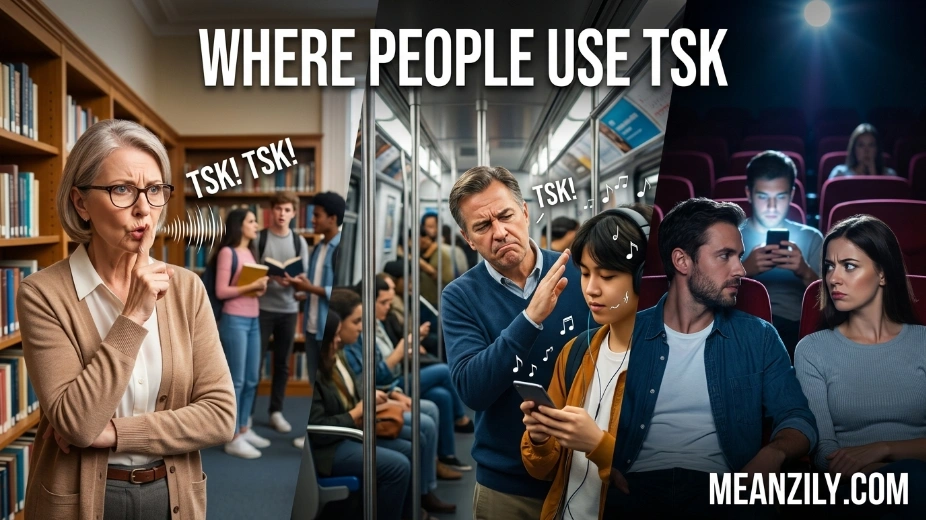
You will see “tsk” almost everywhere people have casual conversations online.
TikTok
On TikTok, users comment “tsk” when reacting to:
- embarrassing videos
- bad decisions
- funny fails
- drama situations
It often adds a dramatic or judging tone.
Snapchat
On Snapchat chats or story replies, people use it to:
- tease friends
- react to silly snaps
- show playful disappointment
It’s usually not serious here.
On Instagram comments or DMs:
- used for sarcastic reactions
- reacting to influencer drama
- joking with friends
In WhatsApp chats:
- used in personal conversations
- often playful or slightly serious depending on tone
SMS
In regular texting:
- used to show disappointment
- or react quickly without typing long sentences
Real Chat Examples
Here are real-style conversations to help you understand how it is used in daily texting:
Example 1
A: I forgot to submit my homework again
B: tsk… you really need to fix that
2
A: I ate the whole pizza alone
B: tsk, no sharing at all?
3
A: I broke my phone screen today
B: tsk, that’s bad luck
4
A: I didn’t study for the test
B: tsk tsk, you’re going to regret itExample 5
A: I lied to my friend
B: tsk… not cool man
6
A: I spent all my money in one day
B: tsk, how are you surviving now?
7
A: I missed the bus again
B: tsk, same story every day
8
A: I forgot her birthday
B: tsk, she’s going to be upset
9
A: I didn’t finish the project
B: tsk tsk, boss won’t be happy
10
A: I slept through my alarm
B: tsk, classic you 😂
How to Reply When Someone Says “tsk”
When someone sends “tsk” in a chat, your reply depends on the tone.
Funny Replies
- “Don’t tsk me 😭 I tried my best!”
- “Okay judge, calm down 😂”
- “Tsk police is here again!”
Casual Replies
- “Yeah I know, my bad”
- “You’re right lol”
- “It happens sometimes”
Friendly Replies
- “I’ll fix it next time”
- “Thanks for reminding me”
- “I understand”
Neutral Replies
- “Okay”
- “Noted”
- “Alright”
The best response depends on whether the person is joking or serious.
Is TSK Rude or Offensive?
“tsk” is usually not offensive, but it can feel a bit judgmental depending on how it is used.
Is it rude?
- It can be slightly rude if used seriously
- It can also be playful among friends
Is it safe to use?
Yes, it is safe for casual conversations online.
School or work use?
- In school chats: okay in informal talk
- In work emails: not appropriate
- In professional settings: avoid using it
So overall, it’s fine for casual texting but not formal communication.
Who Uses This Term?
The term “tsk” is mostly used by:
- Teenagers and young adults
- Gen Z users
- Social media users on TikTok and Instagram
- People who chat casually online
It appears more in informal conversations than professional ones.
You’ll often see it in memes, comment sections, and friendly chats.
It is not limited to any specific country and is used globally wherever English texting slang exists.
Origin of the Term
The origin of “tsk” comes from a natural human sound.
People have been making this sound for centuries to show:
- disappointment
- disagreement
- mild anger
Over time, internet users started writing it as “tsk” to represent that sound in text form.
It became popular through:
- chat rooms
- early messaging apps
- social media platforms
Today, it is widely used as part of online communication culture.
The exact origin is not tied to one person or place. It naturally evolved from spoken expression to digital slang.
Comparison Table
| Term | Meaning | Type | Usage | Popularity |
|---|---|---|---|---|
| tsk | Sound of disapproval | Expression | Casual reaction | Medium |
| IDK | I don’t know | Acronym | Everyday chat | Very high |
| IDC | I don’t care | Acronym | Casual texting | High |
| IMO | In my opinion | Acronym | Opinions online | High |
| BRB | Be right back | Acronym | Chat break | Medium |
Real-World Usage Example
Imagine you are in a group chat with friends planning to go out.
One friend says:
“I forgot to save money for today’s trip.”
Another friend replies:
“tsk… we told you yesterday!”
Here, “tsk” shows playful disappointment. It’s not angry, just a light reaction to a mistake.
This is how people naturally use it in real conversations.
Difference Between TSK and Other Reaction Words
“tsk” is often confused with other short reaction words like “hmm,” “ugh,” or “wow,” but each one has a different emotional tone.
For example, “hmm” usually shows thinking or confusion, while “ugh” shows stronger frustration. “Wow” is positive or surprised.
On the other hand, “tsk” is more subtle. It sits in the middle where someone is not fully angry, but still not happy with what they see or hear.
That’s why it is often used in light judgment situations, not extreme emotions.
Emotional Tone Behind TSK in Conversations
The emotional meaning of “tsk” can change depending on how it is used in a sentence.
Sometimes it feels playful, like friends joking with each other. Other times, it can feel slightly disappointed or even disapproving.
For example, if a friend forgets something small, “tsk” is harmless and fun. But if used in a serious mistake, it can feel like criticism.
So the emotional tone is not fixed — it depends on relationship, situation, and message flow.
Why People Prefer Using TSK Instead of Full Sentences
One reason “tsk” is popular in online chats is because it is fast and expressive.
Instead of typing a full sentence like “I am disappointed in you,” people just write “tsk.”
This makes conversations quicker and more natural, especially in fast-moving chats on apps like Snapchat or Instagram.
It also adds emotion without needing extra words, which is perfect for casual texting.
Misunderstandings People Have About TSK
Many new internet users misunderstand “tsk” when they see it for the first time.
Some think it is an acronym like “LOL” or “BRB,” but it is actually not.
Others believe it always means anger, which is also not true. It can be playful, sarcastic, or even joking depending on context.
Because of this confusion, people often search its meaning to avoid misreading conversations.
How Context Changes the Meaning of TSK
Context plays a very important role in understanding “tsk.”
If it appears after a funny mistake, it is lighthearted. If it appears after a serious issue, it may sound critical.
For example:
- “tsk 😂” usually feels playful
- “tsk…” without emojis can feel serious
- “tsk tsk” often sounds more dramatic or disapproving
So reading the surrounding message is important before reacting.
TSK in Meme Culture and Online Humor
Over time, “tsk” has become part of internet humor and meme culture.
People use it in funny ways to exaggerate reactions. For example, someone might comment “tsk tsk” under a silly video just to sound dramatic.
Memes often use it to imitate a strict teacher, parent, or judge reacting to small mistakes.
This playful usage is one reason it stays popular on social media.
How Non-Native English Speakers Interpret TSK
For people learning English, “tsk” can be confusing because it does not translate directly into other languages.
Non-native speakers often ask whether it is a word or just a sound. In reality, it is closer to a spoken expression than a vocabulary word.
Once explained, most learners find it easy to understand because it reflects a universal human sound of disapproval.
Situations Where You Should Avoid Using TSK
Even though “tsk” is common in casual chat, there are moments when it is better to avoid it.
For example, using it in serious emotional situations can feel insensitive. It may also seem unprofessional in workplace communication.
If someone is sharing bad news or a personal struggle, “tsk” might come across as judgmental instead of supportive.
In such cases, a more empathetic response is always better.
Evolution of TSK in Digital Communication
The use of “tsk” has changed over time with the growth of digital communication.
In early texting days, it was mostly used in plain chat messages. Now, it appears more in social media comments, memes, and short reactions.
With emojis and GIFs becoming popular, “tsk” is often combined with visual expressions to enhance meaning.
This shows how online language keeps evolving with technology.
Psychological Impact of Short Reaction Words Like TSK
Short expressions like “tsk” can influence how messages are emotionally received.
Because they are brief, they can feel sharper than full sentences. The reader may interpret them as quick judgment or emotional reaction.
However, they also make communication feel more natural and human, especially in informal conversations.
That balance between emotion and simplicity is why people continue using them.
Future of Expressions Like TSK in Online Language
Even as new slang words appear every year, expressions like “tsk” are likely to remain in use.
The reason is simple: they are based on human sounds, not trends.
While emojis and new slang may evolve, natural expressions of emotion will always have a place in communication.
So “tsk” may continue to be used for many years in chats and social media reactions.
Frequently Asked Questions
What does tsk mean in text messages?
It means a sound of disappointment or disapproval, often used when reacting to something silly or wrong.
What does tsk mean on TikTok?
On TikTok, it is used in comments to react to drama, fails, or embarrassing situations.
Is tsk slang?
It is not traditional slang. It is an expression that represents a sound people make.
Is tsk rude or offensive?
It is usually not rude, but it can feel slightly judgmental depending on context.
How should you reply to tsk?
You can reply casually like “I know,” humorously like “don’t judge me 😂,” or neutrally like “okay.”
Conclusion
“tsk” is a simple expression used in texting to show disappointment, judgment, or mild frustration. It is commonly seen on TikTok, Instagram, Snapchat, and messaging apps.
People mostly use it in casual conversations, often in a playful way among friends. However, in formal or professional settings, it is better to avoid it.
Understanding its tone is important because it can be friendly or slightly critical depending on context.
Discover More Post
What Does wyd meaning Mean in Text? Real Meaning …
What Does FTL Mean in Text? Slang Guide with Examples …
What Does WSG Mean in Text? Real Meaning Examples …