If you’ve received a message containing “DM” and wondered what it means, you’re not alone. DM is one of the most common internet abbreviations used in texting and social media conversations today.
People frequently see DM on TikTok, Snapchat, Instagram, WhatsApp, Facebook, X (Twitter), and regular text messages. It appears in comments, chats, captions, and online conversations.
Many users search for this term because they want to understand what someone means when they say “DM me” or “send me a DM.” While the abbreviation is simple, its usage can vary slightly depending on the platform.
Understanding DM helps you communicate more confidently in modern digital communication.
DM Meaning in Text
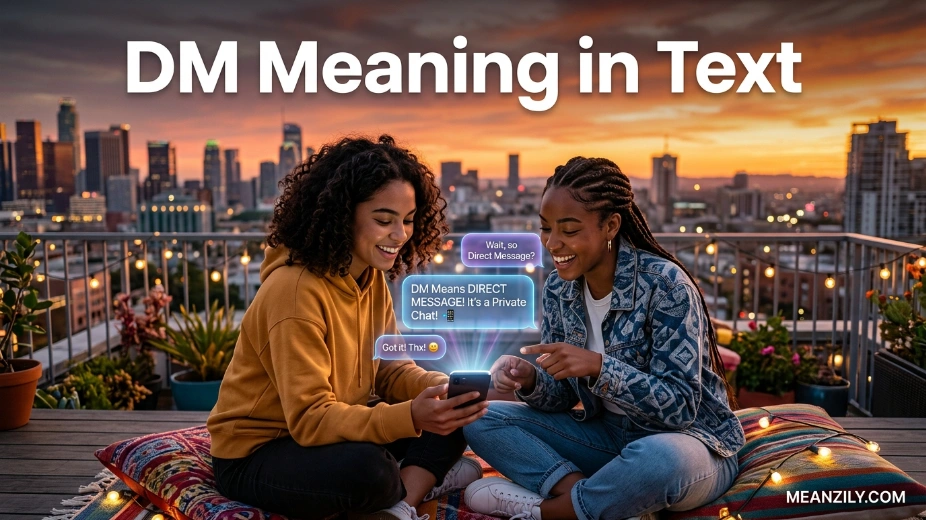
In text slang, DM simply means Direct Message.
A direct message is a private conversation sent directly from one user to another. Unlike public comments, replies, or posts, a DM can only be seen by the people involved in the conversation.
DM is both an abbreviation and an internet shorthand term. People use it because it’s quicker than typing “direct message” every time.
For example:
- “DM me the details.”
- “I’ll send you a DM.”
- “Check your DMs.”
In everyday texting, people immediately understand that DM refers to a private message.
What Does DM Stand For?
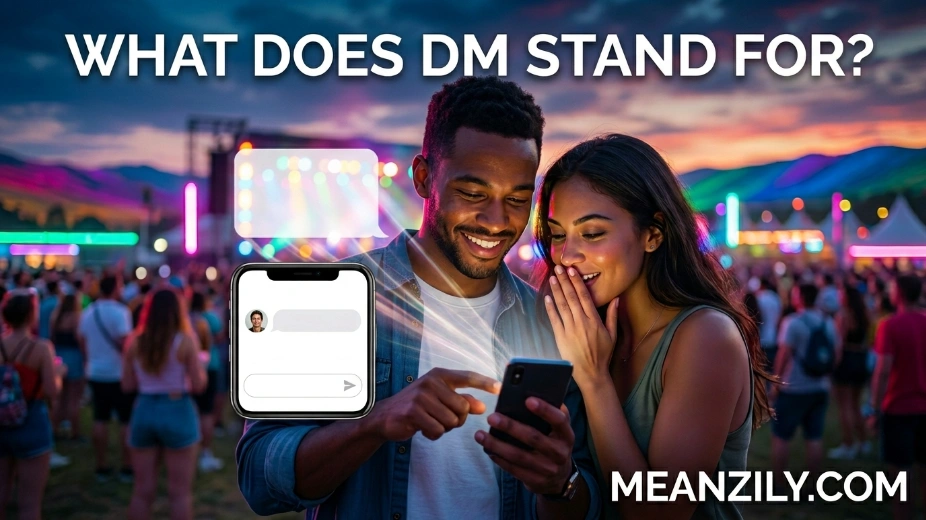
DM stands for:
Direct Message
Let’s break it down:
- Direct = sent straight to a person
- Message = a written communication
Together, Direct Message means a private message sent directly to another user.
The phrase became popular as social media platforms introduced private messaging features. Over time, users shortened it to DM because it is faster and easier to type.
Today, DM has become one of the most recognizable chat acronyms on the internet.
Quick Answer
What does DM mean?
DM means “Direct Message.”
People commonly use it on TikTok, Snapchat, Instagram, WhatsApp, and text messages to refer to a private conversation between two users instead of a public comment or post.
Key Takeaways
- DM stands for Direct Message.
- It is a social media abbreviation used for private communication.
- The term is commonly used on TikTok, Instagram, Snapchat, X (Twitter), Facebook, and messaging apps.
- DM is considered internet slang and messaging shorthand.
- It is not offensive or rude.
- Gen Z, Millennials, creators, influencers, gamers, and everyday social media users frequently use it.
- “DM me” means “send me a private message.”
- It helps move conversations away from public comment sections.
Why Do People Use DM?
There are several reasons why DM remains popular.
It Saves Time
Typing “DM” is much quicker than typing “direct message.”
It Keeps Conversations Private
Instead of discussing personal details publicly, users can move the conversation into private messages.
It Fits Internet Culture
Online communication values speed and convenience. Short abbreviations help people communicate faster.
It Works Across Platforms
The term is recognized almost everywhere, making it easy for users to understand regardless of the app they’re using.
It Helps Networking
Creators, influencers, businesses, and professionals often use DMs to communicate privately with followers and customers.
Where People Use DM
TikTok
On TikTok, users often say:
- “DM me for details.”
- “Send me a DM.”
- “Check your DMs.”
Creators frequently use DMs to answer questions, discuss collaborations, or provide additional information.
Example:
User A: Where did you buy those shoes?
User B: DM me and I’ll send the link.
Snapchat
Snapchat users often use DM to refer to private chats.
Example:
Friend A: I don’t want everyone seeing this.
Friend B: Just DM me.
Most Snapchat conversations are already private, but users still understand and use the term DM.
Instagram is one of the platforms most associated with DMs.
Users often say:
- “Slide into my DMs.”
- “Check your DMs.”
- “I’ll DM you.”
Example:
Comment: Love this artwork!
Creator: Thanks! DM me if you’d like a custom design.
Although WhatsApp uses chats rather than DMs officially, many users still use the term.
Example:
Friend: Can you send the address?
Friend: Sure, I’ll DM it to you.
SMS/Text Messages
Even in traditional texting, DM is commonly understood.
Example:
Friend A: Let’s not discuss it here.
Friend B: Okay, DM me later.
Real Chat Examples
Example 1
A: Did you get the concert tickets?
B: Yes.
A: DM me the seat numbers.
Example 2
A: Where did you buy that hoodie?
B: DM me.
A: Sure.
Example 3
A: I have a question about your post.
B: Send me a DM.
A: Will do.
Example 4
A: Can you help me with homework?
B: DM me after school.
A: Thanks.
Example 5
A: What’s the game code?
B: I’ll DM it.
A: Great.
Example 6
A: Want to join our group?
B: Yes.
A: DM me your username.
Example 7
A: I found a bug in the game.
B: DM the developers.
A: Good idea.
Example 8
A: How much are the tickets?
B: DM for pricing.
A: Okay.
Example 9
A: Nice video!
B: Thanks.
A: I’ll DM you a question.
Example 10
A: Need the meeting link.
B: Check your DMs.
A: Got it.
Example 11
A: Can we talk privately?
B: Sure, DM me.
A: Thanks.
Example 12
A: I love your content.
B: Appreciate it.
A: I’ll DM you feedback.
Example 13
A: Did you finish the project?
B: DM me and I’ll explain.
A: Okay.
Example 14
A: What’s your gaming username?
B: I’ll DM it.
A: Cool.
Example 15
A: Do you sell these?
B: Yes.
A: DM sent.
Example 16
A: I need advice.
B: DM me anytime.
A: Thank you.
Example 17
A: Are applications open?
B: DM for details.
A: Sent.
Example 18
A: Can I ask something personal?
B: Sure, DM me.
A: Thanks.
Example 19
A: Where’s the event?
B: I’ll DM the location.
A: Perfect.
Example 20
A: Is that product available?
B: DM us.
A: Done.
Example 21
A: Need help?
B: DM me.
A: Thanks.
Example 22
A: What’s the password?
B: Check your DMs.
A: Found it.
Example 23
A: Can we collaborate?
B: DM me your ideas.
A: Will do.
Example 24
A: How can I contact you?
B: Send a DM.
A: Okay.
Example 25
A: Got the information?
B: Yes, thanks for the DM.
A: You’re welcome.
How to Reply When Someone Says “DM”
Funny Replies
- “Only if there’s pizza involved.”
- “Incoming DM in 3…2…1…”
- “My fingers are already typing.”
- “DM loading…”
- “You’ve got mail… sort of.”
Casual Replies
- “Sure.”
- “Will do.”
- “Okay, sending one now.”
- “No problem.”
- “Got it.”
Friendly Replies
- “Absolutely, I’ll message you.”
- “Happy to!”
- “I’ll send you a DM shortly.”
- “Sounds good.”
- “I’ll reach out now.”
Neutral Replies
- “Message sent.”
- “Okay, thank you.”
- “I’ll contact you privately.”
- “Understood.”
- “I’ll follow up via DM.”
Is DM Rude or Offensive?
No, DM is not considered rude or offensive.
It is a neutral social media language term used for private communication.
In most situations, DM is completely safe to use online.
At School
Students commonly use DM in chats and online discussions.
At Work
In professional settings, DM is generally acceptable in workplace messaging platforms and social media communication.
However, in formal emails or official documents, writing “direct message” may appear more professional.
Who Uses This Term?
Gen Z
Gen Z uses DM extensively across TikTok, Instagram, Snapchat, and other social platforms.
Millennials
Millennials frequently use DM when communicating online or networking.
Social Media Users
Almost every active social media user understands the term.
Gaming Communities
Gamers often use DM when sharing usernames, invitations, and private information.
Texting Culture
DM has become a standard part of modern texting abbreviations and online messaging culture.
Today, the term is recognized by millions of users worldwide.
Origin of the Term
DM emerged as social networking platforms introduced private messaging features.
As websites and apps evolved, users needed a simple way to distinguish private messages from public posts.
The phrase “Direct Message” became widely used on early social media platforms and online forums.
Eventually, internet users shortened it to DM, following the same trend that created abbreviations like LOL, BRB, and IDK.
The exact first use is difficult to trace, but its popularity grew alongside social media platforms in the 2000s and 2010s.
Other Meanings of DM
Although Direct Message is the most common meaning online, DM can have other meanings depending on context.
Possible alternatives include:
- Dungeon Master (gaming)
- Decision Maker (business)
- District Manager (business)
- Data Mining (technology)
- Diabetes Mellitus (medical)
However, in texting, social media, and online conversations, Direct Message is overwhelmingly the most common meaning.
Common Mistakes People Make About DM
Assuming It Means Public Message
DM actually refers to private communication.
Confusing DM With PM
PM means Private Message. Both are similar, but DM is more common on modern social media.
Thinking It’s Only Used on Instagram
DM is used across many platforms.
Believing It’s Slang Only for Teenagers
People of all ages use DM today.
Using It in Extremely Formal Writing
While understandable, formal communication may benefit from using the full phrase “direct message.”
Related Internet Slang Terms
| Term | Meaning | Common Use |
|---|---|---|
| IDK | I Don’t Know | Expressing uncertainty |
| IDC | I Don’t Care | Showing indifference |
| IMO | In My Opinion | Sharing opinions |
| TBH | To Be Honest | Giving honest thoughts |
| NGL | Not Gonna Lie | Being truthful |
| FR | For Real | Agreement or emphasis |
| SMH | Shaking My Head | Disappointment |
| BRB | Be Right Back | Temporary absence |
These internet slang terms, like DM, help people communicate quickly in digital communication and online messaging.
Comparison Table
| Term | Meaning | Type | Usage | Popularity |
|---|---|---|---|---|
| DM | Direct Message | Abbreviation | Private messaging | Very High |
| IDK | I Don’t Know | Acronym | Uncertainty | Very High |
| IDC | I Don’t Care | Acronym | Indifference | High |
| IMO | In My Opinion | Acronym | Opinions | High |
| BRB | Be Right Back | Acronym | Temporary absence | High |
Real-World Usage Example
Imagine you’re browsing Instagram and see someone selling handmade artwork.
You comment asking about prices.
Instead of posting pricing details publicly, the seller replies, “DM me for information.”
You then send a private message where the conversation continues. This is one of the most common real-world uses of DM today.
Why This Slang Remains Popular
DM remains popular because modern communication prioritizes speed and convenience.
People communicate primarily through smartphones, social media apps, and messaging platforms.
Short abbreviations make conversations faster and easier.
Social media influence has also helped DM become a universal term that works across multiple platforms.
As online communication continues growing, DM remains an important part of internet culture and digital language.
What Does “DM Me” Actually Mean?
One of the most common phrases people encounter online is “DM me.” While it sounds simple, the meaning can vary slightly depending on the situation.
In most cases, “DM me” means “send me a private message so we can continue this conversation away from the public comment section.”
For example, a creator on Instagram might write, “DM me for pricing details.” Instead of posting prices publicly, they prefer discussing information privately with interested users.
People also use “DM me” when sharing personal information, phone numbers, addresses, business inquiries, or confidential details that shouldn’t be posted publicly.
Because privacy is important online, this phrase has become a standard part of internet communication.
What Does “Check Your DMs” Mean?
If someone tells you to “check your DMs,” they’re letting you know that they have already sent you a direct message.
This phrase is common on Instagram, TikTok, Snapchat, X, Discord, and many other social platforms.
For example:
Person A: Can you send me the event details?
Person B: Check your DMs.
In this situation, Person B has already shared the information privately.
Many businesses and content creators also use this phrase when responding to customer questions publicly while handling the actual conversation privately.
Why Businesses Use DMs for Customer Support
Direct messages are no longer used only by friends and family. Many companies now rely heavily on DMs for customer service.
When customers have questions about products, orders, shipping, or refunds, businesses often ask them to continue the conversation through direct messages.
This approach offers several advantages:
- Better privacy
- Faster communication
- Easier problem-solving
- More personalized support
For example, if a customer posts a complaint publicly on Instagram, the company may respond:
“Sorry to hear that. Please send us a DM so we can assist you.”
This allows the company to gather account information securely without exposing personal details publicly.
DM Etiquette: Rules Everyone Should Know
Although direct messaging is informal, there are still some basic etiquette rules worth following.
Be Respectful
Always start conversations politely, especially when messaging someone you don’t know.
Avoid Spamming
Sending multiple messages in a short period can annoy the recipient.
Respect Boundaries
Not everyone is comfortable receiving unexpected messages.
Keep Messages Clear
Get to the point without writing extremely long introductions.
Don’t Demand Immediate Replies
People may be busy and unable to respond right away.
Following these simple guidelines helps create positive online interactions.
Signs Someone Wants You to DM Them
Sometimes people don’t directly say “DM me,” but their wording suggests they would prefer private communication.
Common signs include:
- “Message me for details.”
- “Contact me privately.”
- “Reach out for more information.”
- “Send me a message.”
- “Let’s talk privately.”
These phrases usually indicate that the person wants to move the conversation away from public comments.
Understanding these signals can help you communicate more effectively online.
How DMs Changed Social Media Communication
Before direct messaging became popular, most online interactions happened publicly through comments, forums, and discussion boards.
Today, much of social media communication takes place behind the scenes through private messages.
This shift has changed how people:
- Build friendships
- Network professionally
- Conduct business
- Share personal information
- Collaborate on projects
Direct messaging allows conversations to feel more personal and immediate than public posts.
As social media continues evolving, DMs remain one of the most important communication tools available.
Advantages of Using Direct Messages
Direct messages offer several benefits compared to public conversations.
More Privacy
Only the participants can view the conversation.
Better Organization
Important information doesn’t get buried under hundreds of public comments.
Faster Responses
People often reply more quickly to private messages.
Reduced Misunderstandings
Private conversations allow for clearer communication.
Easier Relationship Building
Whether personal or professional, direct conversations often create stronger connections.
These advantages explain why DM culture continues growing across social media platforms.
Common Situations Where People Send DMs
Direct messages are used in countless everyday situations.
Some of the most common include:
- Asking questions
- Sharing links
- Discussing business opportunities
- Making new friends
- Sending photos or videos
- Organizing events
- Requesting product information
- Offering feedback
- Discussing collaborations
- Exchanging contact details
Because DMs are versatile, they have become an essential part of modern online communication.
How Influencers and Creators Use DMs
Content creators often receive hundreds or even thousands of direct messages every week.
They use DMs to:
- Communicate with followers
- Answer questions
- Negotiate sponsorships
- Discuss collaborations
- Provide customer support
- Build stronger communities
For many influencers, direct messaging is one of the most valuable ways to connect with their audience on a personal level.
This is why you’ll frequently see creators saying things like:
“DM me if you’re interested.”
or
“Send me a DM for more information.”
The Future of DMs in Online Communication
As social media platforms continue developing new features, direct messaging is expected to become even more important.
Modern users increasingly prefer private conversations over public discussions.
New messaging tools now include:
- Voice notes
- Video messages
- AI-powered assistance
- Message reactions
- End-to-end encryption
- Group messaging features
These innovations are making direct messages more powerful and convenient than ever before.
While social media trends come and go, private messaging remains one of the most essential forms of digital communication.
People Also Ask
What does DM mean in text messages?
DM means Direct Message. It refers to a private message sent directly to another person instead of posting publicly.
What does DM mean on TikTok?
On TikTok, DM means Direct Message and is used when users want to communicate privately.
Is DM slang?
DM is considered internet slang and a social media abbreviation commonly used online.
Is DM rude or offensive?
No. DM is neutral and generally considered polite and appropriate.
How should you reply to DM?
You can respond with “Sure,” “I’ll send one,” “Message sent,” or similar replies depending on the conversation.
What does DM stand for?
DM stands for Direct Message.
Why do people use DM?
People use DM to save time and move conversations into private messaging.
Is DM a Gen Z term?
Gen Z uses it frequently, but people of all ages understand and use DM.
Can adults use DM?
Yes. DM is commonly used by adults, businesses, professionals, and organizations.
When should you avoid using DM?
Avoid it in highly formal documents, contracts, or professional writing where the full phrase may be more appropriate.
Frequently Asked Questions
Does DM always mean Direct Message?
In most texting and social media contexts, yes.
What does “DM me” mean?
It means “send me a private message.”
What does “check your DMs” mean?
It means someone has sent you a private message.
Is DM used on WhatsApp?
Yes. Many people informally use DM to refer to WhatsApp messages.
Is DM the same as PM?
Generally yes. Both refer to private messages, although DM is more common today.
Can businesses use DMs?
Absolutely. Many companies use DMs for customer support and inquiries.
Is DM still popular in 2026?
Yes. DM remains one of the most widely used social media abbreviations online.
Conclusion
DM stands for Direct Message, a private message sent directly from one user to another. It is one of the most common texting abbreviations and internet slang terms used today.
You’ll frequently see DM on TikTok, Instagram, Snapchat, WhatsApp, gaming platforms, and text messages. People use it because it’s quick, simple, and effective for moving conversations away from public spaces.
DM is not rude or offensive, making it appropriate for most online conversations. Whether you’re chatting with friends, networking professionally, or communicating on social media, understanding DM helps you navigate modern digital communication with confidence.
Discover More Post
What Does FS Mean in Text? Real Meaning Examples …
What Does PMO Mean in Text? PMO Slang Meaning …
What Does TS Mean in Text? Real Meaning Examples …