Ever come across “DTM” in a text or on social media and had no clue what it meant? You’re not alone—it’s one of those slang terms that can totally throw you off if you’re not plugged into TikTok or Snapchat culture. Most of the time, “DTM” stands for “doing too much,” and it’s usually used when someone is being extra, dramatic, or just over-the-top in a situation.
The tricky part is that slang like this doesn’t always come with a clear rulebook. Depending on the context, it can slightly shift in meaning, which is why so many people end up searching for it in the first place. One post says one thing, another says something different—and suddenly you’re confused.
In everyday Gen Z and casual online chats, “DTM” is often used in a playful or calling-it-out kind of way, not something serious or formal. It’s just a quick way to point out when someone might be going a little overboard.
In this article, we’ll break down exactly what DTM means, how people actually use it in real conversations, and share simple examples so you’ll never get confused by it again.
DTM Meaning in Text
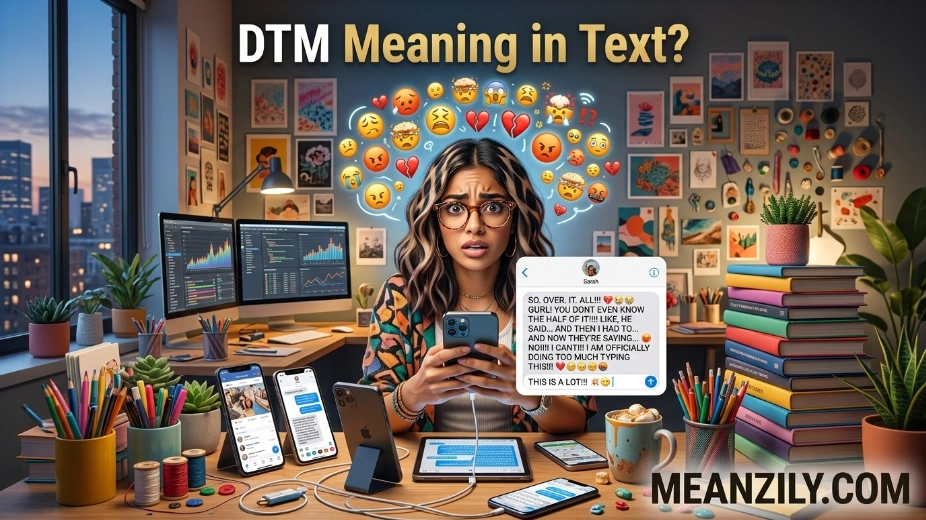
DTM is an internet slang abbreviation. In most modern texting situations, it stands for:
“Doing Too Much.”
This means someone is:
- overreacting
- being dramatic
- exaggerating a situation
- or making something bigger than it needs to be
In everyday chat, people use it when they want to point out that someone’s behavior feels unnecessary or excessive.
For example:
- If someone is crying over a small joke → “You’re DTM”
- If someone is stressing over something minor → “Stop DTM”
It is important to understand that slang like DTM is context-based, meaning tone and situation matter a lot.
Is DTM slang, acronym, or abbreviation?
DTM is an acronym slang term. It is formed from the first letters of a phrase:
- Doing
- Too
- Much
So it becomes DTM.
It is widely used in informal communication, especially in texting culture.
Everyday meaning in chat
In normal conversations, DTM usually means:
- “You’re overreacting”
- “You’re being extra”
- “Relax, it’s not that serious”
It is not meant to be deeply offensive most of the time, but tone can change its impact.
Where People Use DTM
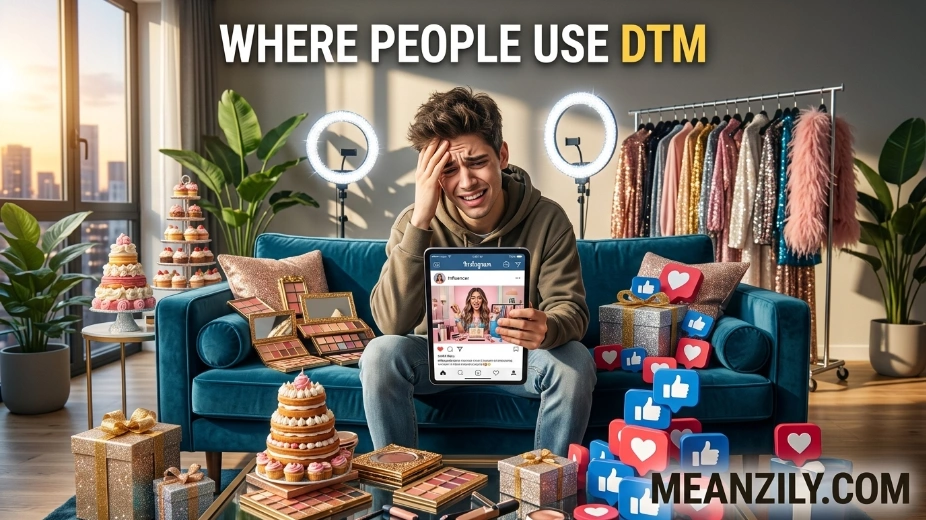
DTM is popular across many social media platforms and messaging apps. Let’s break it down simply.
TikTok
On TikTok, DTM is often used in comments or captions when reacting to dramatic videos.
Example:
- Someone posts a breakup story with intense music
Comments: “Nahhh you DTM 😭”
Snapchat
On Snapchat, friends use it in private chats or snaps when reacting to daily drama.
Example:
- “Bro you DTM over one missed call 😂”
On Instagram, it appears in DMs and comment sections, especially under relatable or emotional posts.
Example:
- “She’s DTM for that reaction lol”
On WhatsApp group chats, friends use DTM casually to tease each other.
Example:
- “You DTM for arguing about pizza toppings again”
SMS (Text Messages)
Even in regular SMS texting, people use DTM in informal chats with friends.
Example:
- “Stop DTM, it’s just a small issue”
Real Chat Examples
Here are 10 real-life style conversations so you can understand how DTM is used naturally:
Example 1
A: I think she hates me forever 😭
B: Bro, you’re DTM, she just didn’t reply yet
2
A: I missed one class, my life is over
B: Nah, you DTM
3
A: He didn’t like my post, I’m done
B: Stop DTM 😂
4
A: I need to delete my whole account
B: Why? You DTM for no reason
5
A: She saw my message and didn’t reply
B: You’re seriously DTM right now
6
A: I think my crush hates me
B: Chill, you DTM overthinking it
7
A: I failed one quiz, I’m dropping out
B: Bro stop DTM 😭
8
A: He said “ok” instead of “okayyy”
B: You DTM for reading into that
9
A: I think everyone is mad at me
B: Nah, you DTM again
10
A: I spilled coffee, worst day ever
B: You DTM but okay 😂
These examples show how flexible and casual the term is in daily chats.
How to Reply When Someone Says “DTM”
If someone uses DTM toward you, your reply depends on tone and situation.
Funny replies
- “Maybe I am DTM 😂”
- “Let me live my dramatic life”
- “I accept my DTM award”
Casual replies
- “Okay fine, maybe I am”
- “You might be right lol”
- “I’ll calm down”
Friendly replies
- “Haha chill, I’m just stressed”
- “I get it, I’ll relax”
- “Fair enough”
Neutral replies
- “Got it”
- “Understood”
- “Okay”
The key is not to take it too seriously because in most cases it is playful slang.
Is DTM Rude or Offensive?
DTM is not usually rude, but it depends on how it is used.
When it is NOT rude:
- Between friends joking
- Casual conversations
- Light teasing
- Funny reactions online
When it CAN feel rude:
- If said in a serious argument
- If used with a harsh tone
- If used to dismiss someone’s feelings
Is it safe to use?
Yes, DTM is generally safe for informal chats. However, it is not suitable for:
- professional emails
- formal conversations
- workplace communication
School or work usage
- In school chats: okay among friends
- In class or formal writing: not appropriate
- In workplace messages: avoid using it
So overall, it is a casual slang term, not an offensive insult.
Who Uses This Term?
DTM is mostly used by younger internet users.
Age groups
- Teenagers (13–19): very common
- Young adults (20–30): also common
- Older users: less common
Gen Z usage
Gen Z uses DTM frequently in:
- memes
- TikTok comments
- Snapchat chats
- Instagram DMs
Common platforms
- TikTok (most popular)
- Snapchat
- WhatsApp groups
How often it appears online
DTM appears frequently in:
- reaction videos
- emotional content
- relationship discussions
- funny meme conversations
It is part of modern internet slang culture where short abbreviations replace full sentences.
Origin of the Term
The exact origin of DTM is not fully documented, but it likely came from early internet chat culture.
Internet culture influence
In early texting and messaging platforms, people started shortening phrases to save time. This led to acronyms like:
- LOL
- BRB
- IDC
DTM evolved in the same way, especially in social media conversations.
Where it became popular
- Black internet culture and AAVE slang influence
- Early Twitter and Tumblr conversations
- Later boosted by TikTok and Instagram Reels
Is the origin clear?
Not completely. Like many slang terms, DTM grew organically rather than being created by one person or group.
Comparison Table
Here is a simple comparison to understand DTM and similar texting abbreviations:
| Term | Meaning | Type | Usage | Popularity |
|---|---|---|---|---|
| DTM | Doing Too Much | Slang/Acronym | Overreacting or being dramatic | High (Gen Z) |
| IDK | I Don’t Know | Acronym | Expressing uncertainty | Very High |
| IDC | I Don’t Care | Acronym | Showing disinterest | High |
| IMO | In My Opinion | Acronym | Sharing opinion | Medium-High |
| BRB | Be Right Back | Acronym | Temporary leave in chat | Medium |
This table helps you see how DTM fits into common internet language.
Real-World Usage Example
Imagine you’re in a friend group chat planning a small hangout.
One friend says:
“I think nobody likes me in this group, I should just leave forever.”
Another friend replies:
“Bro, stop DTM. We literally invited you yesterday 😂”
In this situation, DTM is used to calm someone down and point out that they are overthinking or exaggerating the situation.
It keeps the conversation light and humorous instead of serious.
DTM vs Similar Slang: How It’s Different From Other Terms
A lot of people confuse DTM with other short slang expressions, but it actually has its own specific tone.
Unlike IDC (I don’t care), which shows disinterest, DTM is more about someone reacting too strongly to something small. It focuses on behavior, not feelings.
Compared to “extra”, DTM is slightly stronger. When someone says you’re “extra,” it can be playful or neutral. But DTM often implies the reaction is unnecessary or exaggerated.
It also differs from “overthinking”, because overthinking is internal, while DTM usually describes outward behavior or visible reactions.
So in simple terms:
- IDC = I don’t care about the situation
- Extra = slightly dramatic behavior
- Overthinking = mental stress
- DTM = going overboard in reaction or behavior
Understanding these differences helps you use slang more naturally without mixing meanings.
Emotional Tone Behind DTM in Conversations
Even though DTM looks like just a short abbreviation, it often carries emotional tone depending on how it’s used.
In friendly conversations, DTM usually feels light and humorous. Friends use it to reduce tension or make someone laugh about their reaction.
But in serious situations, the same word can feel dismissive if the person is actually upset. For example, telling someone “you’re DTM” when they are genuinely hurt might make them feel ignored.
This is why tone, timing, and relationship matter a lot in digital slang. Online communication doesn’t include facial expressions, so short terms like DTM can sometimes be misunderstood.
In most casual friendships, though, it is used as a soft way of saying:
“Relax, this situation is not as big as you think.”
Why DTM Became Popular in Online Conversations
DTM didn’t become popular randomly — it grew because people prefer fast and expressive communication online.
Social media platforms like TikTok and Snapchat encourage short, catchy phrases. Users often comment quickly without writing long sentences. That’s where abbreviations like DTM become useful.
Another reason is meme culture. Internet humor often involves exaggeration, and DTM perfectly fits reactions to dramatic or funny content.
Also, modern texting culture values speed. Instead of typing:
“You are overreacting too much right now,”
people simply write:
“DTM 😂”
This shift toward shorter emotional expression is one of the biggest reasons slang terms like DTM spread so fast.
Situations Where You Should NOT Use DTM
Even though DTM is common, there are situations where using it is not a good idea.
You should avoid it when someone is:
- talking about serious mental health issues
- expressing real sadness or trauma
- dealing with personal loss
- discussing sensitive problems
In these cases, saying “you’re DTM” can sound like you are ignoring their feelings.
It is also not suitable in professional environments like:
- workplace chats
- emails
- formal discussions
- customer communication
In short, DTM is best saved for casual, friendly conversations where everyone understands the playful tone.
How DTM Changes Meaning Based on Context
One interesting thing about DTM is that it does not always mean the same thing. Context completely changes how it feels.
For example:
- If someone is joking loudly in a group chat → DTM means “you’re being funny and dramatic”
- If someone is arguing seriously → DTM can mean “you’re exaggerating the problem”
- If used with emojis like 😂 or 😭 → it becomes playful
- Without emojis → it can sound more serious or blunt
This shows how internet slang depends heavily on surrounding text, emojis, and relationship between people.
So even though DTM has a simple meaning, its interpretation is flexible.
Cultural Influence on Slang Like DTM
Internet slang like DTM is deeply influenced by modern digital culture.
Platforms like TikTok and Instagram have created a global communication style where short expressions replace full sentences. This style is especially popular among Gen Z users who prefer fast, expressive language.
Meme culture also plays a big role. Many slang terms spread because they appear in viral videos, captions, or comment sections.
Another influence is music and entertainment trends. Lyrics, online personalities, and influencers often use slang that spreads quickly to audiences.
DTM is part of this larger cultural shift toward informal, expressive, and fast-paced communication online.
Psychological Reason People Use Terms Like DTM
There is also a psychological reason why slang like DTM is so common.
People often use short phrases to:
- reduce emotional intensity
- make conversations feel lighter
- avoid long explanations
- keep communication quick and fun
Instead of saying something serious like “you are overreacting,” DTM softens the message and makes it feel less confrontational.
It also helps people bond socially. Shared slang creates a sense of belonging in friend groups or online communities.
In many ways, DTM is not just a word — it’s a social communication tool.
How DTM Is Interpreted Differently Around the World
Although DTM is mostly used in English-speaking online communities, its understanding can vary depending on region and internet exposure.
In countries with strong TikTok or Instagram usage, younger users are more likely to understand it instantly. However, in places where English slang is less common, people may not recognize it or may misunderstand it completely.
Some users even confuse DTM with other meanings because acronyms can have multiple interpretations in different contexts.
This is why global slang can sometimes create confusion in international chats.
Future of Slang Like DTM in Digital Communication
Internet slang is constantly evolving, and DTM is part of that changing language trend.
In the future, slang terms may become even shorter or more emoji-based. Already, many people replace words entirely with symbols or reaction stickers.
However, terms like DTM will likely remain popular for some time because they are:
- easy to type
- expressive
- widely understood in youth culture
- flexible in meaning
Still, like all internet slang, it may eventually be replaced by newer expressions as online culture continues to change.
Misunderstandings People Have About DTM
A lot of confusion around DTM comes from the fact that people assume it always has one fixed meaning. In reality, slang on the internet is rarely that simple.
Some users think DTM is an insult, but in most cases it is not meant to attack someone personally. It is usually used in a light, joking way among friends. However, if someone sees it without context, they might take it negatively.
Another common misunderstanding is that DTM always means someone is “wrong.” That’s not true either. It’s more about behavior being exaggerated, not necessarily incorrect.
People also sometimes mix it up with unrelated acronyms that exist in different industries or fields, which adds even more confusion.
So the biggest issue isn’t the word itself — it’s how easily it can be misread when tone is missing.
How Emojis Change the Meaning of DTM
Emojis play a big role in how DTM is understood in chats.
For example, when someone writes “DTM 😂,” it usually feels playful and friendly. It shows that the person is joking and not serious.
But if someone simply writes “DTM.” with no emoji, it can feel more blunt or even slightly rude depending on the conversation.
Adding emojis like 😭, 😅, or 😂 softens the meaning and makes the message feel less critical. On the other hand, no emoji or a serious emoji can completely change the tone.
This is why modern texting is not just about words anymore — it’s about how those words are visually supported.
DTM in Friend Groups and Online Communities
DTM is especially common in friend groups where people share a relaxed and informal communication style.
In these spaces, it is often used as a joke between people who already understand each other’s humor. For example, one friend might exaggerate a story, and another replies with “you’re DTM” as a playful tease.
In online communities like gaming groups, Discord servers, or meme pages, DTM is also used frequently. It helps people react quickly without writing long responses.
In these environments, DTM becomes part of group identity — almost like a shared language that strengthens social connection.
Why Context Matters So Much With DTM
Context is everything when it comes to understanding slang like DTM.
The same word can feel completely different depending on the situation. If two close friends are joking, it feels lighthearted. If used during an argument, it might feel dismissive.
Even the timing of the message matters. A quick “DTM 😂” right after a funny statement feels harmless. But using it after someone shares a personal problem can feel inappropriate.
This shows that digital communication is not just about words — it’s about emotional awareness too.
Without context, DTM can easily be misunderstood, which is why people sometimes ask for its meaning online.
DTM in Memes and Internet Humor
DTM is often seen in memes because it fits perfectly with exaggerated reactions.
Many memes show situations where someone is clearly overreacting to something small, and the caption simply says “DTM.” This creates humor because it points out the dramatic behavior in a short and relatable way.
Meme culture thrives on exaggeration, and DTM captures that idea in just three letters.
It is also used in reaction memes, where people respond to funny or dramatic posts with a simple “DTM” comment instead of a full sentence.
This makes it easy to participate in humor without needing long explanations.
Common Mistakes People Make When Using DTM
One of the biggest mistakes people make is using DTM in serious conversations. Since it is casual slang, it should not be used when someone is genuinely upset or asking for support.
Another mistake is overusing it in every conversation. If someone keeps replying “DTM” repeatedly, it can start to sound dismissive or annoying.
Some people also use it with strangers online without considering tone, which can lead to misunderstandings.
The key to using DTM properly is balance — knowing when it fits and when it doesn’t.
How Language Evolution Created Terms Like DTM
Language on the internet changes faster than traditional language. DTM is a result of this evolution.
In earlier times, people wrote full sentences in chats. As messaging became faster, people started shortening phrases to save time and effort.
This led to acronyms becoming part of everyday communication. Over time, these abbreviations became emotional expressions rather than just shortcuts.
DTM is part of this modern shift where language is shaped by speed, convenience, and digital interaction.
Why Young People Prefer Short Forms Like DTM
Younger users prefer slang like DTM because it makes communication faster and more expressive.
Instead of typing long explanations, they can quickly react to situations using short words. This matches the fast pace of social media platforms.
It also feels more natural in online conversations where people respond instantly rather than writing formal sentences.
Another reason is identity. Using slang helps young people feel connected to their peer group and online culture.
DTM becomes more than just a phrase — it becomes part of how they communicate socially.
The Role of DTM in Digital Expression
DTM is not just a random slang term; it represents a bigger shift in how people express emotions online.
Instead of fully explaining feelings, users rely on short phrases that capture the emotion instantly. DTM is one of those expressions that quickly communicates “you’re exaggerating” without needing extra explanation.
This style of communication is efficient, emotional, and easy to understand within the right group.
It shows how digital language is becoming more symbolic and less formal over time.
How Tone of Voice Impacts the Meaning of DTM
Tone of voice plays a huge role in how DTM is understood in text conversations.
Since texting has no sound, people rely on wording, punctuation, and emojis to guess emotion. Because of this, DTM can feel very different depending on how it is written.
For example, if someone types “DTM…” with three dots, it may feel like disappointment or frustration. But if someone writes “DTM 😂,” it feels light and joking.
Capital letters also change perception. Writing “DTM” in all caps can sometimes feel stronger or more direct compared to lowercase use.
So even though the letters stay the same, the emotional delivery changes completely based on tone markers.
Why DTM Spreads Quickly on Social Media Platforms
Slang terms like DTM spread fast because social media is built for short, engaging content.
Platforms like TikTok and Instagram prioritize quick reactions. Users scroll rapidly and respond instantly, so short expressions become more practical than full sentences.
Another reason is virality. When influencers or viral videos use a term like DTM, millions of viewers see it within hours. This exposure helps the slang spread globally in a short time.
Comment sections also act like testing grounds for language. If a phrase gets repeated enough, it becomes part of everyday internet vocabulary.
DTM fits perfectly into this fast-moving environment because it is short, expressive, and easy to understand.
How DTM Fits Into Modern Digital Communication Style
Modern communication has shifted away from formal writing toward a more casual and expressive style.
People today prefer short phrases, abbreviations, and emojis instead of long explanations. DTM is part of this shift because it delivers meaning instantly.
Instead of writing a full sentence explaining someone is exaggerating, users can just type DTM and move on.
This reflects a bigger trend in digital communication: efficiency over detail. People want quick emotional reactions rather than structured explanations.
DTM is a small example of how language adapts to the speed of online interaction.
Emotional Reactions That Usually Trigger the Use of DTM
DTM is often used when someone reacts strongly to something minor.
Common triggers include:
- small misunderstandings
- overthinking messages
- reacting emotionally to jokes
- stressing about minor mistakes
- exaggerated excitement over simple events
In these situations, the person using DTM is usually trying to calm things down or point out that the reaction is bigger than necessary.
It is rarely used in completely serious discussions. Instead, it appears in moments where emotions feel slightly exaggerated compared to the situation.
How DTM Works in Group Chat Dynamics
Group chats are one of the most common places where DTM appears.
In these chats, people often tease each other, joke around, and share exaggerated reactions. DTM becomes a quick way to respond without breaking the flow of conversation.
For example, if one person starts panicking about something small, another member might immediately reply with “DTM” to lighten the mood.
It also helps prevent group drama by reminding everyone not to take things too seriously.
In this way, DTM acts like a social balance tool inside group conversations.
Why Some People Misinterpret DTM Online
Misinterpretation happens often because digital communication lacks emotional cues.
Someone reading DTM for the first time might not understand whether it is a joke, an insult, or a neutral comment.
This confusion increases when people come from different cultural or linguistic backgrounds. Not everyone is familiar with internet slang, so acronyms can feel unclear.
Another reason for misunderstanding is lack of context. A single message like “DTM” without any background can be hard to interpret correctly.
This shows how important context and familiarity are in online language understanding.
The Role of DTM in Casual Digital Humor
DTM is closely connected to casual humor on the internet.
Many jokes online involve exaggerated reactions to simple situations. DTM fits perfectly into this humor style because it highlights the exaggeration in a short phrase.
People often use it to react to funny stories, dramatic posts, or meme content where someone is clearly overreacting.
It creates humor by pointing out behavior in a simple and relatable way.
Because of this, DTM is often seen in light-hearted conversations rather than serious discussions.
How DTM Reflects Internet Generation Communication Habits
DTM also reflects how the internet generation communicates differently from older generations.
Younger users tend to prefer fast, expressive, and informal communication styles. Instead of carefully structured sentences, they rely on short bursts of meaning.
This style is influenced by messaging apps, social media, and meme culture.
DTM is part of this evolution because it compresses a full idea into just three letters.
It shows how digital communication continues to move toward simplicity and speed.
Why DTM Is Easy to Remember and Reuse
One reason DTM is popular is because it is very easy to remember.
It is short, simple, and follows a clear structure. The meaning also connects directly to everyday behavior, which makes it easy to understand.
People don’t need to think too much to use it. Once they learn it means “doing too much,” they can apply it instantly in conversations.
This ease of use helps slang spread faster and stay relevant in online conversations.
How DTM Influences Conversation Flow Online
DTM can actually change the direction of a conversation.
When someone uses it, it often stops emotional escalation and brings humor into the situation.
For example, if a conversation starts becoming too serious or dramatic, replying with DTM can shift the tone toward something lighter.
However, if used at the wrong time, it can also interrupt emotional expression and make someone feel unheard.
So its effect depends heavily on timing and relationship between speakers.
Frequently Asked Questions
What does DTM mean in text messages?
DTM usually means “doing too much,” used when someone is overreacting or being dramatic in chat.
What does DTM mean on TikTok?
On TikTok, DTM is used in comments to react to emotional or exaggerated videos, often jokingly.
Is DTM slang?
Yes, DTM is internet slang and an acronym used in casual online conversations.
Is DTM rude or offensive?
Not usually. It is mostly playful, but tone matters. It can feel rude if used harshly.
How should you reply to DTM?
You can reply casually like “okay,” or jokingly like “maybe I am 😂,” depending on context.
Conclusion
DTM in texting mostly means “doing too much,” and it is used when someone is being overly dramatic, emotional, or exaggerating a situation. It is a common slang term in online conversations, especially among younger users on TikTok, Snapchat, and Instagram.
People use it in playful or casual chats, not formal communication. While it is generally not offensive, it can sound rude depending on tone and situation.
Understanding slang like DTM helps you follow online conversations better and communicate more naturally in digital spaces. Just remember—it’s best used with friends, not in professional settings.
Discover More Post
Chunky Meaning Explained Real-Life Usage Hidden Contexts …
What Does ASL Mean in Text? Real Meaning Examples …
What Does PMO Mean in Text? PMO Slang Meaning …

Roam is an SEO specialist and digital content strategist with over 7 years of hands-on experience in search engine optimization, keyword research, and content marketing. He helps brands grow their online visibility through data-driven SEO strategies and high-quality, user-focused content. As the founder of Meanzily, Roam is passionate about delivering actionable insights that rank on Google and provide real value to readers. His expertise spans on-page SEO, technical optimization, and authority-building content designed for long-term organic growth.