If you’ve recently seen IDM in a text message, TikTok comment, Snapchat chat, or Instagram DM, you may be wondering what it means. This short internet abbreviation appears frequently in online conversations and can have different meanings depending on the context.
In most texting situations, IDM means “I Don’t Mind.” People use it to show that they are okay with something, have no strong preference, or are happy with any option.
Because internet slang changes quickly, many people search for the meaning of IDM when they see it in chats, social media comments, gaming conversations, or messaging apps.
IDM Meaning in Text
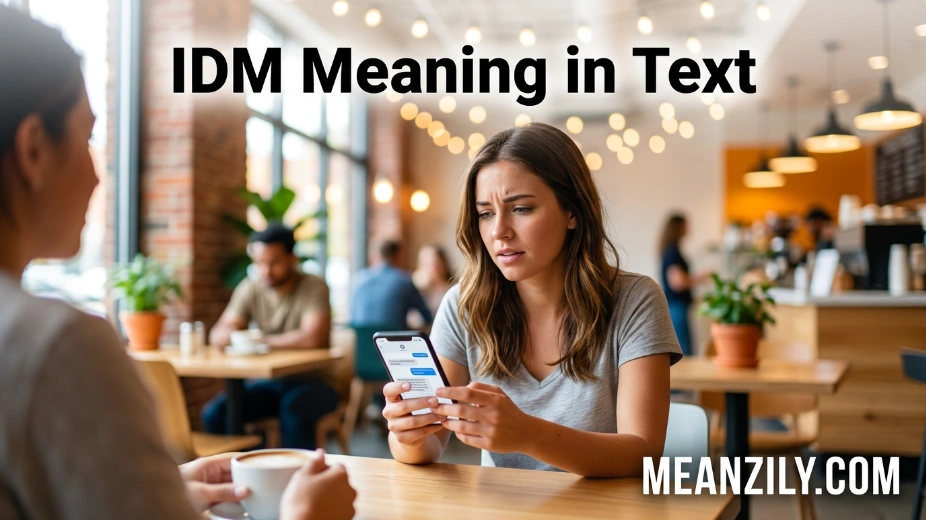
In text messages, IDM stands for “I Don’t Mind.”
People use it when they are comfortable with a suggestion, plan, decision, or option. Instead of typing an entire sentence, they use the shorter abbreviation to save time.
For example:
Friend: Want pizza or burgers?
You: IDM.
This means you are okay with either choice.
As a texting abbreviation, IDM helps make conversations faster and more casual. It fits naturally into modern digital communication where people often prefer short responses.
When someone sends IDM, they usually mean:
- Either option is fine
- They have no strong preference
- They agree with the suggestion
- They are easygoing about the decision
What Does IDM Stand For?
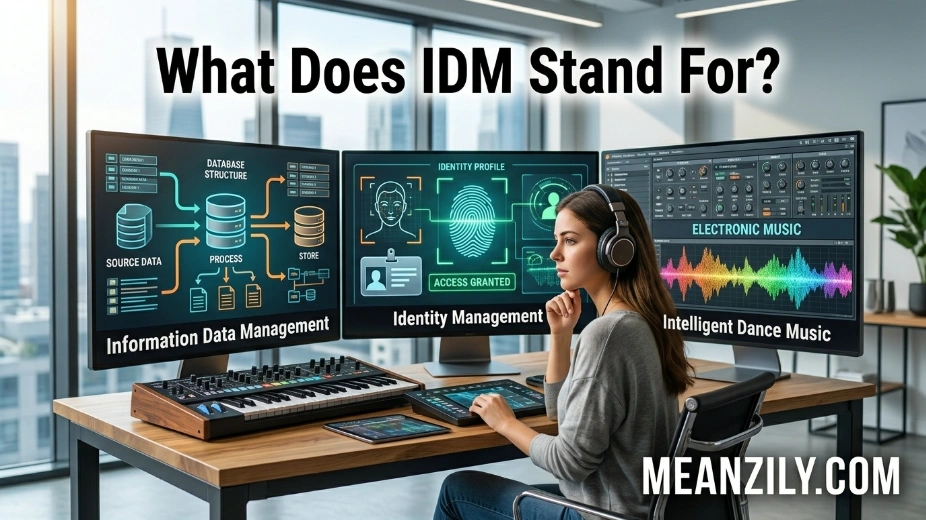
IDM stands for:
I = I
D = Don’t
M = Mind
Combined together, the phrase means:
“I don’t mind.”
In everyday English, “I don’t mind” means that something is acceptable to you.
For example:
- “IDM waiting a few minutes.”
- “IDM where we eat.”
- “IDM if you join us.”
People shorten the phrase because typing three letters is much faster than typing the full sentence, especially during quick online messaging.
Quick Answer
What does IDM mean?
IDM means “I Don’t Mind.”
People commonly use it on TikTok, Snapchat, Instagram, WhatsApp, and text messages to show that they have no objection to something or that they are okay with any choice someone makes.
Key Takeaways
- IDM usually means “I Don’t Mind.”
- It is a common texting abbreviation and internet slang term.
- Frequently used on TikTok, Snapchat, Instagram, WhatsApp, and SMS.
- It helps people respond quickly in online conversations.
- IDM is generally not rude or offensive.
- Most commonly used by Gen Z, Millennials, gamers, and social media users.
- It is considered a form of messaging shorthand.
- The meaning depends on context, but “I Don’t Mind” is the most common interpretation.
Why Do People Use IDM?
There are several reasons why IDM remains popular in online messaging.
It Saves Time
Typing “I Don’t Mind” takes longer than typing “IDM.”
Many users prefer quick responses, especially when chatting on mobile devices.
It Fits Internet Culture
Modern internet slang often focuses on speed and convenience.
Short abbreviations make conversations move faster.
Younger Users Prefer Shortcuts
Gen Z and younger Millennials grew up using messaging apps and social media.
As a result, they often use abbreviations naturally.
It Sounds Casual
IDM feels relaxed and friendly.
Instead of writing a long explanation, users can quickly show agreement or flexibility.
It Works in Many Situations
Whether discussing food, plans, gaming sessions, or social events, IDM fits naturally into countless conversations.
Where People Use IDM
TikTok
On TikTok, IDM often appears in comments and replies.
Users may respond to suggestions, opinions, or content recommendations.
Example:
“Should I post part 2?”
“IDM, both videos were good.”
Snapchat
Snapchat conversations tend to be fast and informal.
IDM helps users reply quickly without typing full sentences.
Example:
“Want to streak later?”
“IDM.”
Instagram users often use IDM in DMs, story replies, and comment sections.
Example:
“Should I keep this photo or delete it?”
“IDM, it looks great.”
WhatsApp is one of the most common places for texting abbreviations.
Example:
“What time should we meet?”
“IDM, whenever works.”
SMS/Text Messages
Traditional text messages also frequently include IDM.
Example:
“Movie or bowling?”
“IDM.”
Real Chat Examples
Example 1
A: Want sushi tonight?
B: IDM.
A: Cool, sushi it is.
Example 2
A: Should we leave at 7?
B: IDM.
A: Great.
Example 3
A: Which game should we play?
B: IDM, you choose.
A: Let’s play Fortnite.
Example 4
A: Blue shirt or black shirt?
B: IDM.
A: Black it is.
Example 5
A: Wanna call later?
B: IDM.
A: I’ll text you then.
Example 6
A: Should I post this?
B: IDM, looks good.
A: Posting now.
Example 7
A: Meet today or tomorrow?
B: IDM.
A: Tomorrow works.
Example 8
A: Pizza?
B: IDM.
A: Nice.
Example 9
A: Want to watch Netflix?
B: IDM.
A: Let’s do it.
Example 10
A: Can Sarah come too?
B: IDM.
A: Awesome.
Example 11
A: New map?
B: IDM.
A: Let’s try it.
Example 12
A: Should we stay longer?
B: IDM.
A: Okay.
Example 13
A: Tea or coffee?
B: IDM.
A: Coffee then.
Example 14
A: Window seat?
B: IDM.
A: Got it.
Example 15
A: Ready?
B: IDM waiting.
A: Be there soon.
Example 16
A: Group chat?
B: IDM.
A: Added you.
Example 17
A: Should we order now?
B: IDM.
A: Done.
Example 18
A: Join the stream?
B: IDM.
A: Sending link.
Example 19
A: Early morning hike?
B: IDM.
A: Great.
Example 20
A: New profile picture?
B: IDM, both look good.
A: Thanks.
Example 21
A: Saturday or Sunday?
B: IDM.
A: Saturday then.
Example 22
A: Extra cheese?
B: IDM.
A: Nice.
Example 23
A: Voice chat?
B: IDM.
A: Joining now.
Example 24
A: Watch the sequel?
B: IDM.
A: Perfect.
Example 25
A: Should we invite more people?
B: IDM.
A: Sounds good.
How to Reply When Someone Says “IDM”
Funny Replies
- Finally, a decision-maker!
- Thanks for narrowing it down.
- Your confidence is inspiring.
- Glad somebody chose chaos.
Casual Replies
- Cool, let’s do that.
- Sounds good.
- Okay then.
- Got it.
Friendly Replies
- Thanks for being flexible.
- Awesome, appreciate it.
- Great, let’s go with that.
- Perfect, thanks.
Neutral Replies
- Understood.
- Noted.
- Okay.
- Thanks for letting me know.
Is IDM Rude or Offensive?
No, IDM is generally not considered rude or offensive.
It is simply a social media abbreviation used to express flexibility or lack of preference.
However, tone and context still matter.
For example:
Polite:
“IDM either option.”
Potentially dismissive:
“IDM, whatever.”
In schools, casual chats, and conversations with friends, IDM is usually perfectly acceptable.
In professional workplaces, using the full phrase “I don’t mind” may sound more professional than using the abbreviation.
Who Uses This Term?
Gen Z
Gen Z uses IDM frequently in texting, TikTok comments, Snapchat messages, and online conversations.
Millennials
Many Millennials also understand and use IDM because they grew up with internet messaging culture.
Social Media Users
Instagram, TikTok, Discord, and WhatsApp users regularly use texting abbreviations like IDM.
Gaming Communities
Gamers often use IDM during team discussions and game planning.
General Texting Culture
Anyone who sends frequent text messages may use IDM as a quick response.
Today, it remains a fairly common messaging shorthand across many platforms.
Origin of the Term
The exact origin of IDM is difficult to trace.
Like many chat acronyms and internet slang terms, it likely developed naturally as online messaging became more popular.
As SMS texting gained popularity in the early 2000s, users began shortening common phrases to save time and character space.
Over time, “I Don’t Mind” became “IDM.”
The abbreviation spread through forums, chat rooms, messaging apps, gaming communities, and eventually social media platforms.
Other Meanings of IDM
Although “I Don’t Mind” is the most common texting meaning, IDM can have alternative meanings in specific contexts.
These include:
- Identity Management
- Integrated Data Management
- Intelligent Dance Music
For example, music fans may use IDM to refer to a genre of electronic music.
In technology discussions, IDM may refer to Identity Management.
However, in everyday texting and social media language, “I Don’t Mind” is usually the intended meaning.
Common Mistakes People Make About IDM
Assuming It Always Has One Meaning
Context matters.
IDM can mean different things depending on the conversation.
Confusing It With IDK
IDK means “I Don’t Know.”
IDM means “I Don’t Mind.”
These phrases have very different meanings.
Confusing It With IDC
IDC means “I Don’t Care.”
IDM means “I Don’t Mind.”
IDC can sound more dismissive than IDM.
Using It in Formal Writing
IDM works best in casual online messaging rather than professional documents.
Related Internet Slang Terms
| Term | Meaning | Common Use |
|---|---|---|
| IDK | I Don’t Know | Expressing uncertainty |
| IDC | I Don’t Care | Showing indifference |
| IMO | In My Opinion | Sharing opinions |
| TBH | To Be Honest | Giving honest thoughts |
| NGL | Not Gonna Lie | Admitting something honestly |
| FR | For Real | Showing agreement |
| SMH | Shaking My Head | Expressing disappointment |
| BRB | Be Right Back | Leaving temporarily |
These terms often appear alongside IDM in social media language and online messaging.
Comparison Table
| Term | Meaning | Type | Usage | Popularity |
|---|---|---|---|---|
| IDM | I Don’t Mind | Abbreviation | Showing flexibility | High |
| IDK | I Don’t Know | Abbreviation | Expressing uncertainty | Very High |
| IDC | I Don’t Care | Abbreviation | Showing indifference | Very High |
| IMO | In My Opinion | Acronym | Sharing views | High |
| BRB | Be Right Back | Acronym | Temporary absence | High |
Real-World Usage Example
Imagine two friends planning dinner.
One friend texts:
“Do you want Mexican food or Italian food tonight?”
The other replies:
“IDM.”
This tells the first friend that either option is fine. The response is quick, friendly, and easy to understand.
Why This Slang Remains Popular
Several factors keep IDM popular online.
Speed of Communication
People want faster conversations.
Short abbreviations reduce typing time.
Mobile Messaging
Most social media activity happens on smartphones.
Short responses are convenient on small keyboards.
Social Media Influence
TikTok slang, Snapchat slang, and other internet trends help keep abbreviations relevant.
Digital Communication Habits
Modern online conversations often favor quick, efficient messaging shorthand.
IDM fits perfectly into this style.
How IDM Changes the Tone of a Conversation
Small abbreviations can have a big impact on how a message feels. When someone uses IDM, they often sound relaxed, flexible, and easygoing.
For example, imagine a friend asks where you want to eat. Responding with “IDM” shows that you’re happy to go along with the group’s decision. It creates a cooperative tone rather than a demanding one.
This is one reason the abbreviation remains popular in online messaging. It helps people avoid unnecessary disagreements and keeps conversations moving smoothly.
In many cases, IDM can make a person appear more approachable because it signals that they are open to different options.
Situations Where IDM Is Commonly Used
People use IDM in countless everyday situations. Most of the time, it appears when a choice needs to be made.
Some common examples include:
- Choosing a restaurant
- Deciding what movie to watch
- Planning a meeting time
- Selecting a gaming mode
- Picking a travel destination
- Discussing weekend plans
Instead of writing a long explanation, a person can simply reply with IDM to show that they are comfortable with any reasonable option.
Because of its versatility, the abbreviation works across many different types of conversations.
Why IDM Sounds More Polite Than IDC
Many people confuse IDM and IDC because the abbreviations look similar. However, the tone behind them can be very different.
IDM means “I Don’t Mind,” which usually sounds flexible and cooperative.
IDC means “I Don’t Care,” which can sometimes sound uninterested or dismissive.
For example:
“I don’t mind where we go.”
feels much friendlier than:
“I don’t care where we go.”
Although both responses suggest no preference, IDM often comes across as more respectful and considerate.
This subtle difference explains why many people prefer using IDM when chatting with friends, classmates, or coworkers.
Can IDM Be Used in Group Chats?
Yes, IDM is especially common in group conversations.
Group chats often involve multiple people discussing plans, events, or decisions. Since everyone may have different opinions, IDM allows users to show agreement without creating unnecessary debate.
Imagine a group chat discussing a weekend outing.
One person suggests going to the beach.
Another suggests a movie.
Instead of arguing for one option, someone might simply respond with IDM.
This helps the group reach a decision faster while keeping the conversation positive.
How Context Helps You Understand IDM
Like many internet slang terms, IDM depends heavily on context.
The same abbreviation may appear in different situations, but the surrounding conversation usually makes the meaning obvious.
For example:
“Movie at 8 or 9?”
“IDM.”
Here, the meaning is clearly “I Don’t Mind.”
Understanding the messages before and after the abbreviation is often the easiest way to interpret it correctly.
When reading online conversations, always consider the topic being discussed rather than focusing only on the abbreviation itself.
IDM and Modern Digital Communication
Communication habits have changed dramatically over the last two decades.
People now send thousands of messages through texting apps, social media platforms, and online communities. As a result, shorter forms of communication have become increasingly popular.
IDM is part of this larger trend.
Users want messages that are quick to type, easy to read, and simple to understand. Abbreviations help achieve those goals.
This evolution has transformed how people communicate online and has contributed to the growth of internet slang across all age groups.
Is IDM Popular Around the World?
Although IDM is commonly seen in English-language conversations, it is not limited to one country.
People in the United States, Canada, the United Kingdom, Australia, and many other regions use the abbreviation regularly.
Because English dominates many social media platforms, internet slang often spreads internationally.
Even users whose first language is not English may recognize abbreviations like IDM because they encounter them frequently on TikTok, Instagram, Discord, and other global platforms.
This worldwide exposure has helped keep the term relevant in online communication.
What IDM Reveals About Online Culture
Internet slang often reflects broader communication trends.
The popularity of IDM shows that people value convenience, speed, and simplicity when interacting online.
Rather than writing lengthy explanations, users often prefer short responses that communicate the same idea.
IDM is a perfect example of this behavior.
It delivers a complete message in just three letters while remaining easy to understand for most internet users.
As digital communication continues to evolve, abbreviations like IDM will likely remain an important part of online culture.
Should Parents Know What IDM Means?
Parents who monitor their children’s online activity often encounter unfamiliar abbreviations.
Fortunately, IDM is generally harmless.
Unlike some slang terms that contain hidden meanings, IDM usually means “I Don’t Mind” and is considered safe for everyday conversations.
Understanding common texting abbreviations can help parents better follow online discussions and communicate more effectively with younger family members.
Learning these terms also reduces confusion when reading messages or social media comments.
Will IDM Still Be Popular in the Future?
Predicting the future of internet slang is difficult because trends change quickly.
However, abbreviations that solve a practical problem often survive much longer than trend-based slang.
IDM remains useful because it expresses a common idea in a very short format.
People regularly need a way to communicate flexibility and agreement, which means the abbreviation continues to serve a purpose.
While new slang terms may appear over time, IDM is likely to remain recognizable for years because of its simplicity and usefulness.
People Also Ask
What does IDM mean in text messages?
In most text messages, IDM means “I Don’t Mind.” It shows that someone is okay with a suggestion or has no strong preference.
What does IDM mean on TikTok?
On TikTok, IDM usually means “I Don’t Mind.” Users often write it in comments and replies when discussing choices or opinions.
Is IDM slang?
Yes. IDM is considered internet slang and a texting abbreviation commonly used in digital communication.
Is IDM rude or offensive?
No. IDM is generally polite and non-offensive. It usually indicates flexibility rather than disrespect.
How should you reply to IDM?
You can respond with phrases like “Okay,” “Sounds good,” “Thanks,” or “Let’s do that.”
What does IDM stand for?
IDM stands for “I Don’t Mind.”
Why do people use IDM?
People use IDM because it saves time and makes online messaging faster and more convenient.
Is IDM a Gen Z term?
Gen Z uses IDM frequently, but Millennials and many other internet users also understand it.
Can adults use IDM?
Absolutely. Anyone can use IDM in casual conversations.
When should you avoid using IDM?
Avoid using it in highly formal business communication where complete sentences may appear more professional.
Frequently Asked Questions
Is IDM commonly used on Snapchat?
Yes. Snapchat users frequently use IDM in casual chats.
Does IDM mean the same thing everywhere?
Usually yes, but context can occasionally change the meaning.
Is IDM positive or negative?
It is generally neutral or positive.
Can IDM be used in gaming chats?
Yes. Gamers often use IDM when discussing game choices or team decisions.
Is IDM still popular?
Yes. It remains a widely recognized texting abbreviation.
Can IDM replace “okay”?
Sometimes. Depending on the situation, IDM can communicate acceptance similar to saying “okay.”
Conclusion
IDM most commonly means “I Don’t Mind” in text messages, social media posts, and online conversations. It is a popular texting abbreviation that helps people communicate quickly while showing flexibility or agreement.
You’ll commonly see IDM on TikTok, Snapchat, Instagram, WhatsApp, gaming chats, and standard SMS messages. The term is generally friendly, non-offensive, and appropriate for casual conversations.
Whether you’re chatting with friends, commenting on social media, or sending a quick message, understanding IDM can help you navigate modern internet slang and digital communication with confidence.
Discover More Post
What Does wyd meaning Mean in Text? Real Meaning …
What Does FTL Mean in Text? Slang Guide with Examples …
INT Slang Meaning Explained What It Really Means in Texts …

Cove is the founder and lead SEO strategist behind Meanzily, with over 5 years of hands-on experience in search engine optimization and content marketing. He specializes in creating high-quality, user-focused content that aligns with Google’s latest SEO and E-E-A-T guidelines. Cove has helped multiple websites grow organically through data-driven strategies, keyword research, and on-page optimization. His mission is to deliver valuable, easy-to-understand content that ranks well and truly helps readers.