Have you seen someone use “OC” in a text message, TikTok comment, Snapchat chat, or Instagram post and wondered what it means?
In most online conversations, OC means “Original Character.” People use it when talking about a character they created themselves rather than one from a movie, TV show, game, or book.
The term is especially common in fandom communities, gaming groups, roleplaying spaces, and social media platforms where users share artwork, stories, animations, and creative content.
Many people search for the meaning of OC because the abbreviation can have different meanings depending on the context, making it confusing for beginners.
OC Meaning in Text
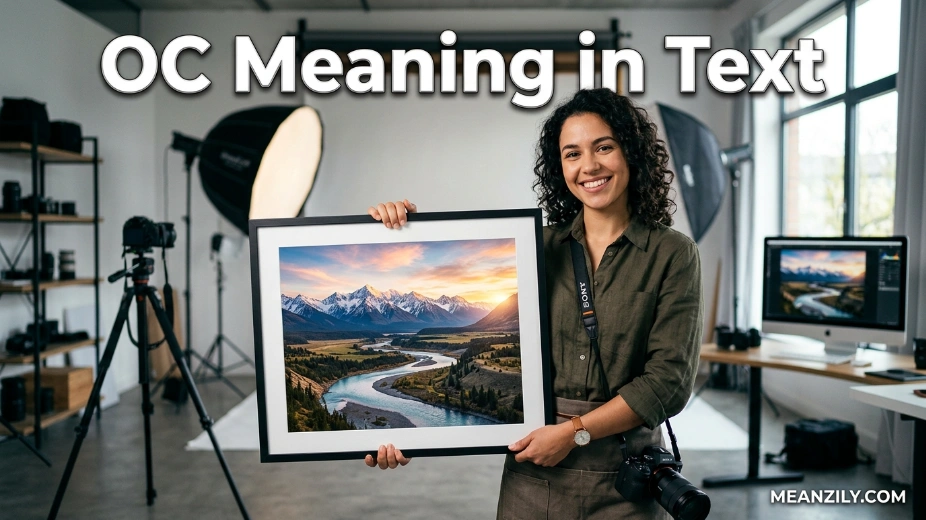
In text conversations, OC typically stands for “Original Character.”
An Original Character is a fictional person created by someone rather than borrowed from an existing franchise.
For example, if someone creates their own superhero, anime character, fantasy warrior, or game character, they may call it their “OC.”
Example:
Friend 1: I finally finished drawing my OC.
Friend 2: Nice! Can I see it?
In this example, the person is referring to a character they personally designed.
OC is considered both an internet abbreviation and a form of online shorthand that helps people communicate faster.
When people see OC in texting, they generally understand it as a custom-made character unless the conversation suggests another meaning.
What Does OC Stand For?
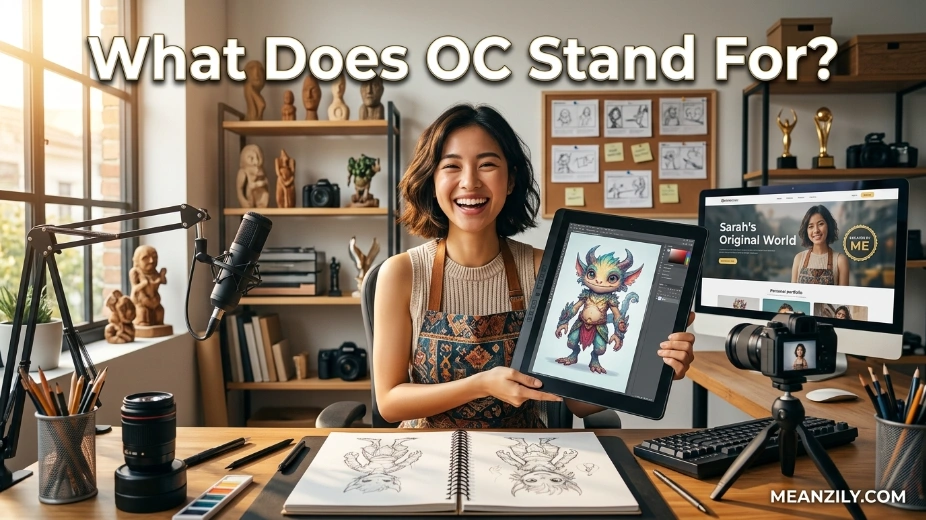
OC stands for:
Original Character
Breaking it down:
- Original = created by the user
- Character = a fictional person or personality
The phrase became popular because artists, writers, gamers, and roleplayers frequently needed a short way to identify characters they invented themselves.
Instead of typing “original character” repeatedly, people simply started using “OC.”
This made communication faster, especially in online forums, social media comments, gaming chats, and fan communities.
Quick Answer
What does OC mean?
OC means “Original Character.”
People commonly use it on TikTok, Snapchat, Instagram, WhatsApp, gaming communities, and text messages to refer to a character someone created themselves rather than an existing fictional character from a movie, game, anime, or television show.
Key Takeaways
- OC usually means Original Character
- It is a common internet slang abbreviation
- Popular in fandoms, gaming communities, art communities, and social media
- Frequently seen on TikTok, Instagram, Snapchat, Discord, and texting apps
- Not considered rude or offensive
- Used mostly by Gen Z, gamers, artists, writers, and social media users
- Can occasionally have alternative meanings depending on context
- Most often refers to a fictional character created by an individual
Why Do People Use OC?
There are several reasons why people use OC online.
It Saves Time
Typing two letters is much quicker than typing “Original Character” every time.
It Fits Internet Culture
Internet slang often develops to make communication faster and easier.
Just like people use IDK, BRB, or IMO, many users prefer saying OC.
It Helps Creative Communities
Artists, writers, and roleplayers constantly discuss their characters.
Using OC immediately tells others that the character is self-created.
It Creates Clear Communication
Instead of explaining that a character isn’t from Marvel, Disney, anime, or a game, people can simply say it’s an OC.
Younger Users Prefer Shortcuts
Gen Z and younger internet users often communicate using abbreviations and chat acronyms.
OC naturally fits into modern digital communication.
Where People Use OC
TikTok
On TikTok, OC often appears in videos featuring original artwork, animations, cosplay characters, or storytelling content.
Example:
“My OC finally got a redesign.”
TikTok creators frequently showcase character designs and backstories using the hashtag #OC.
Snapchat
On Snapchat, OC may appear in casual conversations between friends discussing art, gaming, or roleplaying.
Example:
“Check out my new OC.”
Friends often send sketches, screenshots, or character concepts through chat.
Instagram artists use OC frequently in captions and hashtags.
Example:
“New OC artwork finished today.”
Art communities use the term constantly when posting character illustrations.
WhatsApp users may mention OC while discussing creative projects or gaming communities.
Example:
“I’m writing a story about my OC.”
The abbreviation works well in private chats and group conversations.
SMS/Text Messages
Traditional texting also uses OC when talking about custom-created characters.
Example:
“Your OC looks amazing.”
Because texting encourages short communication, abbreviations like OC remain popular.
Real Chat Examples
Example 1
A: Who’s that character?
B: That’s my OC.
A: The design looks awesome.
Example 2
A: Did you draw this?
B: Yep, it’s my OC.
A: Great work.
Example 3
A: Is that from an anime?
B: No, it’s an OC.
A: That’s impressive.
Example 4
A: Your character looks familiar.
B: It’s actually my OC.
A: Nice design.
Example 5
A: What are you posting today?
B: A drawing of my OC.
A: Can’t wait to see it.
Example 6
A: Is your OC a hero?
B: Kind of.
A: Sounds cool.
Example 7
A: Who made this character?
B: I did. It’s my OC.
A: Great creativity.
Example 8
A: What game is that character from?
B: It’s not from a game.
A: Oh, it’s an OC?
B: Exactly.
Example 9
A: Why are people commenting OC?
B: Because the creator made the character.
A: Got it.
Example 10
A: Is that fan art?
B: No, it’s my OC.
A: Nice work.
Example 11
A: Can I draw your OC?
B: Sure.
A: Thanks.
Example 12
A: How old is your OC?
B: Around 20 in the story.
A: Interesting.
Example 13
A: I made a new OC today.
B: Show me.
A: Sending it now.
Example 14
A: Your OC has a great backstory.
B: Thanks.
A: It feels realistic.
Example 15
A: Is this your OC?
B: Yes.
A: Looks amazing.
Example 16
A: New profile picture?
B: Yep, it’s my OC.
A: Nice choice.
Example 17
A: What’s your OC’s name?
B: Kai.
A: Cool name.
Example 18
A: Are you making another OC?
B: Probably.
A: Looking forward to it.
Example 19
A: This OC belongs in a game.
B: That’s the goal.
A: Awesome.
Example 20
A: Is that your OC or fan art?
B: My OC.
A: Great design.
Example 21
A: Your OC has great armor.
B: Thank you.
A: Very creative.
Example 22
A: Did you write a story for your OC?
B: Yes.
A: I’d love to read it.
Example 23
A: Why does everyone say OC?
B: It means Original Character.
A: Makes sense.
Example 24
A: Is your OC a villain?
B: More of an antihero.
A: Interesting.
Example 25
A: New OC?
B: Yep.
A: Looks fantastic.
How to Reply When Someone Says “OC”
Funny Replies
- Your OC deserves a movie deal.
- That OC has more personality than I do.
- Hollywood should call you immediately.
- That character is ready for stardom.
- Your OC just stole the spotlight.
Casual Replies
- Nice OC.
- Looks great.
- That’s really creative.
- Cool design.
- I like the character.
Friendly Replies
- You did an amazing job.
- I love the design.
- Your creativity really shows.
- That’s a fantastic OC.
- I’d love to learn more about the character.
Neutral Replies
- Interesting character.
- Nice work.
- Thanks for sharing.
- That’s well designed.
- Looks good.
Is OC Rude or Offensive?
No, OC is generally not considered rude or offensive.
It is simply a social media abbreviation used to describe an Original Character.
Most people use it in positive and creative contexts.
It is safe to use in:
- School discussions
- Art communities
- Social media posts
- Text messages
- Gaming communities
- Online conversations
In professional workplaces, however, people may prefer writing out “Original Character” if the audience is unfamiliar with internet slang.
Who Uses This Term?
OC is widely used by:
Gen Z
Gen Z users frequently encounter OC content on TikTok, Instagram, Discord, and gaming platforms.
Millennials
Many Millennials use the term, especially those involved in fandoms, gaming, art, and creative writing.
Social Media Users
Creative communities across social media rely heavily on the term.
Gamers
Gamers often create custom characters and refer to them as OCs.
Writers and Artists
Writers and artists are among the biggest users of this abbreviation because they regularly create original characters for stories and artwork.
Origin of the Term
The term OC (Original Character) became popular in online creative communities during the early days of internet forums, fan-fiction websites, and roleplaying groups.
As artists and writers began sharing their work online, they needed a simple way to distinguish their own characters from characters that already existed in popular franchises. Saying “Original Character” made that distinction clear.
Over time, the phrase was shortened to “OC” because internet users prefer quick and efficient communication.
The abbreviation gained even more popularity through fan-fiction websites, DeviantArt, Tumblr, Discord communities, gaming forums, and later TikTok and Instagram.
While it’s difficult to identify exactly who used the term first, its roots are strongly connected to online creative culture.
How OC Changes Meaning Depending on Context
Although Original Character is the most common meaning, context always matters.
For example, if someone is discussing artwork, storytelling, gaming, or roleplaying, OC almost certainly means Original Character.
However, in other conversations, OC can have different meanings entirely.
This is why understanding the surrounding discussion is important before assuming what someone means.
Most social media users automatically interpret OC as Original Character when the conversation involves creative content.
Signs Someone Is Talking About an Original Character
Sometimes people use OC without explaining it.
Fortunately, there are several clues that can help you understand the meaning.
You are probably looking at an Original Character if the conversation includes:
- Character designs
- Storytelling
- Fan art
- Animation
- Roleplaying
- Gaming avatars
- Character backstories
- Fictional worlds
- Comics
- Creative writing
For example:
“Here’s my OC’s new outfit.”
“My OC finally got a redesign.”
“I’m writing a story about my OC.”
These examples clearly indicate the person is talking about a self-created fictional character.
Why Creative Communities Love Using OC
Creative communities helped make OC a mainstream internet term.
Artists enjoy creating unique characters because it allows them to express their imagination without relying on existing franchises.
Writers use OCs to build stories and fictional universes.
Gamers create OCs for roleplaying experiences.
Animators develop OCs for videos and short films.
Because the term is so useful across different creative hobbies, it became a standard part of internet slang and online communication.
What Makes a Good OC?
Many beginners wonder what separates a memorable Original Character from an average one.
A strong OC usually has:
- A unique personality
- Clear strengths and weaknesses
- Personal goals
- A believable backstory
- Distinctive appearance
- Interesting relationships
For example, a fantasy warrior becomes more interesting when they have fears, flaws, and motivations rather than simply being powerful.
People often connect more strongly with characters who feel realistic and relatable.
How OC Is Used in Online Art Communities
Art communities use the term OC almost daily.
Artists frequently share:
- Character sketches
- Full illustrations
- Character redesigns
- Reference sheets
- Character concepts
Many creators even organize OC challenges where artists draw their characters in different styles or situations.
Typical examples include:
“Draw your OC in winter clothing.”
“Show your oldest OC.”
“Redraw your first OC.”
These activities encourage creativity while helping artists improve their skills.
OC in Roleplaying Communities
Roleplaying communities are another major reason OC remains popular.
In roleplaying games, players often create custom characters that interact within fictional settings.
These characters may be:
- Wizards
- Detectives
- Superheroes
- Space explorers
- Fantasy warriors
- Students
- Villains
Each OC usually includes a detailed profile describing their personality, appearance, abilities, and background.
Because roleplaying depends heavily on original storytelling, OCs play a central role in these communities.
How Beginners Can Create Their Own OC
Creating an Original Character is easier than many people think.
Start with the basics:
- Choose a name.
- Decide on age and appearance.
- Create a personality.
- Give the character goals.
- Add strengths and weaknesses.
- Develop a backstory.
You don’t need professional art skills to create an OC.
Many people start by simply writing character descriptions and expanding them over time.
The best OCs often evolve gradually as creators continue building their stories.
Why People Become Attached to Their OCs
Many creators feel a strong emotional connection to their Original Characters.
Unlike characters from movies or games, OCs are personal creations.
People spend countless hours designing their appearance, writing their stories, and developing their personalities.
Over time, these characters can represent creativity, personal growth, and artistic achievement.
This explains why many creators enjoy discussing their OCs and sharing them with others online.
Other Meanings of OC
Although Original Character is the most common meaning online, OC can occasionally mean other things.
Some alternative meanings include:
| Meaning | Context |
|---|---|
| Original Character | Art, gaming, fandoms |
| Orange County | Geography and locations |
| Original Content | Social media and content creation |
| Officer Commanding | Military usage |
| Out of Character (sometimes OOC is used instead) | Roleplaying communities |
The correct meaning depends entirely on the conversation.
In texting and social media slang, Original Character is usually the intended definition.
Common Mistakes People Make About OC
Many people misunderstand the term when they first encounter it.
Assuming It Has Only One Meaning
OC can have several meanings depending on context.
Always consider the surrounding conversation.
Confusing OC With Original Content
Some social media users think OC means Original Content.
While this can happen in certain contexts, Original Character is generally more common in fandom and art communities.
Thinking Every Custom Avatar Is an OC
Not every avatar automatically qualifies as an Original Character.
An OC usually has a unique identity, personality, or story behind it.
Misunderstanding Fandom Discussions
New users sometimes mistake OCs for official characters from movies or games.
In reality, OCs are created by fans themselves.
Related Internet Slang Terms
| Term | Meaning | Common Use |
|---|---|---|
| IDK | I Don’t Know | Expressing uncertainty |
| IDC | I Don’t Care | Showing indifference |
| IMO | In My Opinion | Sharing opinions |
| TBH | To Be Honest | Giving honest thoughts |
| NGL | Not Gonna Lie | Admitting something honestly |
| FR | For Real | Showing agreement |
| SMH | Shaking My Head | Expressing disappointment |
| BRB | Be Right Back | Temporary absence |
Unlike these chat acronyms, OC refers to a creative concept rather than a reaction or opinion.
Comparison Table
| Term | Meaning | Type | Usage | Popularity |
|---|---|---|---|---|
| OC | Original Character | Internet abbreviation | Creative communities | High |
| IDK | I Don’t Know | Text slang | Casual conversations | Very High |
| IDC | I Don’t Care | Chat acronym | Informal messaging | High |
| IMO | In My Opinion | Discussion abbreviation | Opinions and debates | High |
| BRB | Be Right Back | Messaging shorthand | Temporary absence | Very High |
Real-World Usage Example
Imagine a high school student named Emma who enjoys drawing fantasy characters.
She spends several weeks designing a warrior princess complete with unique clothing, abilities, and a personal backstory.
Emma uploads the artwork to Instagram and writes:
“Meet my newest OC. She’s the guardian of an ancient kingdom.”
Her followers immediately understand that the character was created by Emma rather than borrowed from a movie, anime, or game.
This is one of the most common real-world uses of the term OC online.
Why This Slang Remains Popular
OC continues to thrive because internet culture values creativity and self-expression.
Several factors contribute to its popularity:
Fast Communication
Abbreviations save time and make conversations quicker.
Mobile Messaging Habits
People prefer short terms while texting on smartphones.
Social Media Growth
Platforms like TikTok and Instagram expose more users to OC-related content.
Creative Communities
Artists, gamers, writers, and roleplayers continue introducing new users to the term.
Because these communities remain active, the abbreviation is unlikely to disappear anytime soon.
How OC Changes Meaning Depending on Context
One reason people get confused about the meaning of OC is that context matters. While most internet users understand OC as “Original Character,” the same abbreviation can mean something completely different in another conversation.
For example, an artist posting a drawing on Instagram is probably referring to an Original Character. However, someone discussing a television show, workplace topic, or location may be using OC differently.
This is why it’s important to read the surrounding messages before assuming what someone means. Internet slang often depends on context, and OC is no exception.
When OC appears alongside words like drawing, art, character, story, roleplay, anime, or gaming, it almost always refers to an Original Character.
Signs That Someone Is Talking About an Original Character
If you’re new to internet culture, there are several clues that can help you identify when OC means Original Character.
You may see people discussing character names, backstories, personalities, powers, costumes, relationships, or fictional worlds. These are all strong indicators that the conversation involves an OC.
Artists frequently upload sketches and write captions such as “Meet my newest OC” or “I redesigned my OC today.”
Writers may talk about character development, while gamers might discuss custom characters they created for roleplaying communities.
Once you recognize these patterns, identifying the meaning becomes much easier.
Why Creative Communities Love Using OC
The term OC has become deeply connected to creative expression online.
Artists use OCs to practice drawing and design skills. Writers use them to build stories and fictional worlds. Animators use them to create unique content that stands out from existing franchises.
Having an Original Character allows creators to showcase their imagination without relying on characters owned by someone else.
Many people become emotionally attached to their OCs because they spend months or even years developing their personalities, appearances, and histories.
For some creators, an OC becomes much more than a fictional character—it becomes a long-term creative project.
What Makes a Good OC?
A memorable Original Character usually has more than just a cool appearance.
Strong OCs often have unique personalities, goals, strengths, weaknesses, and personal struggles. These details make the character feel realistic and relatable.
For example, a character who always succeeds can feel boring. A character who faces challenges and learns from mistakes tends to feel more authentic.
Creators often spend significant time developing their characters because a well-designed OC can become the foundation of stories, comics, games, and animations.
How OC Is Used in Online Art Communities
Art communities have helped make the term OC popular across the internet.
When artists post illustrations, they often specify whether the artwork features a fan-made character from an existing franchise or an Original Character.
This distinction helps viewers understand the creator’s work.
Many artists participate in OC challenges where they draw their characters in different styles, outfits, or situations. These activities encourage creativity and community engagement.
As a result, the term OC has become part of everyday vocabulary within online art spaces.
OC in Roleplaying Communities
Roleplaying communities frequently use Original Characters.
In roleplaying games and online forums, participants create unique characters and interact with others through fictional scenarios.
An OC might be a wizard, detective, superhero, warrior, student, or any other type of character the creator imagines.
These communities often encourage detailed character profiles that include personality traits, history, abilities, and goals.
Because roleplaying relies heavily on original storytelling, the term OC appears constantly in these spaces.
How Beginners Can Start Creating Their Own OC
Creating an Original Character can be a fun creative activity, even for beginners.
Start by choosing basic details such as a name, age, personality, and appearance. Then think about the character’s goals, fears, hobbies, and background.
You don’t need professional drawing skills to create an OC. Many people begin with written descriptions before creating visual designs.
Over time, you can continue adding details and refining the character as your ideas grow.
The most important thing is to create something that feels unique and enjoyable to you.
Why People Become Attached to Their OCs
Many creators form strong emotional connections with their Original Characters.
Unlike characters from movies or television shows, OCs are often built from personal ideas and experiences. Creators invest time, creativity, and emotion into developing them.
As the character grows, it may represent a creator’s imagination, artistic progress, or storytelling journey.
This emotional investment explains why many people enjoy discussing their OCs online and sharing them with others.
How Social Media Helped Popularize OC
Social media platforms have played a major role in spreading the term OC.
Before social media became widespread, Original Characters were mostly discussed in niche forums and fandom websites.
Today, TikTok, Instagram, Discord, YouTube, and other platforms allow creators to share their characters with large audiences instantly.
This increased visibility has introduced the term to millions of new users who may not have encountered it otherwise.
As creative content continues growing online, OC remains an important part of internet culture.
Can Businesses and Brands Use Original Characters?
Interestingly, Original Characters are not limited to individual creators.
Many businesses create mascot characters to represent their brands. These mascots are essentially company-created Original Characters.
Examples include fictional spokespeople, animated brand mascots, and marketing characters used in advertisements.
Because they are unique creations designed specifically for a brand, they fit the broader definition of Original Characters.
This shows how the concept of an OC extends beyond social media and creative hobbies into professional marketing and branding.
People Also Ask
What does OC mean in text messages?
In most text messages, OC means Original Character. It refers to a fictional character someone personally created rather than one from an existing franchise.
What does OC mean on TikTok?
On TikTok, OC usually refers to an Original Character featured in artwork, animation, storytelling videos, or roleplaying content.
Is OC slang?
Yes. OC is considered internet slang and a social media abbreviation commonly used in online communities.
Is OC rude or offensive?
No. OC is generally harmless and not considered offensive.
How should you reply to OC?
You can respond by complimenting the character, asking about its story, or showing interest in the creator’s work.
What does OC stand for?
OC stands for Original Character.
Why do people use OC?
People use it because it is faster than typing “Original Character” and is widely understood in creative communities.
Is OC a Gen Z term?
Gen Z uses it frequently, but Millennials and older internet users also use the term.
Can adults use OC?
Absolutely. OC is used by people of all ages involved in creative hobbies.
When should you avoid using OC?
Avoid using the abbreviation when speaking with people unfamiliar with internet slang or in formal professional documents.
Frequently Asked Questions
Is OC only used by artists?
No. Writers, gamers, roleplayers, animators, and content creators also use the term regularly.
Can an OC be based on a real person?
Yes. Some creators use real-life inspiration while still creating a unique fictional character.
Is OC popular in gaming communities?
Yes. Many gamers create Original Characters for roleplaying games and online storytelling.
Can one person have multiple OCs?
Absolutely. Many creators develop dozens of Original Characters over time.
Do OCs need artwork?
No. An OC can exist solely as a written character without any drawings.
Are OCs copyrighted?
In many cases, original creative characters may qualify for copyright protection depending on how they are developed and used.
Conclusion
So, what does OC mean in text?
In most online conversations, OC stands for Original Character. It refers to a fictional character that someone personally created rather than a character from an existing movie, television show, game, anime, or book.
The abbreviation is especially popular among artists, writers, gamers, roleplayers, and social media users who regularly share creative content online.
OC is not rude, offensive, or inappropriate. It is a widely accepted piece of internet slang used across TikTok, Snapchat, Instagram, WhatsApp, Discord, and other online platforms.
Now that you know what OC means, you’ll have no trouble understanding it the next time it appears in a text message, social media post, gaming chat, or online conversation.
Discover More Post
What Does HB Mean in Text From a Girl? Slang Meaning …
What Does MK Mean in Text? Real Meaning Examples …
What Does lbvs Meaning in Text? Real Meaning Examples …