If you’ve come across “RLS” in a text, TikTok comment, Snapchat chat, or even an Instagram DM and paused for a second wondering what it means—you’re not alone. Most of the time, people use RLS to mean “Real Life Stuff” or “Real Life Situation,” basically referring to whatever is going on in their offline world.
It’s one of those slang terms that shows up when someone is busy, distracted, or just dealing with things outside social media. The tricky part is that its exact meaning can shift slightly depending on the conversation, which is why it often confuses people at first glance.
You’ll see it pop up across all the usual places—TikTok captions, Snapchat replies, WhatsApp chats, Instagram messages, and regular texts. And if you’re not familiar with internet slang, it can feel like everyone’s speaking a different language.
In this guide, we’ll break it all down in a simple way—what RLS actually means, how people use it in real conversations, how you should respond, and when it’s okay (or not okay) to use it yourself.
RLS Meaning in Text
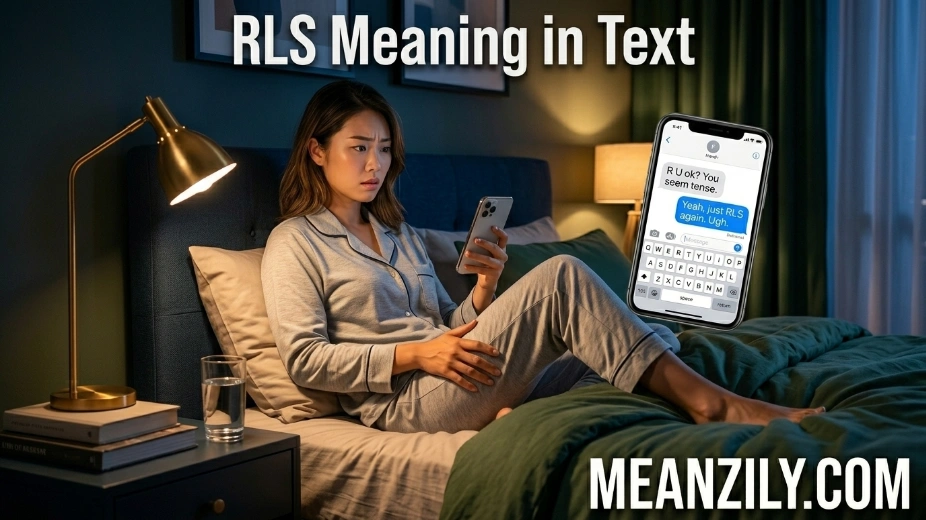
RLS is an abbreviation commonly used in online conversations and text messaging.
The most common meanings include:
- Real Life Stuff
- Real Life Situation
- Real Life Story (less common)
When someone uses RLS, they are usually talking about something happening outside the internet or social media.
For example:
“Sorry I haven’t been online much. Dealing with some RLS.”
In this case, the person means they are busy handling real-life responsibilities or problems.
Unlike many internet abbreviations that are jokes or memes, RLS is generally used to describe genuine situations affecting someone’s daily life.
What Does It Mean in Everyday Chat?
In normal conversations, RLS is often used when someone:
- Is busy with work or school
- Has family responsibilities
- Is dealing with personal issues
- Needs a break from social media
- Cannot reply quickly
It serves as a short way to explain that real-life matters are taking priority.
Where People Use RLS
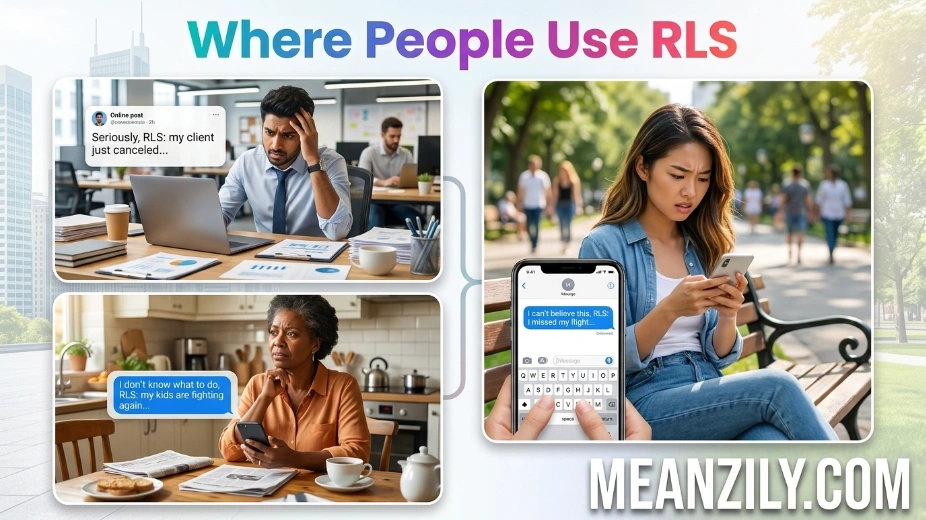
RLS appears across many social platforms and messaging apps.
TikTok
On TikTok, users may mention RLS when explaining why they haven’t posted content recently.
Example:
“No uploads this week because of some RLS.”
This tells followers that personal responsibilities are keeping them busy.
Snapchat
Snapchat users sometimes use RLS in private chats when they cannot respond immediately.
Example:
“Sorry for the late reply. RLS has been crazy lately.”
Instagram users may mention RLS in stories, captions, or direct messages.
Example:
“Taking a short break because of RLS.”
This helps followers understand why someone is less active.
On WhatsApp, friends often use RLS to explain delays in messaging.
Example:
“I’ll answer later. Got some RLS to deal with.”
SMS
Traditional text messages also use RLS as a quick explanation for being unavailable.
Example:
“Can’t talk right now. RLS is keeping me busy.”
Real Chat Examples
Here are some realistic examples showing how RLS might appear in conversations.
Example 1
A: Haven’t seen you online lately.
B: Yeah, lots of RLS this week.
A: Hope everything goes well.
Example 2
A: Why didn’t you join the game last night?
B: Had some RLS to handle.
A: No worries.
Example 3
A: Are you posting a new video soon?
B: Probably next week. RLS has been hectic.
A: Looking forward to it.
Example 4
A: You disappeared from Instagram.
B: Just dealing with RLS.
A: Got it.
Example 5
A: Want to hang out tonight?
B: Can’t. Busy with RLS.
A: Maybe another day.
Example 6
A: Why are you replying so slowly?
B: RLS is keeping me occupied.
A: Makes sense.
Example 7
A: Are you okay?
B: Yeah, just some RLS going on.
A: Glad you’re okay.
Example 8
A: Missed you in the group chat.
B: Sorry, RLS got in the way.
A: Happens to everyone.
Example 9
A: Can you help me today?
B: Maybe later. RLS first.
A: Sure thing.
Example 10
A: Haven’t heard from you.
B: Been busy with RLS lately.
A: Hope things calm down soon.
How to Reply When Someone Says “RLS”
Your response depends on the tone of the conversation.
Funny Replies
- “Tell RLS to give you a day off.”
- “Real life always ruins the fun.”
- “Looks like RLS won again.”
- “Hope you survive the RLS challenge.”
Casual Replies
- “No problem.”
- “I understand.”
- “Take your time.”
- “Hope everything is okay.”
Friendly Replies
- “Hope things get better soon.”
- “Let me know if you need anything.”
- “Take care of yourself.”
- “Wishing you the best.”
Neutral Replies
- “Understood.”
- “Thanks for letting me know.”
- “Okay, no worries.”
- “Sounds good.”
Is RLS Rude or Offensive?
No, RLS is generally not considered rude or offensive.
Most people use it as a neutral abbreviation to describe real-life responsibilities or situations.
It is usually safe to use in casual conversations with friends, classmates, family members, and online communities.
However, because some people may not know what the abbreviation means, it can be clearer to write out “real life stuff” in professional settings.
Is It Appropriate at School?
Yes, it is usually acceptable in informal conversations among students.
Is It Appropriate at Work?
In casual workplace chats, it may be understood. However, writing the full phrase is often more professional.
Who Uses This Term?
RLS is mainly used by people who spend time online and communicate through messaging apps.
Age Groups
The term is most common among:
- Teenagers
- Young adults
- College students
- Active social media users
Gen Z Usage
Gen Z users often prefer abbreviations because they make texting faster and more convenient.
RLS fits well with other common internet shortcuts.
Common Platforms
You’ll most often see it on:
- TikTok
- Snapchat
- Discord
- Text messages
How Often Does It Appear Online?
RLS is not as common as abbreviations like IDK or BRB, but it still appears regularly in online communities and private chats.
Its popularity varies depending on the platform and friend group.
Origin of the Term
The exact origin of RLS is somewhat unclear.
Like many internet abbreviations, it likely developed naturally as users searched for shorter ways to communicate online.
As texting became more popular, people began shortening longer phrases into quick acronyms.
The phrase “real life stuff” was already commonly used in everyday speech. Over time, internet users shortened it to RLS for convenience.
Because internet slang often spreads through social media, gaming communities, forums, and messaging apps, the abbreviation gradually became recognizable to many users.
Although its precise starting point is difficult to identify, its growth reflects the broader trend of shortening phrases for faster digital communication.
Comparison Table
| Term | Meaning | Type | Usage | Popularity |
|---|---|---|---|---|
| RLS | Real Life Stuff / Real Life Situation | Abbreviation | Explaining real-world responsibilities | Moderate |
| IDK | I Don’t Know | Acronym | Expressing uncertainty | Very High |
| IDC | I Don’t Care | Acronym | Showing lack of interest | High |
| IMO | In My Opinion | Acronym | Sharing personal opinions | High |
| BRB | Be Right Back | Acronym | Temporarily leaving a conversation | Very High |
Real-World Usage Example
Imagine a student who usually chats with friends every evening.
During exam week, they become much less active online because they are studying, attending classes, and preparing assignments.
A friend messages them and asks why they haven’t been around.
The student replies:
“Sorry, lots of RLS right now.”
This simple response lets their friend know that real-life responsibilities are taking priority over online activities.
Why Do People Use RLS Instead of Writing the Full Phrase?
Texting culture is built around speed. People often shorten common phrases to save time and make conversations flow more naturally. RLS is one of those shortcuts that lets someone quickly explain they are dealing with things outside the online world.
Instead of typing a longer explanation, a person can simply write “RLS” and most internet users will understand the general idea. This is especially useful when someone is busy and doesn’t want to go into personal details.
Another reason people use RLS is privacy. Sometimes a person doesn’t want to explain exactly what’s happening in their life. Using this abbreviation allows them to acknowledge a situation without sharing too much information.
As online communication becomes faster, abbreviations like RLS continue to be a convenient way to communicate.
Different Meanings of RLS Depending on Context
Like many internet abbreviations, RLS can occasionally have different meanings depending on where it appears.
In casual text conversations, it most often refers to “Real Life Stuff” or “Real Life Situation.” However, in certain professional, medical, or technical discussions, the same letters may represent something completely different.
This is why context matters. Looking at the surrounding conversation usually makes the intended meaning clear.
For example, if someone says they are taking a break from social media because of RLS, they are almost certainly referring to real-life responsibilities rather than any other definition.
Understanding context is one of the easiest ways to interpret internet slang correctly.
Signs That Someone Is Talking About RLS
Sometimes people use RLS without explaining what it means. Fortunately, there are clues that can help you understand it.
You might notice someone mentioning:
- Being busy
- Taking a break online
- Family responsibilities
- School assignments
- Work commitments
- Personal challenges
These situations often indicate that RLS is being used to describe real-life obligations.
The abbreviation frequently appears when someone wants to explain reduced activity online or delayed responses to messages.
When you recognize these patterns, understanding the conversation becomes much easier.
Why RLS Is Popular in Online Communities
Online communities often develop their own vocabulary over time. RLS became useful because many internet users face the same challenge of balancing online activities with offline responsibilities.
Whether someone participates in gaming groups, social media communities, fan pages, or discussion forums, there are times when real life demands attention.
Rather than writing a long explanation every time, users can simply mention RLS.
This shared understanding helps conversations stay simple while still communicating important information.
Because the abbreviation is flexible and easy to understand, it continues to be used across different online spaces.
Common Situations Where You Might See RLS
RLS tends to appear during certain situations more often than others.
For example, a student may use it during exam season when studies become a priority. An employee might mention it during a busy work project. Parents may use it when family responsibilities take up extra time.
Content creators sometimes mention RLS when explaining why they have not uploaded videos or posted updates.
Gamers also use the term when they cannot participate in events, tournaments, or group activities.
In all of these cases, the abbreviation serves as a simple explanation that real-world responsibilities come first.
Can RLS Mean Something Different in Other Fields?
Yes. Outside of texting and social media, RLS can represent completely different terms.
For example, certain industries, organizations, and professional fields may use RLS as an abbreviation for technical concepts. In medical discussions, it may even have a separate meaning unrelated to internet slang.
This is why it is important not to assume every use of RLS means the same thing.
When reading messages on TikTok, Instagram, Snapchat, or WhatsApp, it usually refers to real-life situations. In professional documents or specialized discussions, the meaning may change.
Checking the context will help you avoid misunderstandings.
How Internet Slang Like RLS Changes Over Time
Internet language evolves quickly. New abbreviations appear every year while older ones sometimes fade away.
Terms survive when people find them useful. RLS has remained relevant because it describes something nearly everyone experiences—managing responsibilities away from the internet.
Social media platforms also influence how slang spreads. A phrase used by a small group today can become widely recognized after being shared by creators, influencers, or online communities.
Because language constantly changes, the popularity of abbreviations can rise and fall over time.
RLS has maintained its usefulness because the concept behind it remains universal.
Mistakes People Make When Interpreting RLS
One common mistake is assuming RLS always has a single meaning.
Another mistake is thinking it refers to a specific problem or emergency. In reality, RLS can describe anything from homework and work deadlines to family commitments and personal matters.
Some people also misunderstand the abbreviation because they are unfamiliar with internet slang.
If you’re unsure what someone means, asking a polite follow-up question is usually the best approach.
Most people are happy to clarify their message if there is confusion.
Benefits of Understanding Modern Text Abbreviations
Learning abbreviations like RLS helps you navigate online conversations more confidently.
You can understand messages faster, participate in discussions more naturally, and avoid confusion when reading social media posts.
Text abbreviations also reveal how digital communication continues to evolve. They show how people adapt language to fit modern communication habits.
Whether you’re a student, parent, professional, or casual social media user, understanding common internet terms can improve your online experience.
Even if you don’t use these abbreviations yourself, knowing what they mean makes conversations easier to follow.
Should You Use RLS in Your Own Messages?
Using RLS is generally fine when talking with friends, classmates, gaming groups, or social media contacts.
The abbreviation feels casual and friendly, making it suitable for informal conversations.
However, if you’re communicating with someone who may not recognize internet slang, writing the full phrase can prevent confusion.
In professional emails, business communications, or formal settings, complete sentences are usually the better choice.
The best approach is to match your language to your audience. If the people you’re talking to regularly use abbreviations, RLS will likely feel natural in the conversation.
Why Some People Have Never Heard of RLS
Even though internet abbreviations are common, not every term reaches the same level of popularity. RLS is one of those expressions that many people understand within certain online circles but may be unfamiliar to others.
Someone who spends a lot of time on social media, gaming platforms, or messaging apps is more likely to recognize the abbreviation. Meanwhile, people who mainly use the internet for work or news may never encounter it.
This difference explains why some users immediately understand RLS while others search online to find its meaning. Internet language often spreads through communities rather than through official dictionaries, so awareness can vary greatly from person to person.
How RLS Helps Keep Conversations Short
Modern messaging is built around quick exchanges. Most people prefer sending short messages rather than lengthy explanations.
RLS works well because it communicates a broad idea in only three letters. Instead of describing work deadlines, family obligations, or personal commitments in detail, a person can use a simple abbreviation.
This keeps conversations moving without requiring long explanations every time someone becomes busy. The abbreviation acts as a shortcut that many online users instantly recognize.
As a result, it helps make digital communication faster and more efficient.
Situations When You Should Explain RLS Further
Although RLS is useful, there are moments when additional explanation may be helpful.
For example, if a close friend is worried about you, replying with only “RLS” might sound vague. In that situation, adding a little context can make the conversation feel more personal.
You don’t have to share private details. Even a simple statement such as “Just dealing with some family responsibilities” can provide reassurance.
Knowing when to expand on an abbreviation is an important communication skill, especially when talking with people who care about your well-being.
How RLS Reflects the Balance Between Online and Offline Life
The popularity of RLS highlights an interesting aspect of modern life. People spend significant time online, yet they still have responsibilities away from screens.
School, work, family, health, hobbies, and personal goals all require attention. Sometimes these responsibilities reduce the amount of time available for social media or messaging.
When people mention RLS, they are often acknowledging this balance. The abbreviation reminds others that real-world commitments remain important, even in an increasingly digital world.
This may be one reason the term continues to resonate with so many internet users.
What RLS Can Tell You About a Conversation
Abbreviations often reveal more than their literal meaning. When someone uses RLS, it may indicate that they are setting expectations about their availability.
For example, they might be explaining why they are replying slowly, missing online events, or taking a temporary break from a platform.
Understanding this message can help prevent misunderstandings. Instead of assuming someone is ignoring messages, you can recognize that they are simply focused on other priorities.
In many cases, RLS serves as a polite way to keep communication clear.
Why Context Matters More Than the Abbreviation Itself
The letters RLS are only part of the message. The surrounding conversation often provides the most important clues.
For instance, the phrase could appear in a discussion about school, work, friendships, or content creation. Each situation adds a slightly different layer of meaning.
This is why experienced internet users rarely focus on the abbreviation alone. They consider the entire conversation before deciding what the sender means.
Developing this habit can improve your understanding of many types of online slang, not just RLS.
Similar Situations Where People Might Use Other Words Instead
Not everyone uses RLS when discussing real-life responsibilities. Some people prefer alternative phrases.
You might see expressions such as:
- Busy offline
- Personal matters
- Real-world responsibilities
- Taking a break
- Life has been hectic
- Handling some things
These alternatives communicate a similar idea but with different wording.
The choice often depends on personal preference, age group, or the platform being used.
Why Abbreviations Continue to Shape Online Communication
Abbreviations have been part of internet culture for decades. As technology changes, people continue looking for ways to communicate quickly.
Smartphones, messaging apps, and social media encourage brief interactions. Because of this, short forms remain useful even when typing has become easier.
Terms like RLS demonstrate how language adapts to modern habits. They allow users to communicate ideas efficiently without sacrificing meaning.
This ongoing evolution is one reason internet slang remains such a fascinating part of digital culture.
Understanding RLS as a New Internet User
If you’re new to social media or online communities, abbreviations can seem confusing at first.
The good news is that most internet slang follows predictable patterns. Once you learn a few common terms, understanding others becomes much easier.
RLS is a great example because its meaning is relatively straightforward. It simply points to activities, responsibilities, or situations happening outside the internet.
Learning terms like this can help new users feel more comfortable participating in online discussions and group chats.
The Future of Terms Like RLS
Internet language never stands still. Some abbreviations disappear after a few years, while others become part of everyday communication.
The future of RLS will likely depend on whether people continue finding it useful. Since the need to describe real-life responsibilities is unlikely to disappear, the abbreviation may remain relevant for years to come.
Even if new slang terms emerge, the idea behind RLS will probably continue to exist in one form or another.
Language changes constantly, but the need for quick and practical communication remains the same.
What Parents Should Know About RLS
Parents sometimes notice unfamiliar abbreviations in messages and wonder whether they indicate something concerning.
In most cases, RLS is harmless. It generally refers to ordinary real-life responsibilities rather than secret codes or inappropriate content.
Understanding common internet terms can help parents better follow online conversations without unnecessary worry.
Rather than assuming the worst, learning the meaning behind abbreviations often provides a clearer picture of how young people communicate today.
Why Content Creators Sometimes Mention RLS
Many content creators build strong relationships with their audiences. When posting schedules change, followers often become curious about the reason.
Instead of sharing private details, creators may simply mention RLS. This offers a respectful balance between transparency and privacy.
Followers usually understand that personal responsibilities occasionally need attention.
As a result, the abbreviation has become a convenient way for creators to communicate temporary absences while maintaining professional boundaries.
Why RLS Is Easy to Understand Compared to Other Slang
Some internet slang terms can be difficult to figure out because they have hidden meanings or are based on inside jokes. RLS is different. Once someone learns that it refers to real-life matters, the abbreviation becomes fairly easy to remember.
The phrase behind the letters is familiar to most people. Everyone has responsibilities, commitments, and unexpected situations outside the internet. Because of this, the meaning feels natural rather than confusing.
This simplicity helps explain why new users can often learn the term quickly compared to more complicated forms of online slang.
How Friend Groups Create Their Own Meanings for RLS
Internet language is not always used the same way by everyone. Some friend groups may use RLS in slightly different ways depending on their habits and communication style.
For one group, it may refer mainly to schoolwork and exams. For another, it could mean work schedules or family commitments. The general idea stays the same, but the specific situations may vary.
This flexibility allows the abbreviation to fit many different conversations without losing its core meaning.
As a result, people can adapt it to their own social circles while still being understood.
The Role of RLS in Online Friendships
Online friendships often involve daily conversations, shared interests, and regular interaction. When someone suddenly becomes less active, friends naturally wonder what happened.
RLS provides a simple explanation without requiring a lengthy discussion. It reassures others that the absence is usually related to offline responsibilities rather than a problem within the friendship.
This can help maintain trust and understanding between people who primarily communicate online.
In many cases, a short mention of RLS prevents unnecessary confusion or concern.
Why Some Users Prefer Full Sentences Over RLS
Although abbreviations are convenient, not everyone enjoys using them.
Some people prefer complete sentences because they feel clearer and more personal. Writing “I’ve been busy with work lately” can sometimes communicate more warmth than simply saying “RLS.”
The choice often depends on communication style. Users who value speed may choose abbreviations, while those who prefer detailed conversations may avoid them.
Neither approach is wrong. The best option is usually the one that feels most natural for the situation.
How RLS Fits Into Modern Digital Communication
The way people communicate has changed dramatically over the past two decades. Messages that once took several sentences are now often condensed into a few words or abbreviations.
RLS reflects this shift toward concise communication. It delivers a complete idea in a very small amount of space.
This trend can be seen across texting, social media, gaming chats, and online communities. People frequently look for ways to communicate efficiently while still conveying important information.
RLS is one example of how language adapts to new technology and communication habits.
When RLS Can Prevent Misunderstandings
Misunderstandings are common in online conversations because tone and intent are not always obvious.
Imagine someone suddenly stops responding to messages. Without an explanation, others may assume they are uninterested, upset, or intentionally ignoring the conversation.
A brief mention of RLS can immediately change that perception. It lets people know that outside responsibilities are affecting availability.
This simple clarification often prevents unnecessary assumptions and keeps relationships positive.
Why Younger Generations Recognize RLS More Quickly
People who grew up using smartphones and social media tend to encounter internet abbreviations more frequently.
Because of this exposure, younger users often recognize terms like RLS almost immediately. They are accustomed to seeing shortened expressions in comments, captions, direct messages, and group chats.
Older users may be less familiar with these abbreviations, especially if they primarily use technology for work-related purposes.
This difference highlights how communication habits can vary across generations.
How RLS Can Be Used Respectfully
One reason RLS remains widely accepted is that it is generally respectful and non-confrontational.
The abbreviation does not insult anyone or create conflict. Instead, it simply communicates that someone is occupied with matters outside the online world.
Using it politely can help set expectations without sounding rude or dismissive.
For example, telling someone you’ll respond later because of RLS is usually viewed as considerate communication rather than an excuse.
Why Online Communities Value Personal Boundaries
Many internet users appreciate having a degree of privacy. Not everyone wants to share detailed information about personal challenges or responsibilities.
RLS helps create that boundary. It allows someone to acknowledge that something is happening without revealing sensitive details.
This balance between communication and privacy is especially important in large online communities where people may not know each other well.
The abbreviation offers a simple way to maintain personal space while remaining courteous.
How RLS Appears in Group Conversations
Group chats often move quickly, making short messages especially useful.
When several people are discussing plans, games, events, or projects, someone may use RLS to explain why they cannot participate.
Because group conversations involve multiple people, lengthy explanations can sometimes interrupt the flow of discussion. A brief abbreviation allows the person to communicate their situation efficiently.
This practicality makes RLS a convenient term in active group settings.
What Makes RLS Different From Trend-Based Slang
Many slang expressions become popular because of memes, viral videos, or temporary internet trends.
RLS is somewhat different. Its usefulness comes from describing a common life experience rather than from entertainment value.
People are likely to encounter real-world responsibilities regardless of changing online trends. Because of this, the abbreviation serves a practical purpose instead of relying on popularity alone.
Terms with practical uses often remain relevant longer than purely trend-driven slang.
How Learning RLS Can Improve Online Communication Skills
Understanding internet abbreviations is part of becoming a more confident digital communicator.
Knowing terms like RLS helps you interpret conversations accurately and respond appropriately. It also reduces the chance of misunderstanding messages from friends, classmates, coworkers, or online communities.
As digital communication continues to grow, familiarity with common abbreviations becomes increasingly useful.
Even a small amount of knowledge can make online interactions smoother and more enjoyable.
Why RLS Continues to Be Relevant Today
Technology changes quickly, but the need to balance online activities with offline responsibilities remains constant.
People still attend school, go to work, spend time with family, and handle everyday obligations. Because these experiences are universal, the concept behind RLS remains meaningful.
The abbreviation continues to provide a quick and effective way to communicate that real-world priorities require attention.
As long as people maintain lives outside the internet, terms like RLS are likely to remain useful in digital conversations.
Frequently Asked Questions
What does RLS mean in text messages?
RLS usually means “Real Life Stuff” or “Real Life Situation.” It refers to personal responsibilities or events happening offline.
What does RLS mean on TikTok?
On TikTok, RLS often means someone is busy dealing with real-life matters and cannot post or interact as much as usual.
Is RLS slang?
Yes. It is considered internet slang and an online abbreviation used in texting and social media conversations.
Is RLS rude or offensive?
No. RLS is generally neutral and not considered offensive.
How should you reply to RLS?
You can reply with messages such as “No worries,” “Take your time,” or “Hope everything goes well.”
Conclusion
RLS is a simple abbreviation that usually means “Real Life Stuff” or “Real Life Situation.” People use it when they want to explain that offline responsibilities are taking up their time.
You’ll commonly see it on TikTok, Snapchat, Instagram, WhatsApp, and in text messages. The term is generally friendly, safe, and non-offensive.
While it’s fine for casual conversations, using the full phrase may be a better choice in professional or formal situations. Understanding RLS helps you keep up with modern internet slang and communicate more confidently online.
Discover More Post
INT Slang Meaning Explained What It Really Means in Texts …
What Does ASF Mean in Text? Real Meaning Examples …
What Does SCP Mean in Text? Real Meaning Examples …

Jinx is a seasoned SEO expert and digital content strategist with over 9 years of hands-on experience in search engine optimization, content marketing, and online brand growth. As the driving force behind Meanzily, Jinx specializes in creating high-performing, user-focused content that ranks, converts, and delivers real value. With deep expertise in modern SEO trends, keyword research, and search intent optimization, Jinx helps websites grow organically and sustainably. Passionate about data-driven strategies and helpful content, Jinx is committed to delivering accurate, engaging, and SEO-friendly insights for today’s digital audience.