If you’ve seen TIA in a text message, social media comment, or online post, it usually means “Thanks in Advance.” People use it when they’re asking for help, recommendations, or information and want to show appreciation before anyone responds.
At first glance, TIA may look like just another random internet abbreviation. But if you spend time on TikTok, Snapchat, Instagram, WhatsApp, Facebook groups, or even work emails, you’ll notice it appears surprisingly often. That’s why so many people search for its meaning after spotting it in a conversation.
Like many texting terms, TIA isn’t always used exactly the same way. Depending on the situation, it can sound friendly, polite, casual, or even slightly expectant. Understanding the context can help you avoid confusion and respond appropriately.
In this guide, you’ll discover what TIA really means, where it’s commonly used, how people use it in everyday conversations, and the best ways to reply when someone sends it to you.
TIA Meaning in Text
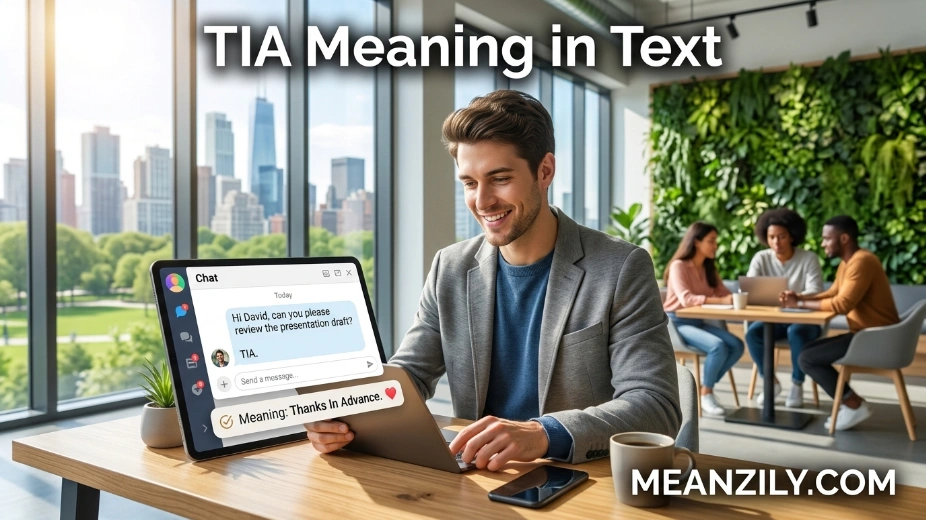
TIA stands for “Thanks in Advance.”
It is an abbreviation commonly used in digital communication. Instead of writing out the full phrase, people shorten it to TIA to save time.
When someone writes TIA, they are expressing gratitude before receiving help or an answer.
For example:
“Can anyone recommend a good laptop for college? TIA.”
In this case, the person is thanking others before they respond.
Is TIA Slang, an Acronym, or an Abbreviation?
TIA is generally considered an acronym because each letter represents the first letter of a phrase:
- T = Thanks
- I = In
- A = Advance
Although it’s widely used in internet conversations, it is not traditional slang. It’s more accurately described as a texting abbreviation or internet acronym.
What Does TIA Mean in Everyday Chat?
In everyday messaging, TIA is simply a polite way to say:
- Thanks beforehand
- Appreciate your help
- Thank you before you answer
- Thanks for any assistance
It helps make requests sound friendlier and more respectful.
Where People Use TIA

TIA appears across many social media platforms and messaging apps.
TIA on TikTok
On TikTok, users often include TIA when asking questions in comments.
Examples:
- “Where did you buy this outfit? TIA.”
- “Anyone know the song name? TIA.”
The abbreviation helps users show appreciation to anyone who replies.
TIA on Snapchat
Snapchat users may use TIA in private chats when asking for advice, recommendations, or information.
Example:
“Can you send me the homework details? TIA.”
TIA on Instagram
Instagram users frequently use TIA in captions, stories, and comment sections.
Example:
“Looking for good skincare recommendations. TIA!”
This encourages followers to respond.
TIA on WhatsApp
WhatsApp conversations often include TIA in group chats.
Example:
“Does anyone have the meeting schedule? TIA.”
It’s especially common in work groups, family chats, and community groups.
TIA in SMS Text Messages
Traditional text messaging is another place where TIA appears.
Example:
“Can you pick up some milk on your way home? TIA.”
Using TIA can make requests sound more polite.
How to Reply When Someone Says TIA
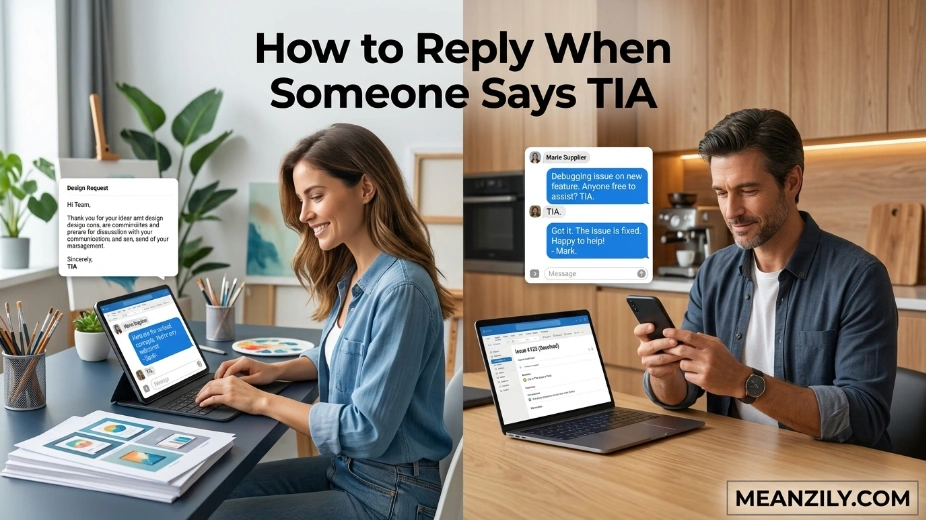
There isn’t one correct response. It depends on the tone of the conversation.
Funny Replies
- You’re welcome in advance too!
- Future thanks accepted.
- Happy to help for those advance thanks.
- I’ll earn that thank-you.
Casual Replies
- No problem.
- Sure thing.
- Got it.
- Happy to help.
Friendly Replies
- Anytime!
- You’re welcome.
- Glad to help.
- Of course, happy to assist.
Neutral Replies
- I’ll check.
- Let me see.
- I’ll get back to you.
- I’ll look into it.
Is TIA Rude or Offensive?
In most situations, TIA is not rude or offensive.
It is generally viewed as a polite expression because the sender is thanking someone before receiving assistance.
However, tone matters.
Some people may feel that using TIA after a demanding request sounds slightly presumptive, as if help is already expected.
For example:
“Send me all the project files today. TIA.”
Depending on the context, this could sound pushy.
Is It Safe to Use?
Yes. TIA is considered safe and widely accepted in online communication.
Is It Appropriate at School?
Yes. Students often use TIA when asking classmates or teachers simple questions.
Is It Appropriate at Work?
Generally yes. Many professionals use TIA in emails and workplace chats.
However, in highly formal business communication, writing “Thank you in advance” may look more
professional.
Real Chat Examples
Here are 10 realistic texting conversations showing how TIA is used.
Example 1
A: Do you know a good restaurant nearby?
B: What type of food?
A: Italian preferably, TIA.
Example 2
A: Can someone share today’s class notes?
B: I have them.
A: Awesome, TIA!
Example 3
A: What’s the best phone under $500?
B: Depends on what you need.
A: Mostly camera quality, TIA.
Example 4
A: Anyone know the movie title from that clip?
B: I think it’s from a thriller.
A: Great, TIA.
Example 5
A: Can you send me the Zoom link?
B: Sure.
A: Thanks, TIA.
Example 6
A: Looking for book recommendations.
B: What genre?
A: Mystery novels, TIA.
Example 7
A: Which software do you use for editing?
B: Adobe Premiere Pro.
A: Thank you, TIA.
Example 8
A: Does anyone know the store hours?
B: They close at 9 PM.
A: Perfect, TIA.
Example 9
A: Can somebody explain this math question?
B: Send a screenshot.
A: Will do, TIA.
Example 10
A: Any suggestions for a weekend trip?
B: Try the mountains.
A: Sounds good, TIA.
Who Uses This Term?
TIA is used by a wide range of internet users.
Age Groups
You’ll commonly see it among:
- Teenagers
- College students
- Adults
- Professionals
Unlike some slang terms that are mostly used by younger people, TIA is popular across multiple generations.
Gen Z Usage
Gen Z users often include TIA in social media comments and direct messages.
They appreciate abbreviations that make communication faster.
Common Platforms
TIA frequently appears on:
- TikTok
- Snapchat
- Text messages
- Online forums
How Often Does It Appear Online?
It appears regularly, especially in posts where someone is asking:
- Questions
- Recommendations
- Advice
- Technical help
- Product suggestions
Origin of the Term
The exact origin of TIA is difficult to pinpoint.
The phrase “Thanks in Advance” existed long before texting and social media became popular.
Early Internet Usage
As online forums and email communication grew, users began shortening common phrases to save time.
TIA became one of many internet abbreviations that spread across online communities.
Internet Culture Influence
The rise of texting, instant messaging, and social media accelerated the use of abbreviations.
People wanted faster ways to communicate, leading to widespread adoption of acronyms like:
- TIA
- LOL
- BRB
- IDK
- IMO
Is the Origin Certain?
Not entirely.
While the phrase itself is much older, no single person or platform is credited with creating TIA.
It appears to have evolved naturally through internet communication.
Comparison Table
| Term | Meaning | Type | Usage | Popularity |
|---|---|---|---|---|
| TIA | Thanks in Advance | Acronym | Showing appreciation before receiving help | High |
| IDK | I Don’t Know | Acronym | Expressing uncertainty | Very High |
| IDC | I Don’t Care | Acronym | Showing indifference | High |
| IMO | In My Opinion | Acronym | Sharing personal opinions | High |
| BRB | Be Right Back | Acronym | Temporarily leaving a conversation | Very High |
Real-World Usage Example
Imagine you’re moving to a new city and need recommendations for a reliable internet provider.
You post in a community Facebook group:
“Can anyone recommend a fast and affordable internet provider in the area? TIA.”
By adding TIA, you’re politely thanking group members before they respond.
This simple abbreviation makes your request feel more friendly and appreciative.
Why Do People Say TIA Instead of Writing the Full Phrase?
People often choose TIA because it is quick and convenient. In today’s fast-paced online world, users prefer shorter messages that still communicate the same meaning.
Instead of typing “Thanks in Advance,” someone can simply write TIA and save time. This is especially common on mobile devices where people send messages rapidly throughout the day.
The abbreviation also helps keep comments and posts shorter. On social media platforms where users often ask questions, TIA allows them to sound polite without adding extra words.
For many internet users, TIA has become so familiar that they immediately understand its meaning without needing any explanation.
Different Tones of TIA in Conversations
Although TIA always means “Thanks in Advance,” the tone can change depending on the message.
In a friendly conversation, it can sound warm and appreciative. For example, asking a friend for movie recommendations and ending the message with TIA feels casual and polite.
In professional situations, it may sound respectful when used appropriately. Employees often use it when requesting information from coworkers.
However, when attached to a demanding request, some readers may interpret it as expecting help rather than politely requesting it. Because of this, context plays an important role in how the abbreviation is received.
Common Situations Where You Might See TIA
TIA appears most often when someone needs assistance from others.
A person may use it when looking for travel recommendations, asking for technical support, searching for product suggestions, or requesting advice from friends.
Parents often use TIA in community groups when asking for school information or local recommendations.
Students may include it when requesting study resources or class notes.
Because it fits almost any request, TIA has become a versatile abbreviation across many online communities.
TIA in Online Communities and Forums
Online forums are one of the places where TIA appears most frequently.
When users create discussion posts, they often ask questions that require answers from experienced members. Adding TIA shows appreciation to anyone willing to help.
For example, someone joining a technology forum might ask for computer troubleshooting advice and finish the post with TIA.
Similarly, users in travel, gaming, fitness, and hobby communities often use the abbreviation when seeking recommendations.
The phrase helps create a friendly atmosphere where people feel valued for contributing helpful answers.
Can TIA Be Used in Emails?
Yes, TIA is commonly used in emails, especially informal and semi-professional messages.
Many people add TIA at the end of a request when they are expecting a response.
For example:
“Could you send me the updated schedule? TIA.”
This approach keeps the email short while still expressing gratitude.
However, in highly formal business settings, some professionals prefer writing the full phrase “Thank you in advance” because it appears more polished and professional.
Similar Abbreviations People Use Alongside TIA
TIA is part of a larger group of internet abbreviations that simplify communication.
Some common examples include:
- TY = Thank You
- THX = Thanks
- TYSM = Thank You So Much
- NP = No Problem
- YW = You’re Welcome
These abbreviations are often used together in texting conversations.
For instance, one person may write TIA when asking for help, and another may respond with NP after providing assistance.
Together, these shortcuts help people communicate quickly while maintaining politeness.
Signs That Someone Is Using TIA Correctly
Using TIA correctly is fairly simple.
The abbreviation works best when you are requesting information, recommendations, opinions, or assistance from others.
A good example would be:
“Can anyone recommend a reliable laptop for students? TIA.”
This sounds natural because the person is politely thanking others before they answer.
The abbreviation feels most appropriate when paired with genuine questions rather than commands.
Understanding this difference helps ensure that your messages sound respectful and friendly.
How TIA Helps Create Positive Online Interactions
Small expressions of gratitude can significantly influence online conversations.
When people feel appreciated, they are often more willing to provide helpful responses.
Using TIA shows that the sender values other people’s time and effort.
Even though it consists of only three letters, it communicates courtesy and respect.
This positive tone can encourage better engagement in comment sections, group discussions, and community forums where users rely on one another for support and advice.
Should Beginners Learn Texting Acronyms Like TIA?
Learning common texting abbreviations can make online communication much easier.
People who are new to social media or messaging apps sometimes encounter unfamiliar terms and feel confused.
Understanding abbreviations such as TIA helps users follow conversations without constantly searching for definitions.
It also improves communication skills because users can recognize the tone and purpose behind different messages.
As digital communication continues to evolve, knowing common acronyms becomes increasingly useful in everyday life.
How TIA Reflects Modern Digital Communication
The popularity of TIA highlights how communication has changed in the internet age.
People now exchange information faster than ever through social media, messaging apps, and online communities.
As a result, shorter forms of communication have become more common.
TIA is a perfect example of how language adapts to technology. A phrase that once required three words can now be expressed with just three letters.
Its continued use demonstrates how internet culture influences the way people communicate, share information, and build connections online.
Frequently Asked Questions
What does TIA mean in text messages?
TIA means “Thanks in Advance.” It is used when someone is asking for help or information.
What does TIA mean on TikTok?
On TikTok, TIA usually means “Thanks in Advance” when users ask questions in comments or captions.
Is TIA slang?
Not exactly. TIA is generally considered an acronym or texting abbreviation rather than traditional slang.
Is TIA rude or offensive?
No. TIA is usually polite and respectful, although it can occasionally sound demanding depending on the wording of the message.
How should you reply to TIA?
You can reply with:
- No problem
- Happy to help
- You’re welcome
- Sure thing
- I’ll check
Conclusion
TIA stands for “Thanks in Advance,” a popular internet abbreviation used to express appreciation before receiving help, information, or advice. You’ll commonly see it on TikTok, Snapchat, Instagram, WhatsApp, online forums, and regular text messages.
In most situations, it’s a polite and friendly way to make a request. While it is generally safe to use at school, work, and in everyday conversations, it’s best to avoid relying on abbreviations in very formal communication where writing out the full phrase may sound more professional.
Understanding TIA can help you communicate more confidently and understand online conversations more easily.
Discover More Post
Benjamin Meaning The Hidden Truth Origins, and Powerful …
What Does WSG Mean in Text? Real Meaning Examples …
TSK Meaning in Text Slang Explained What It Means and How …

Cove is the founder and lead SEO strategist behind Meanzily, with over 5 years of hands-on experience in search engine optimization and content marketing. He specializes in creating high-quality, user-focused content that aligns with Google’s latest SEO and E-E-A-T guidelines. Cove has helped multiple websites grow organically through data-driven strategies, keyword research, and on-page optimization. His mission is to deliver valuable, easy-to-understand content that ranks well and truly helps readers.